
Jan Molby mural on Sybil Road at the corner with Anfield Road in Liverpool, England, UK.
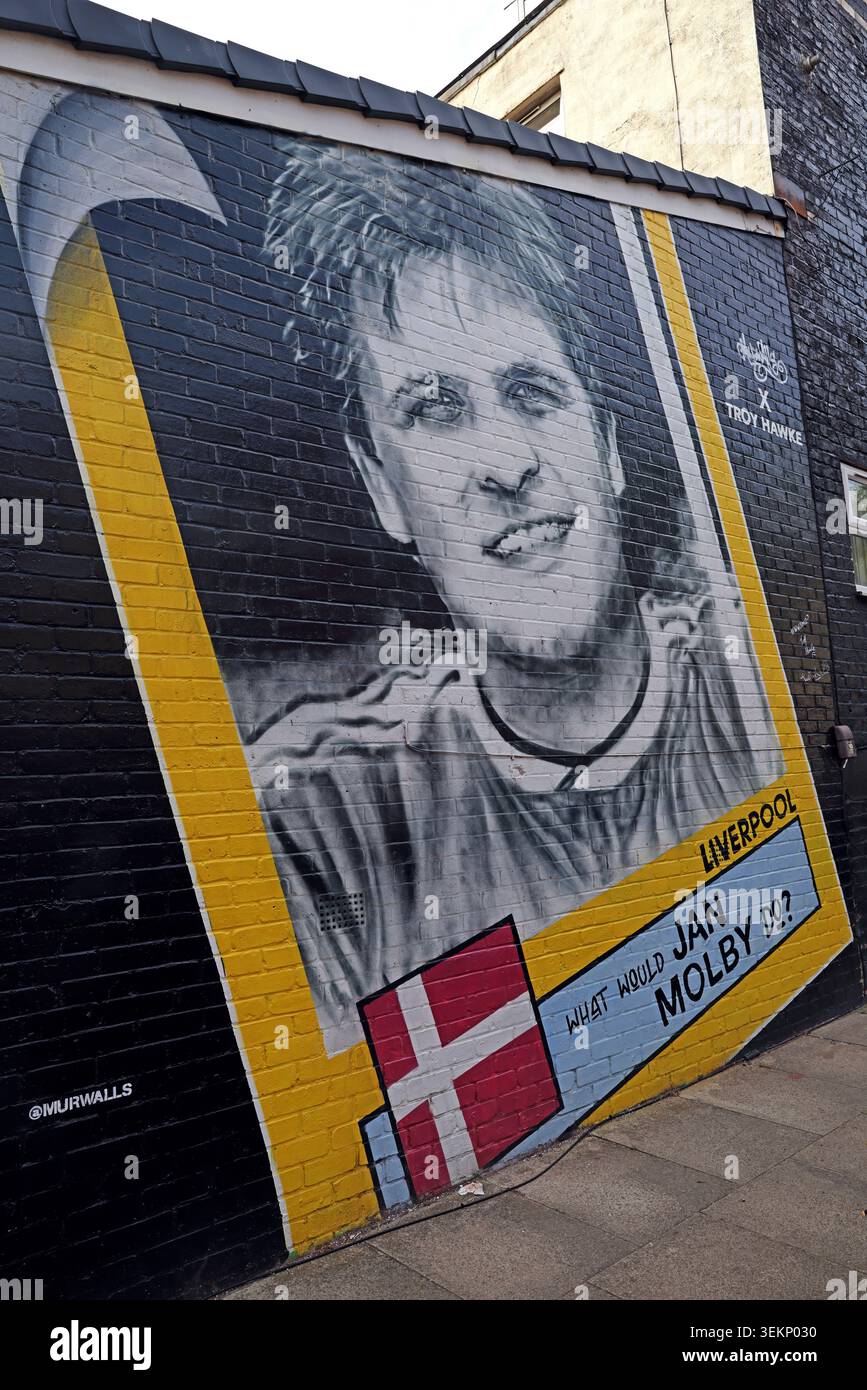
Image details
Contributor:
Tony SmithImage ID:
3EKP030File size:
128.1 MB (6.6 MB Compressed download)Releases:
Model - no | Property - noDo I need a release?Dimensions:
5464 x 8192 px | 46.3 x 69.4 cm | 18.2 x 27.3 inches | 300dpiDate taken:
30 May 2026Location:
Sybil Road at Anfield Road, Liverpool, Merseyside, England, UKMore information:
. Jan Molby mural on Sybil Road at the corner with Anfield Road in Liverpool, England, UK. Photographed on 30 May 2026. The recorded location is Sybil Road at Anfield Road, Liverpool, Merseyside, England, UK. The large monochrome portrait depicts the former Liverpool FC midfielder alongside Denmark-inspired colours and football graphics. Located in the streets surrounding Anfield stadium, the artwork forms part of the extensive collection of football murals celebrating players, managers and club history across the neighbourhood. The narrow gable-end format and recognisable portrait make it a strong individual player tribute within Liverpool's football landscape. For statue, the historical context is that monuments and civic artworks are part of the visual history of place; Their subjects reveal whom a community chose to celebrate, while later reinterpretation or controversy can evolution the meaning of an apparently permanent object. Looking at sports venue, the longer history is that british sports venues often have histories extending far beyond their current appearance, with rebuilt stands, sponsorship names and safety standards reflecting the professionalisation and commercial growth of spectator sport. For statue, the 2026 context is that public art is closely connected with regeneration, tourism, identity and debate about representation; Murals and sculptures can become visitor landmarks while also prompting discussion about whose history is visible in public space. In 2026, sports venue remains relevant because sporting imagery has relevance beyond results, illustrating club identity, fan culture, major-event economics, venue investment and the role of sport in local regeneration. Further relevant search phrases include street art, urban culture, cultural identity, visual culture, community art, place-making, memorial art, creative industries, public realm, cultural landmark, football club, supporters, matchday, and sporting heritage.

