
Bill Shankly statue outside Anfield stadium in Liverpool, England, UK, honouring the legendary Liverpool FC manager.
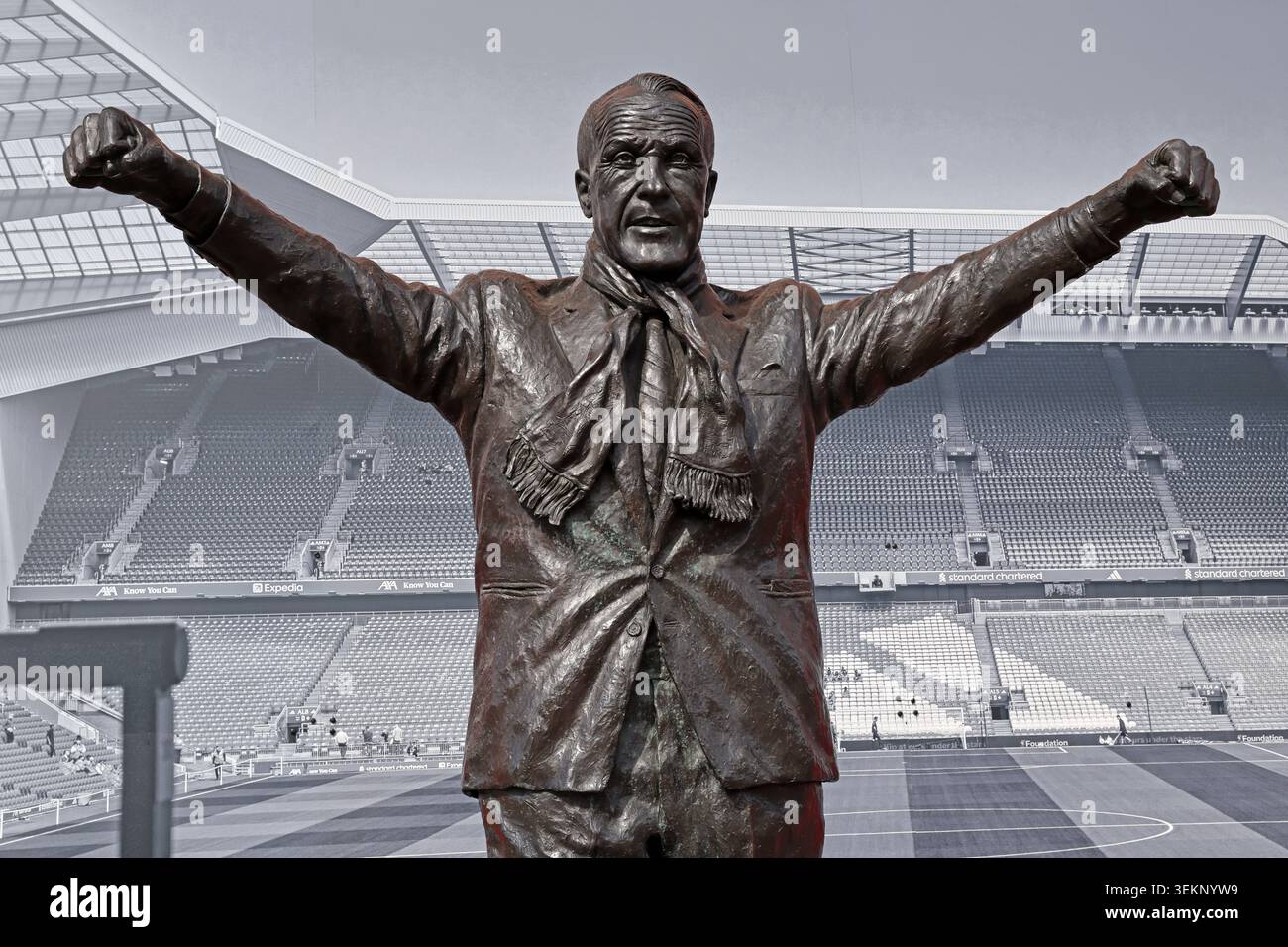
Image details
Contributor:
Tony SmithImage ID:
3EKNYW9File size:
119.9 MB (4.7 MB Compressed download)Releases:
Model - no | Property - noDo I need a release?Dimensions:
7928 x 5284 px | 67.1 x 44.7 cm | 26.4 x 17.6 inches | 300dpiDate taken:
30 May 2026Location:
Anfield stadium, Anfield Road, Liverpool, Merseyside, England, UKMore information:
. Bill Shankly statue outside Anfield stadium in Liverpool, England, UK, honouring the legendary Liverpool FC manager. Photographed on 30 May 2026. The recorded location is Anfield stadium, Anfield Road, Liverpool, Merseyside, England, UK. The bronze sculpture shows Shankly with both arms raised in a celebratory pose against the backdrop of the stadium seating. Shankly transformed Liverpool during his managerial career and remains one of the most important figures in the club's history. The dramatic outstretched pose and stadium background create a strong visual connection between the manager's legacy and the modern home of Liverpool FC. For the story of community art, it is useful to note that public art turns streets and buildings into records of local culture; Murals, statues and memorial sculpture can commemorate people and events, celebrate industry, respond to politics or simply enliven public space, while materials and style often identify a particular era. The historical setting for supporter culture is that football and major sporting events leave a rich material record through flags, tickets, souvenirs, programmes and venue signage; International tournaments in particular can turn everyday objects into historical evidence of national sporting culture. Seen through ecclesiastical architecture, the earlier context is that ecclesiastical buildings are both active places of worship and repositories of local evidence; Churchyard monuments, carved stone, stained glass and plaques provide material for genealogy, architectural history, religious practice and remembrance. For present-day community art, 2026 is significant because contemporary street art continues to blur the line between unofficial expression, commissioned mural and tourist attraction; Images are therefore relevant to urban culture, creative industries, heritage interpretation and place-making. Its associated themes also include heritage, fans, history, sports, tourism, and legendary.

