
Leeds City Market interior at Kirkgate Market in Leeds, West Yorkshire, England, UK.
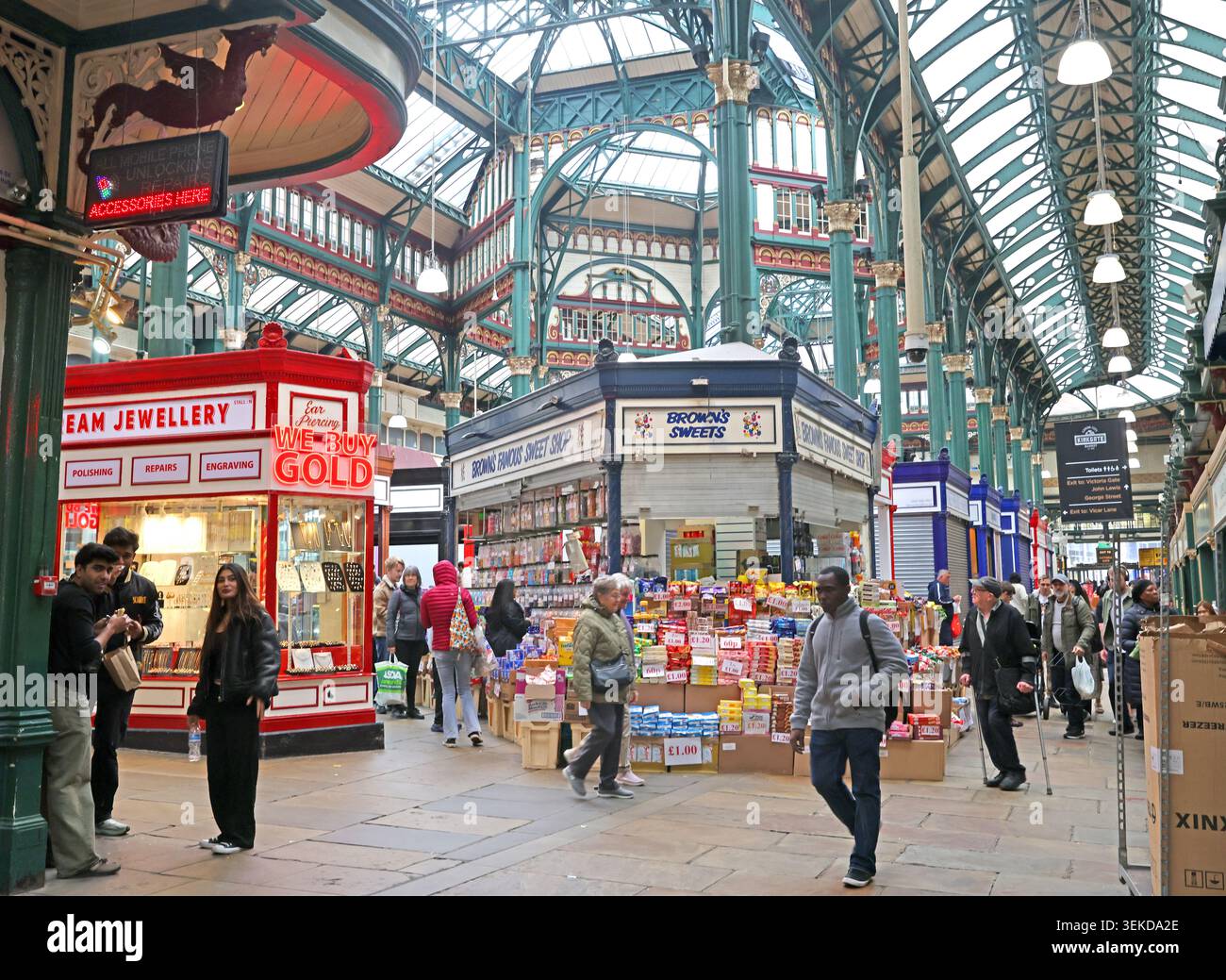
Image details
Contributor:
Tony SmithImage ID:
3EKDA2EFile size:
96.3 MB (4.3 MB Compressed download)Releases:
Model - no | Property - noDo I need a release?Dimensions:
6788 x 4960 px | 57.5 x 42 cm | 22.6 x 16.5 inches | 300dpiDate taken:
16 May 2026Location:
Leeds Kirkgate Market, Leeds, West Yorkshire, England, UKMore information:
. Leeds City Market interior at Kirkgate Market in Leeds, West Yorkshire, England, UK. Photographed on 16 May 2026. The recorded location is Leeds Kirkgate Market, Leeds, West Yorkshire, England, UK. The busy covered market scene shows colourful stalls, shoppers and ornate iron-and-glass structure beneath the long arcade roof, with traditional market businesses and modern retail signs sharing the space. Leeds Kirkgate Market remains one of Britain's best-known indoor markets and is closely associated with independent traders, fresh food, specialist retail and the origins of Marks & Spencer. The lively interior demonstrates the continuing social and economic role of covered markets as places for affordable shopping, small businesses and everyday community life. For the story of ingredients, it is useful to note that restaurants, street vendors and domestic dishes illustrate migration and cultural exchange as much as appetite; Foods once considered specialist can become familiar through travel, supermarkets and changing urban populations. The historical setting for regeneration is that market halls have long concentrated small traders under one roof, combining food, household goods and specialist retail with an important social role; Regenerated markets increasingly mix traditional stalls with cafés, events and independent makers. For present-day ingredients, 2026 is significant because hospitality and food retail continue to adapt to higher costs, delivery platforms and changing diets, making older restaurant and product images valuable evidence of consumer trends. In the 2026 discussion of regeneration, town-centre resilience remains a major issue as online shopping, costs and changing footfall reshape retail; Markets and independent businesses are increasingly promoted as anchors for regeneration, local identity and experience-led shopping. Additional discoverability terms include food culture, cuisine, street food, home cooking, and food photography.

