
Thornton's Arcade in Leeds city centre, West Yorkshire, England, UK, showing busy pedestrian passage.
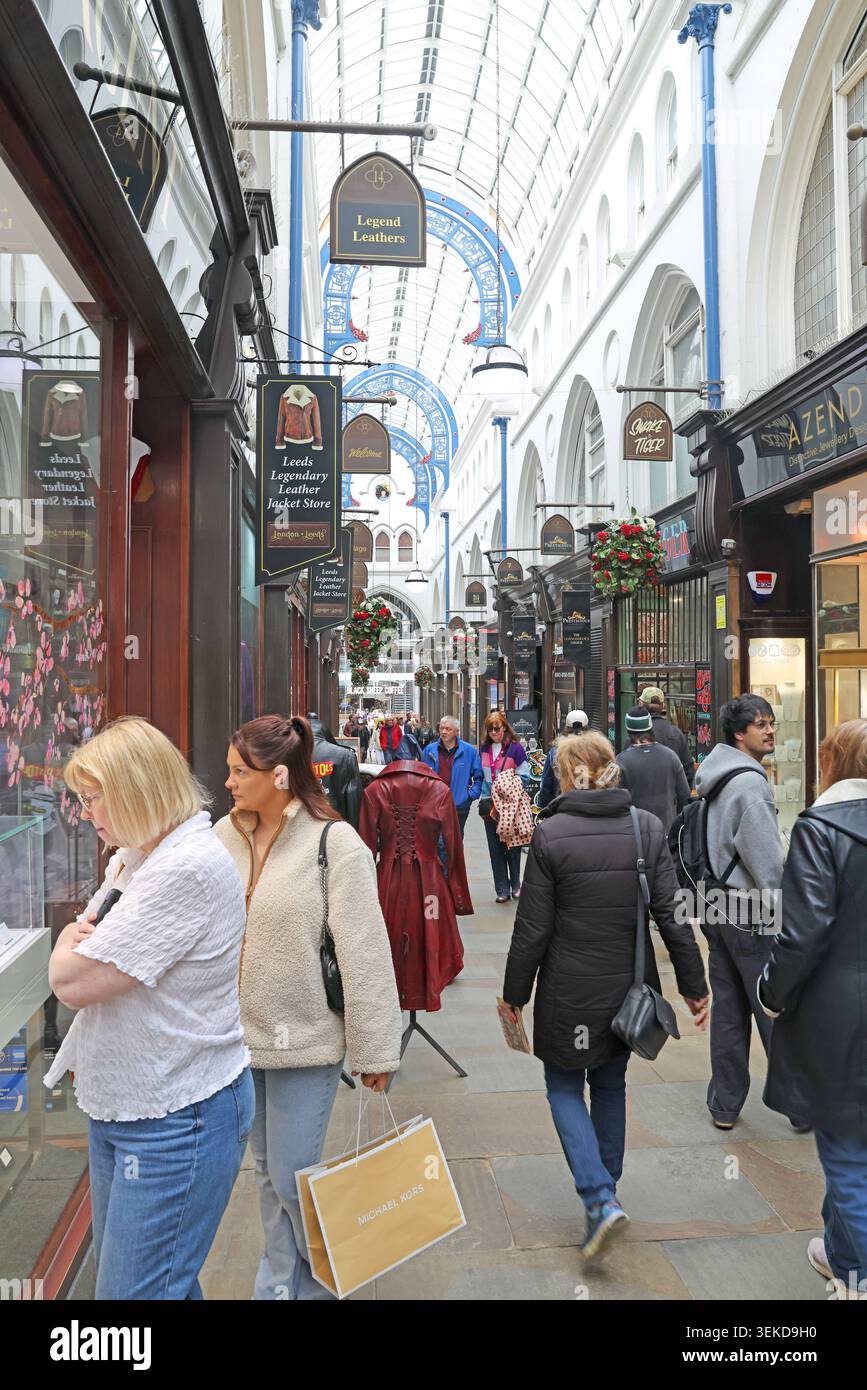
Image details
Contributor:
Tony SmithImage ID:
3EKD9H0File size:
128.1 MB (4.6 MB Compressed download)Releases:
Model - no | Property - noDo I need a release?Dimensions:
5464 x 8192 px | 46.3 x 69.4 cm | 18.2 x 27.3 inches | 300dpiDate taken:
16 May 2026Location:
Thornton's Arcade, Leeds, West Yorkshire, England, UKMore information:
. Thornton's Arcade in Leeds city centre, West Yorkshire, England, UK, showing busy pedestrian passage. Photographed on 16 May 2026. The recorded location is Thornton's Arcade, Leeds, West Yorkshire, England, UK. Opened in the nineteenth century, Thornton's Arcade is one of Leeds' historic covered shopping arcades and is known for its decorative architecture and famous clock feature. The interior combines ornate detailing with everyday commercial use, making it a useful illustration of how historic retail infrastructure continues to function within a modern city centre. It can support stories about retail heritage, pedestrian shopping, adaptive reuse, tourism and the preservation of distinctive urban architecture. Within the history of public clock, mechanical public clocks combine engineering with ornament and often survive long after the original building or transport function changes. In relation to vintage object, historical context shows that collectable items gain meaning through provenance and context; A board game, badge, souvenir or branded package may connect a national event or local place with mass manufacturing and personal memory. For the story of heritage building, it is useful to note that architecture records the priorities of the period in which a structure was designed: materials, ornament, scale and planning reveal technology, status and intended use; Later alterations, extensions and new tenants add further layers, so a single façade can embody several phases of local past. Against the 2026 backdrop for public clock, historic clocks also contribute to place identity and restoration projects where original street furniture or building details are retained. As of 2026, the position for vintage object is that online resale, nostalgia and interest in vintage design have made many ordinary twentieth-century objects active collecting categories rather than disposable goods.

