
Rushton's Warehouse on New Market Street in Wigan, Greater Manchester, England, UK, showing close architectural detail.
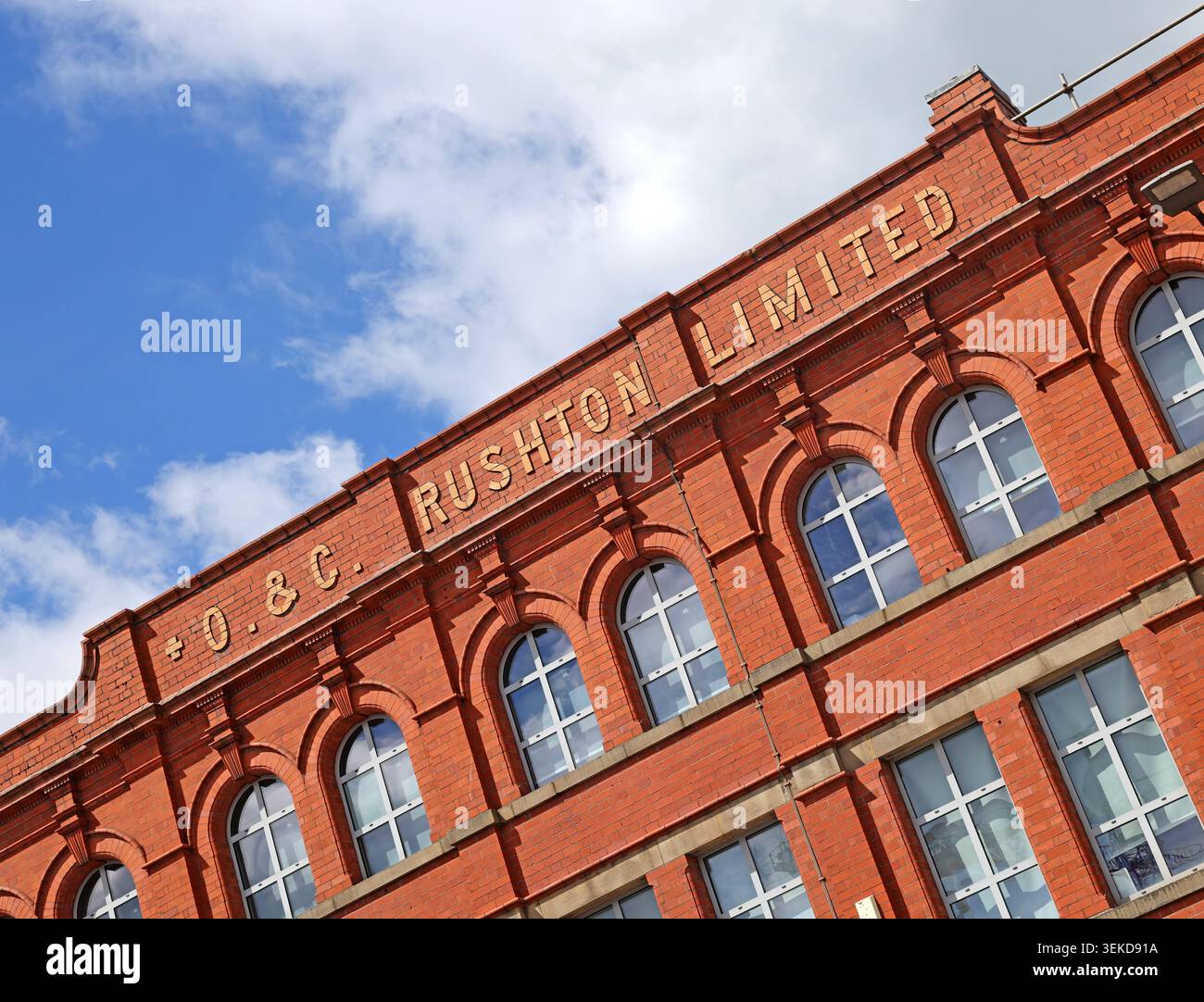
Image details
Contributor:
Tony SmithImage ID:
3EKD91AFile size:
99.9 MB (3.8 MB Compressed download)Releases:
Model - no | Property - noDo I need a release?Dimensions:
6764 x 5164 px | 57.3 x 43.7 cm | 22.5 x 17.2 inches | 300dpiDate taken:
6 May 2026Location:
New Market Street, Wigan, Greater Manchester, England, UKMore information:
. Rushton's Warehouse on New Market Street in Wigan, Greater Manchester, England, UK, showing close architectural detail. Photographed on 6 May 2026. The recorded location is New Market Street, Wigan, Greater Manchester, England, UK. The imposing red-brick commercial building carries historic RUSHTON LIMITED lettering and repeated arched windows, giving it a strong industrial and commercial character. Surviving warehouse buildings such as this are important physical reminders of Wigan's commercial past and contribute significantly to the character of older town-centre streets. The image can illustrate conservation, adaptive reuse, heritage-led regeneration and the challenges of retaining historic buildings as urban centres change around them. Within the history of mechanical engineering, industrial buildings and machinery preserve the material history of manufacturing: steam power, engineering, mining, textiles, ceramics and mass production transformed both the economy and the physical character of towns; Surviving equipment is now studied as industrial archaeology. In relation to historic comparison, historical context shows that town and neighbourhood photographs record the accumulation of ordinary change: road layouts, shop names, signage, public art and building uses; Their value increases when compared over decades because apparently minor details can become the clearest evidence of transformation. For the story of high street, it is useful to note that market halls have long concentrated small traders under one roof, combining food, household goods and specialist retail with an important social role; Regenerated markets increasingly mix traditional stalls with cafés, events and independent makers. Against the 2026 backdrop for mechanical engineering, former industrial sites continue to be repurposed for housing, offices and cultural attractions; Historic machinery and surviving fabric therefore illustrate both deindustrialisation and current.

