
LGBTQ+ street art at The Molly House in Manchester, showing Alan Turing and Quentin Crisp in the Gay Village.
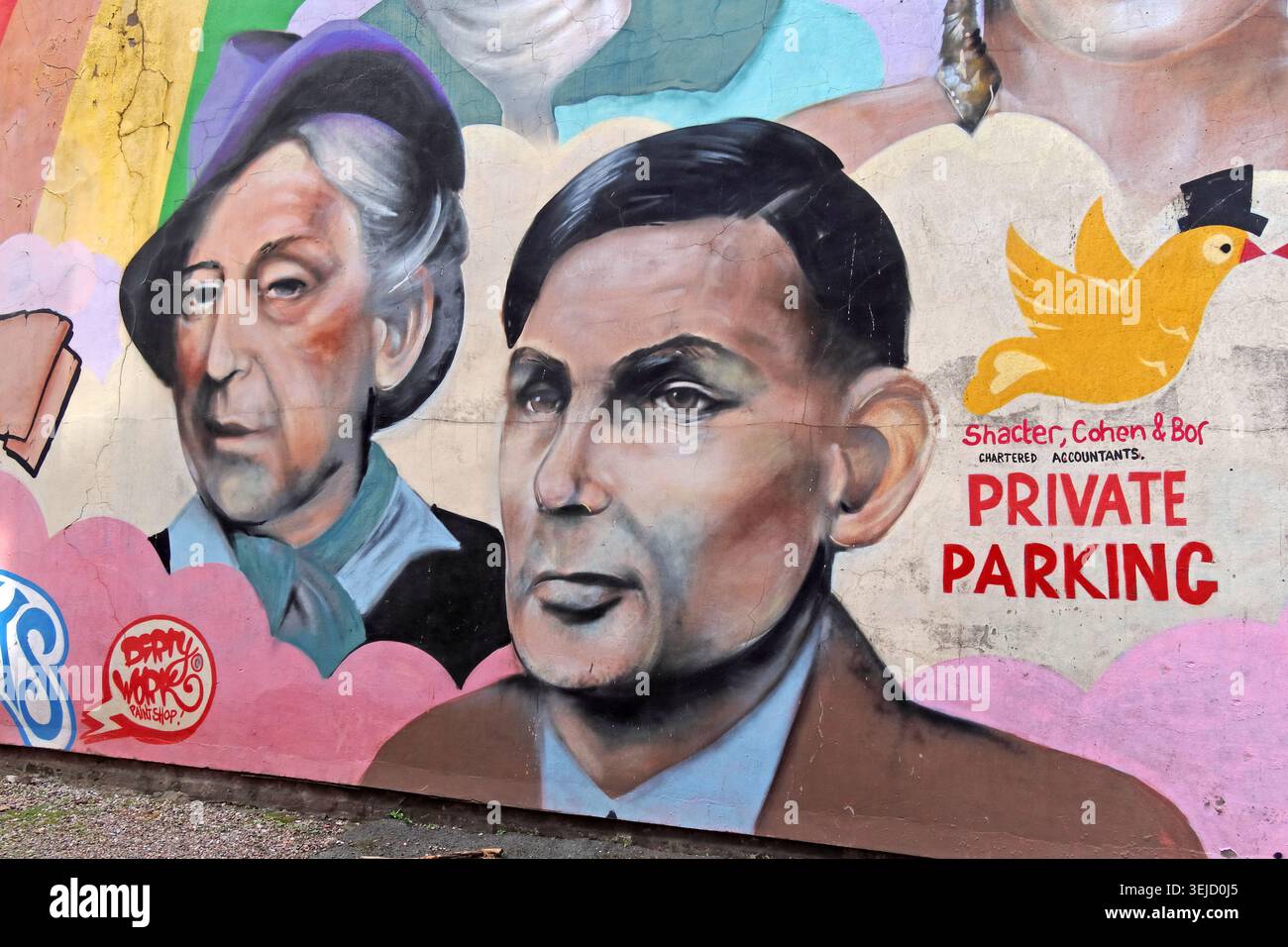
Image details
Contributor:
Tony SmithImage ID:
3EJD0J5File size:
57.1 MB (2.5 MB Compressed download)Releases:
Model - no | Property - noDo I need a release?Dimensions:
5472 x 3648 px | 46.3 x 30.9 cm | 18.2 x 12.2 inches | 300dpiDate taken:
23 May 2026Location:
26 Richmond Street, Manchester, Greater Manchester, England, UK, M1 3NB.More information:
Molly House mural on Richmond Street in Manchester’s Gay Village, centred on painted portraits of Quentin Crisp and Alan Turing. The wall sits beside one of the area’s best-known LGBTQ+ bars, close to Canal Street and the city centre’s nightlife, Pride and queer heritage quarter. Crisp’s stylised face, with hat, pale hair and carefully theatrical expression, brings in the history of queer self-invention, camp visibility and public defiance. Turing’s portrait adds a sharper Manchester connection: the mathematician and codebreaker worked at the University of Manchester after the Second World War, helped shape early computing, and has become a major figure in British LGBTQ+ history because of the state persecution he suffered after his conviction for homosexual acts. Together, the two faces turn a side wall into a public act of remembrance, identity and urban storytelling. The mural’s composition is bright and theatrical, with pink cloud shapes, a yellow bird graphic, pastel colour blocks and the readable words “PRIVATE PARKING” painted beside the figures. It is not a formal monument or blue-plaque view, but everyday city street art, mixing portraiture, advertising, wall texture and a back-lane setting. The artwork is part of a living leisure district, not a sealed heritage display. It sits among bars, service yards and late-night footfall, where debates about safety and commercial change remain visible. No sky is visible, so the weather and season are not clear, but the even outdoor light and slightly damp-looking ground give the picture the feel of a cool urban day rather than a staged heritage view. The image has strong editorial use for features on Manchester Gay Village, LGBTQ+ history, public art, Alan Turing, Quentin Crisp, Pride culture, queer spaces, nightlife, urban regeneration, equality, memory, identity and the way unofficial city walls can carry cultural history as powerfully as museums or civic statues.

