
BEA Bank of East Asia branch sign at 3-5 Charlotte Street, Manchester, England, UK.
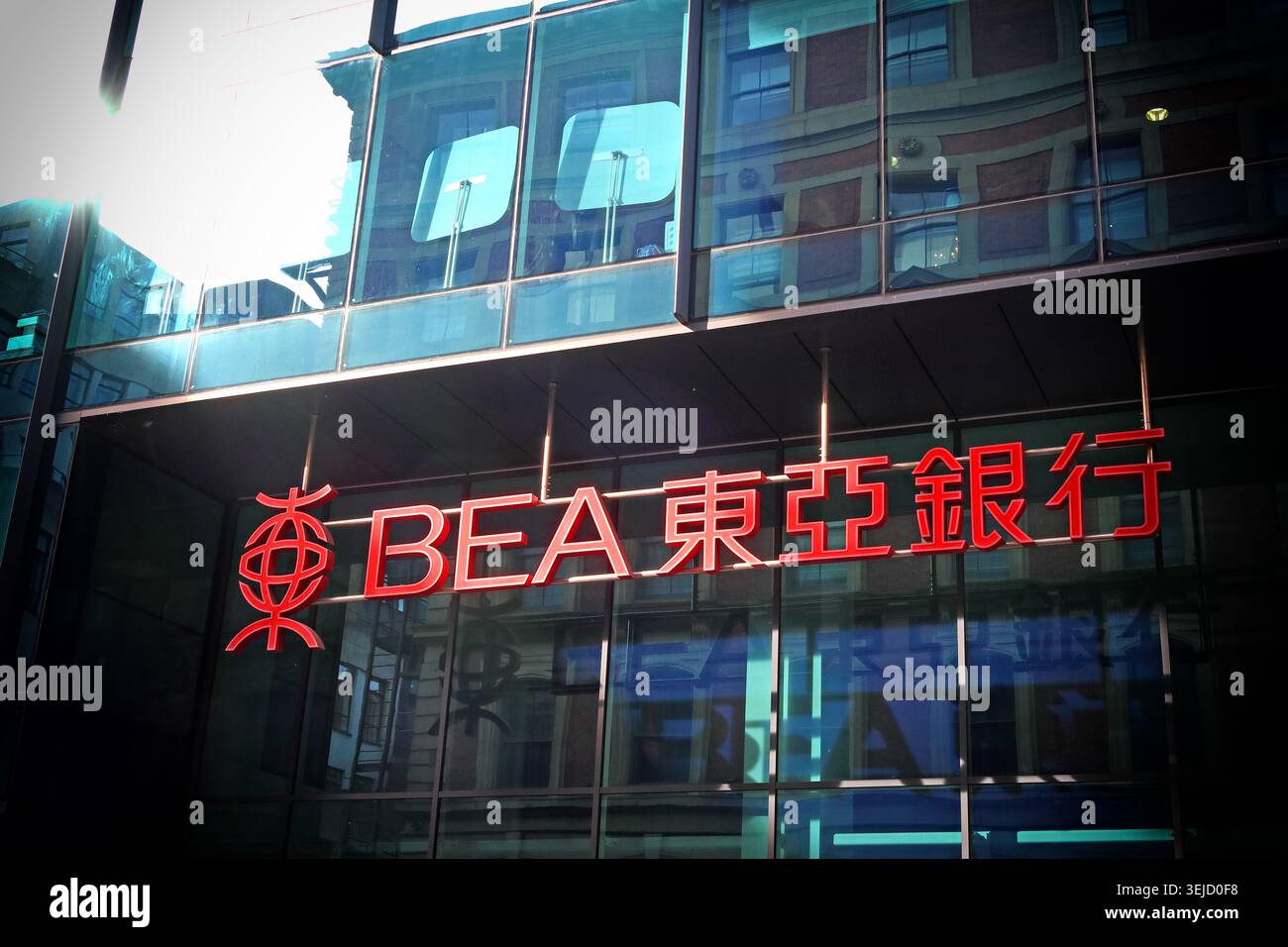
Image details
Contributor:
Tony SmithImage ID:
3EJD0F8File size:
57.1 MB (1.7 MB Compressed download)Releases:
Model - no | Property - noDo I need a release?Dimensions:
5472 x 3648 px | 46.3 x 30.9 cm | 18.2 x 12.2 inches | 300dpiDate taken:
23 May 2026Location:
3-5 Charlotte Street, Manchester, Greater Manchester, England, UKMore information:
. BEA Bank of East Asia branch sign at 3-5 Charlotte Street, Manchester, England, UK. Photographed on 23 May 2026. The recorded location is 3-5 Charlotte Street, Manchester, Greater Manchester, England, UK. The illuminated red BEA lettering and Chinese characters are displayed on the modern glass frontage of the bank's Manchester premises. The combination of English and Chinese branding makes the location immediately distinctive and can illustrate stories about global banking, Asian investment, international business links, currency and financial services, Manchester's Chinese community and the presence of overseas financial institutions in major British cities. In relation to sterling, historical context shows that financial objects connect economic history with daily life; Cashpoints, savings products, notes and coins show how people stored and accessed money before online banking reduced the visibility of traditional branches and paper transactions. For the story of typography, it is useful to note that temporary and permanent notices are valuable social-history evidence because they capture the rules and assumptions of a particular moment, from parking and access to opening times, safety and public-service instructions. The historical setting for household object is that everyday objects often become better historical evidence with age because packaging, typography, materials and branding change more rapidly than their basic function; Souvenirs, games and household items can therefore date consumer culture very precisely. As of 2026, the position for sterling is that cash is used less frequently than in earlier decades but remains important for some consumers and small businesses; UK access-to-cash protections make ATMs, notes and closed branches relevant to debate about financial inclusion and the shift to digital banking. Further relevant terminology includes money, financial services, signage, and public information.

