
Old grey Heineken pub sign for the closed Mark Addy riverside pub beside the River Irwell on Stanley Street, Salford, Greater Manchester.
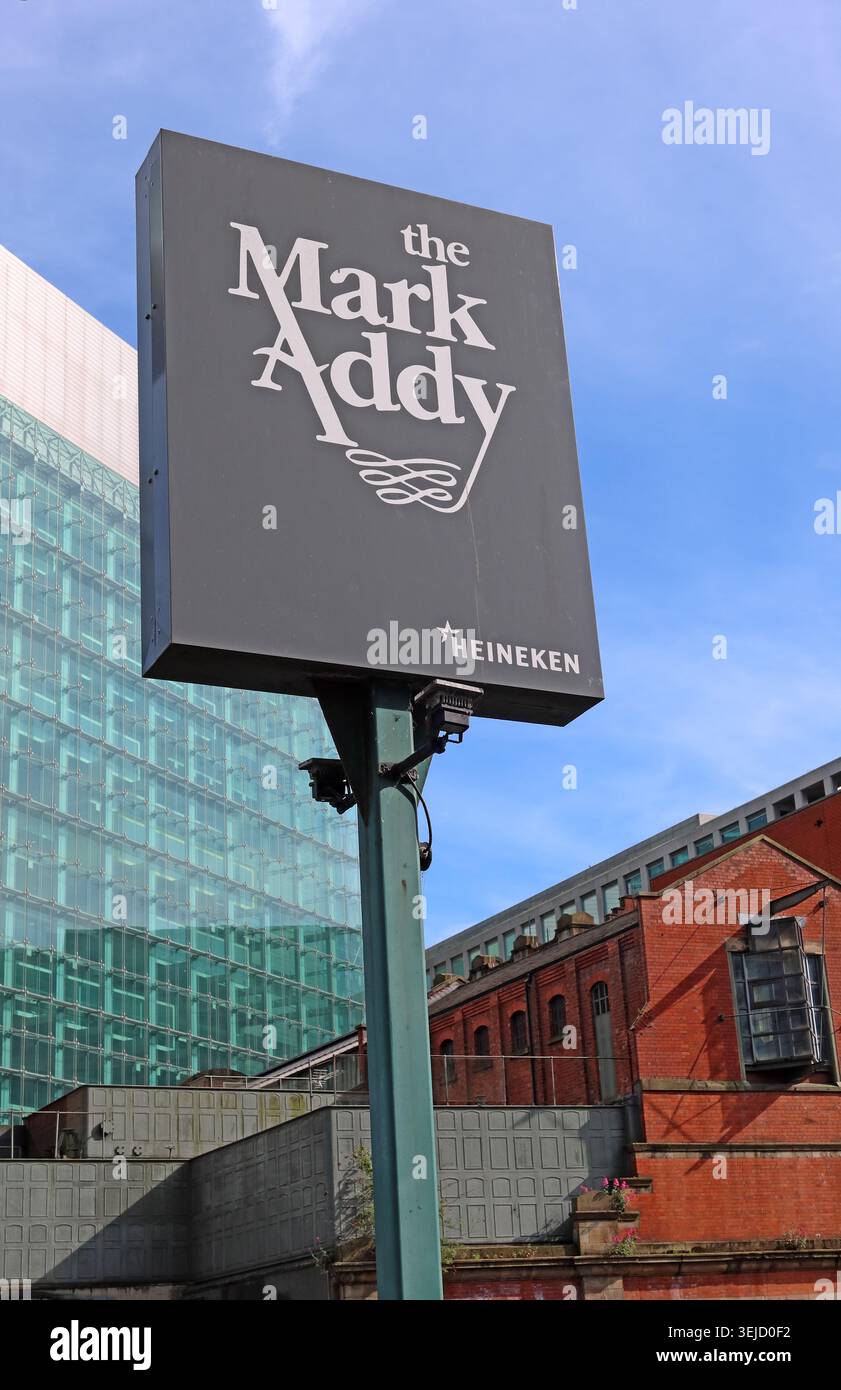
Image details
Contributor:
Tony SmithImage ID:
3EJD0F2File size:
56.1 MB (1.6 MB Compressed download)Releases:
Model - no | Property - noDo I need a release?Dimensions:
3564 x 5505 px | 30.2 x 46.6 cm | 11.9 x 18.4 inches | 300dpiDate taken:
23 May 2026Location:
The Mark Addy, Stanley Street, Salford, Greater Manchester, England, UK, M3 5EJMore information:
This close-up editorial image shows the pub sign for The Mark Addy, the former riverside public house and restaurant beside the River Irwell on Stanley Street in Salford. The sign stands against a clear blue sky, with modern glass buildings and older red-brick industrial architecture behind it, placing the image in the changing cityscape between Salford and Manchester. The picture is useful for illustrating lost pubs, closed hospitality venues, riverside regeneration, urban change, beer branding, Heineken signage and the relationship between new development and older local landmarks. The Mark Addy was named after Mark Addy, a Victorian Salford oarsman and publican remembered for rescuing more than 50 people from the dangerous and heavily polluted River Irwell. Its position beside the water made the name unusually apt, turning a river rescue story into a well-known pub identity. The venue opened in the early 1980s and became a distinctive Salford drinking and dining spot, partly because of its sunken waterside setting, terrace views and proximity to Manchester city centre. The pub later gained a strong food reputation when chef Robert Owen Brown became associated with it, helping it become one of the better-known modern British and northern food destinations in the city region. Reports and listings describe the site as closed, with CAMRA noting long-term closure from December 2015 and local coverage linking the decline to flooding, repair costs and the practical difficulty of maintaining a low-lying venue by the Irwell. As a result, the image can support stories about climate risk, flood damage, hospitality economics, independent restaurants, forgotten Salford institutions and memories of pre-regeneration nightlife. For stock use, the readable sign gives immediate subject recognition, while the background contrast adds wider themes of gentrification, river corridors, city centre expansion, heritage loss, public memory and Salford’s evolving identity

