
Passengers at Manchester Coach Station ticket gates on Chorlton Street, Manchester, England, UK.
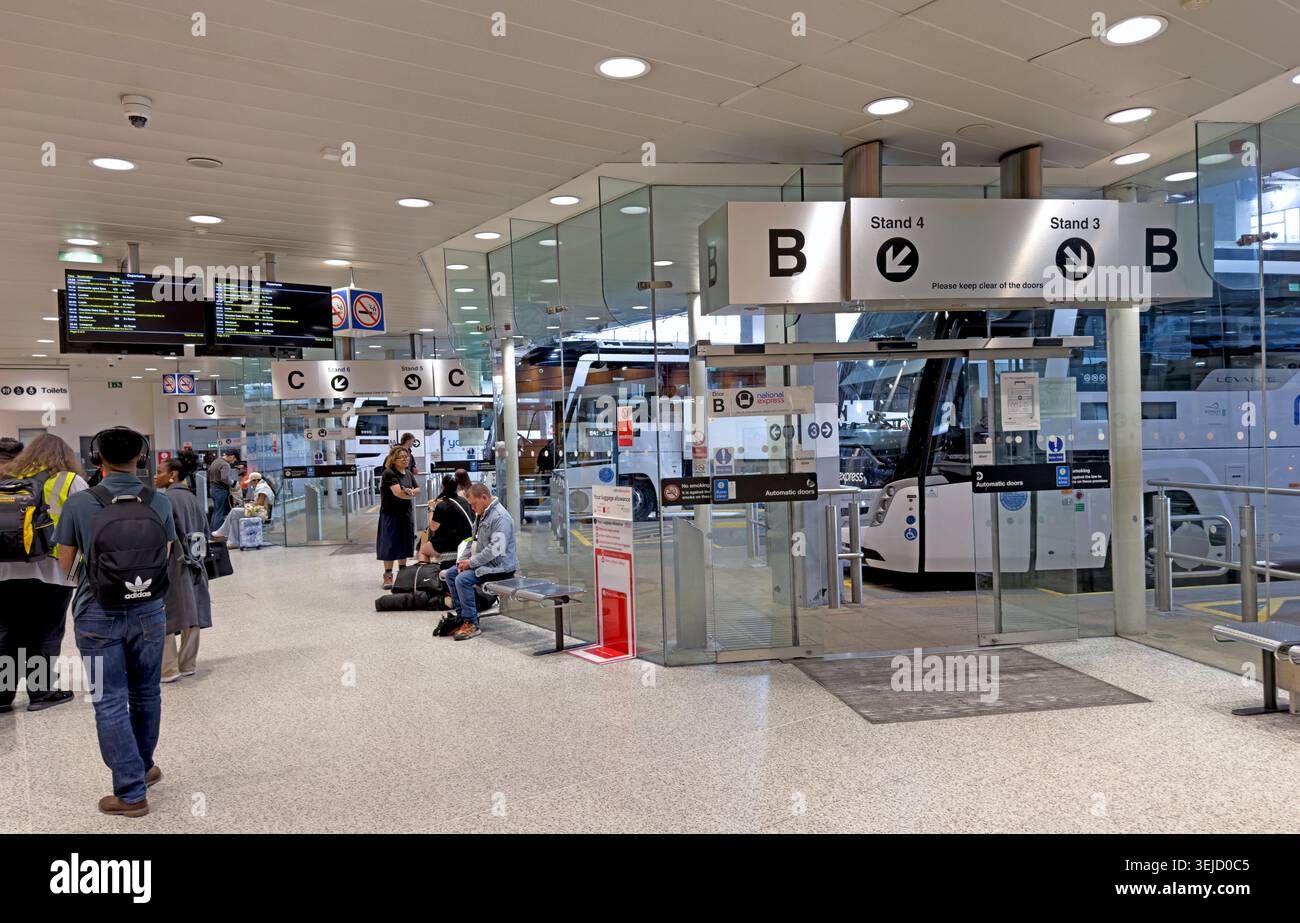
Image details
Contributor:
Tony SmithImage ID:
3EJD0C5File size:
67.5 MB (2.8 MB Compressed download)Releases:
Model - no | Property - noDo I need a release?Dimensions:
6064 x 3889 px | 51.3 x 32.9 cm | 20.2 x 13 inches | 300dpiDate taken:
23 May 2026Location:
Manchester Coach Station, Chorlton Street, Manchester, Greater Manchester, England, UKMore information:
. Passengers at Manchester Coach Station ticket gates on Chorlton Street, Manchester, England, UK. Photographed on 23 May 2026. The recorded location is Manchester Coach Station, Chorlton Street, Manchester, Greater Manchester, England, UK. The terminal interior shows travellers moving through automated barriers beneath bay signs and passenger information displays, with seating and waiting areas visible beyond. The everyday scene can illustrate stories about domestic tourism, public transport capacity, ticketing technology, accessibility, coach fares, passenger numbers and the continuing role of long-distance bus services as a relatively affordable alternative to rail and car travel. For the story of commuter travel, it is useful to note that urban buses and local transport connect residential areas with town centres, employment, hospitals and stations; Their routes provide a practical map of how communities function and how transport policy changes over time. The historical setting for passenger railway is that stations are both functional transport interchanges and pieces of civic architecture; Their canopies, footbridges, booking halls, signal boxes and signage reveal how passenger expectations and railway technology changed from steam-era operation to today's increasingly digital network. Seen through community history, the earlier context is that local place names and small landmarks can be as significant to community history as nationally famous buildings; Streets, neighbourhood businesses and informal attractions offer reference points that may vanish during redevelopment or rebranding. For present-day commuter travel, 2026 is significant because bus reliability, affordability and network coverage remain important , particularly for people without cars and for access to employment, education and healthcare. Its associated themes also include rolling stock, train service, rail infrastructure, and station architecture.

