
Latchford Tunnel pedestrian and cycle underpass in Warrington, Cheshire, England, UK.
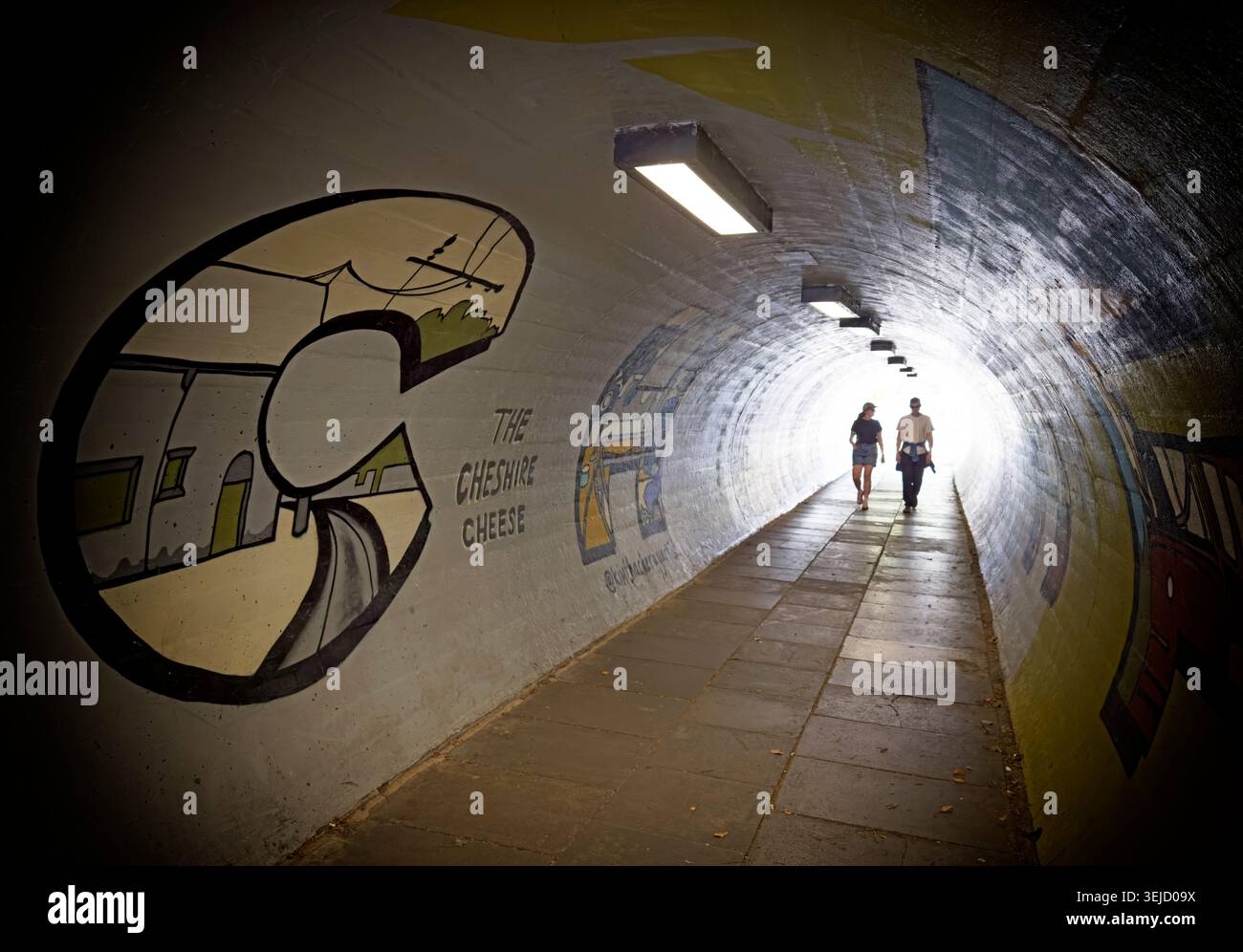
Image details
Contributor:
Tony SmithImage ID:
3EJD09XFile size:
78.2 MB (2.1 MB Compressed download)Releases:
Model - no | Property - noDo I need a release?Dimensions:
6264 x 4366 px | 53 x 37 cm | 20.9 x 14.6 inches | 300dpiDate taken:
23 May 2026Location:
Latchford, Warrington, Cheshire, England, UKMore information:
. Latchford Tunnel pedestrian and cycle underpass in Warrington, Cheshire, England, UK. Photographed on 23 May 2026. The recorded location is Latchford, Warrington, Cheshire, England, UK. The curved brick-lined passage has public artwork on the walls and a bright opening at the far end, with pedestrians walking through the tunnel. The tunnel provides a practical connection beneath surrounding roads and forms part of the everyday walking and cycling environment in the area. Looking at townscape, the longer history is that place-based photography helps document the relationship between named locations and the people or businesses associated with them, especially where formal architectural records are limited. The background to disabled access is that community processions and walking days are long-established forms of local public celebration, bringing schools, churches, clubs and families onto streets that normally serve traffic; Photographs preserve both community participation and the appearance of neighbourhoods at a specific date. In 2026, townscape remains relevant because current place-making policy increasingly emphasises distinctive local identity rather than generic development, so small landmarks and community businesses can become important parts of how an area is represented. Current 2026 context around disabled access is that inclusive access is a central requirement for public services and events, with greater attention to step-free routes, disabled participation and practical barriers in streets and older buildings. Other useful descriptive phrases include local history, place identity, streetscape, community history, local landmark, urban change, regeneration, local character, public realm, historic comparison, town centre, local heritage, wheelchair access, accessibility, inclusive design, and public event. Further editorial search language includes step-free access, local tradition, inclusive event, and community life.

