
Warrington Neighbourhood Weekender post-event school pickup traffic sign, Cheshire, England, UK.
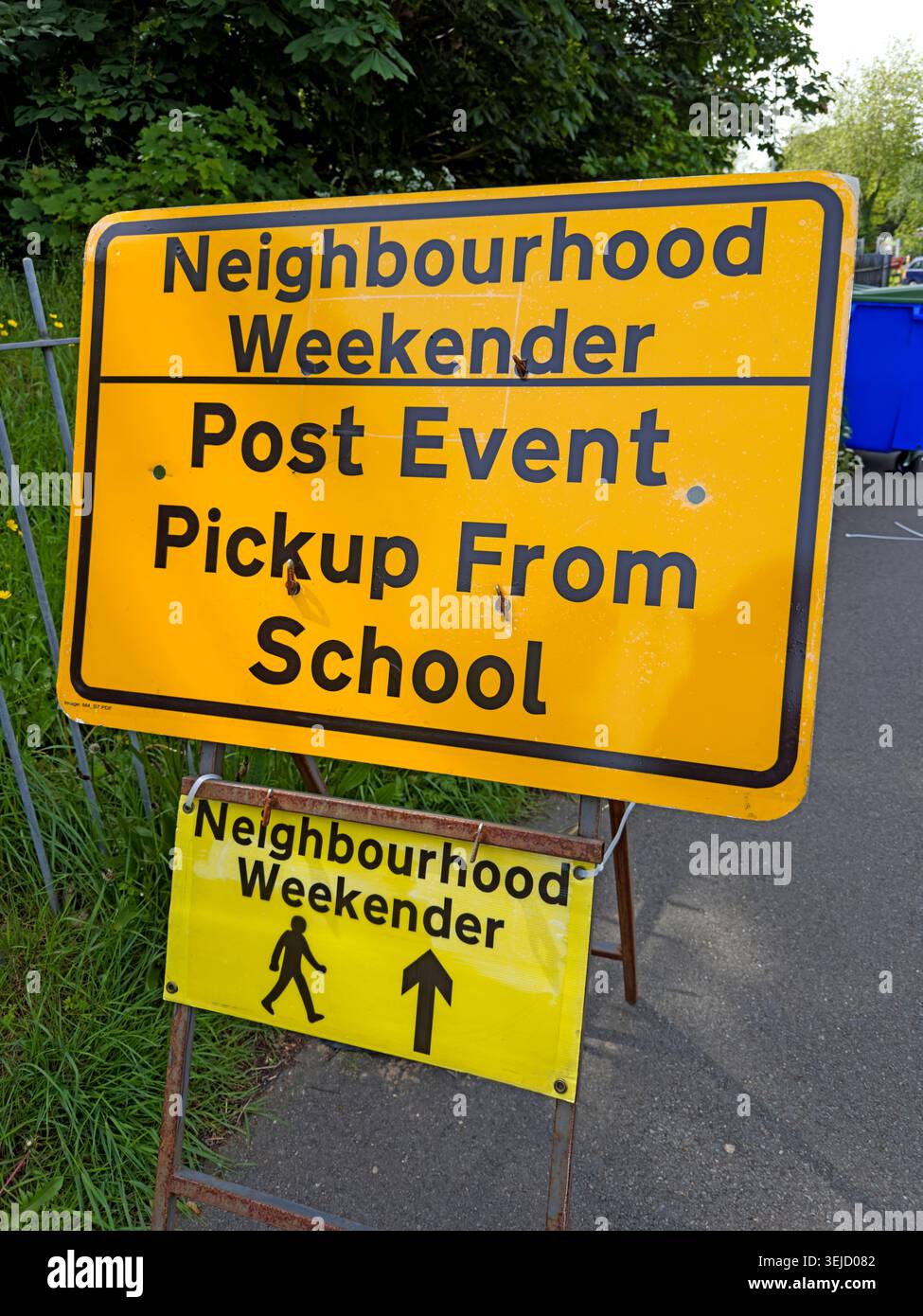
Image details
Contributor:
Tony SmithImage ID:
3EJD082File size:
139.5 MB (3.4 MB Compressed download)Releases:
Model - no | Property - noDo I need a release?Dimensions:
6048 x 8064 px | 51.2 x 68.3 cm | 20.2 x 26.9 inches | 300dpiDate taken:
22 May 2026Location:
Warrington, Cheshire, England, UKMore information:
. Warrington Neighbourhood Weekender post-event school pickup traffic sign, Cheshire, England, UK. Photographed on 22 May 2026. The recorded location is Warrington, Cheshire, England, UK. The temporary yellow road sign gives instructions for festival traffic and directs drivers to a post-event pickup point at a school, with a smaller Neighbourhood Weekender direction sign below. Large outdoor music events require carefully managed arrival and departure arrangements, including designated pickup locations and temporary signage. The background to speed limit is that road signs and traffic controls form a visual history of motoring and highway management; Standardised symbols, speed limits, parking restrictions and direction signs developed as vehicle numbers rose and roads became more complex. Within the history of lettering, wayfinding developed from painted names and fingerposts into standardised road, rail and public-information systems; Local signs still retain distinctive typography or bilingual wording even within increasingly consistent national standards. In relation to local character, historical context shows that place-based photography helps document the relationship between named locations and the people or businesses associated with them, especially where formal architectural records are limited. Current 2026 context around speed limit is that road policy is increasingly contested around speed reduction, active travel, air quality and the balance between vehicle access and safer streets; Twenty-mile-per-hour limits and traffic-calming schemes are especially prominent in local political debate. Against the 2026 backdrop for lettering, current public-realm design increasingly expects signs to be legible, inclusive and consistent, while bilingual and accessibility information reflects wider policy around language and equal access. Relevant alternative phrases include traffic management, 20 mph, street furniture, and road safety.

