
Canal lock in Manchester Gay Village beside Canal Street, Manchester, England, UK.
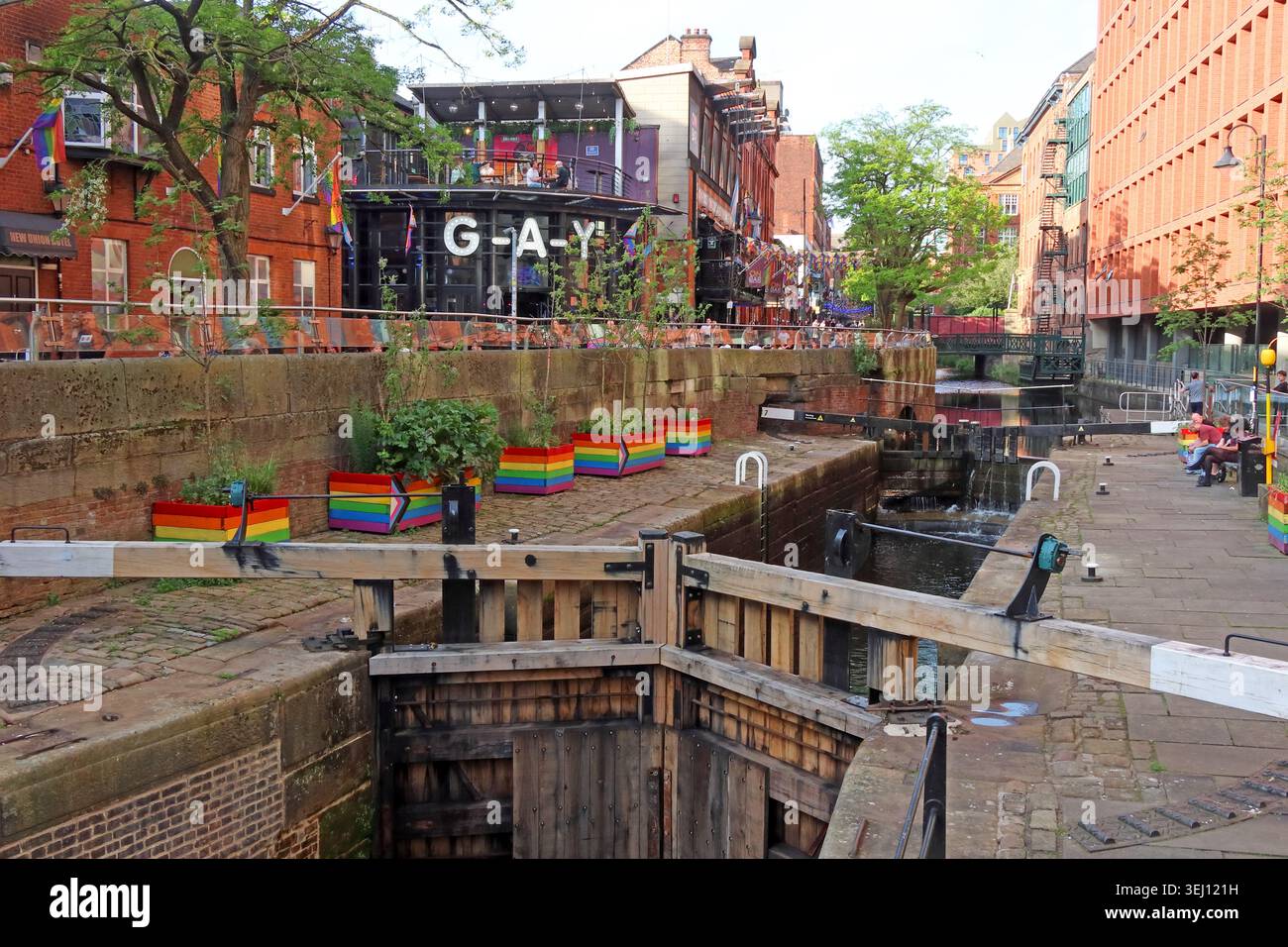
Image details
Contributor:
Tony SmithImage ID:
3EJ121HFile size:
57.1 MB (2.8 MB Compressed download)Releases:
Model - no | Property - noDo I need a release?Dimensions:
5472 x 3648 px | 46.3 x 30.9 cm | 18.2 x 12.2 inches | 300dpiDate taken:
23 May 2026Location:
Manchester Gay Village, Manchester, Greater Manchester, England, UKMore information:
. Canal lock in Manchester Gay Village beside Canal Street, Manchester, England, UK. Photographed on 23 May 2026. The recorded location is Manchester Gay Village, Manchester, Greater Manchester, England, UK. The urban waterway and lock sit among red-brick buildings, bars and public spaces associated with one of Britain's best-known LGBTQ+ districts. Rainbow-painted seating and colourful features add to the distinctive character of the area. The scene shows how historic canal infrastructure has become integrated into a busy entertainment district and can illustrate stories about queer tourism, canal heritage, public realm, nightlife economies, urban regeneration and the changing use of former industrial waterways in modern city centres. The historical setting for inland waterway is that britain's canals were built principally in the eighteenth and early nineteenth centuries to move coal, raw materials and manufactured goods cheaply between industrial districts, ports and growing towns; Locks, basins, bridges and towpaths survive as engineering heritage. Seen through streetscape, the earlier context is that town and neighbourhood images record the accumulation of ordinary change: road layouts, shop names, signage, public art and building uses; Their value increases when compared over decades because apparently minor details can become the clearest evidence of transformation. For political history, the historical context is that political photographs gain meaning over time as candidates, parties and constitutional debates change; A routine campaign scene can later become evidence of a turning point, an unsuccessful candidacy or a movement that developed further. In the 2026 discussion of inland waterway, the condition and funding of ageing waterway infrastructure remain recurring issues, while canals are valued for navigation, walking, cycling, biodiversity and urban regeneration as well as heritage.

