
Latchford Railway Viaduct over the Bridgewater Canal at Thelwall, Warrington, Cheshire, England, UK.
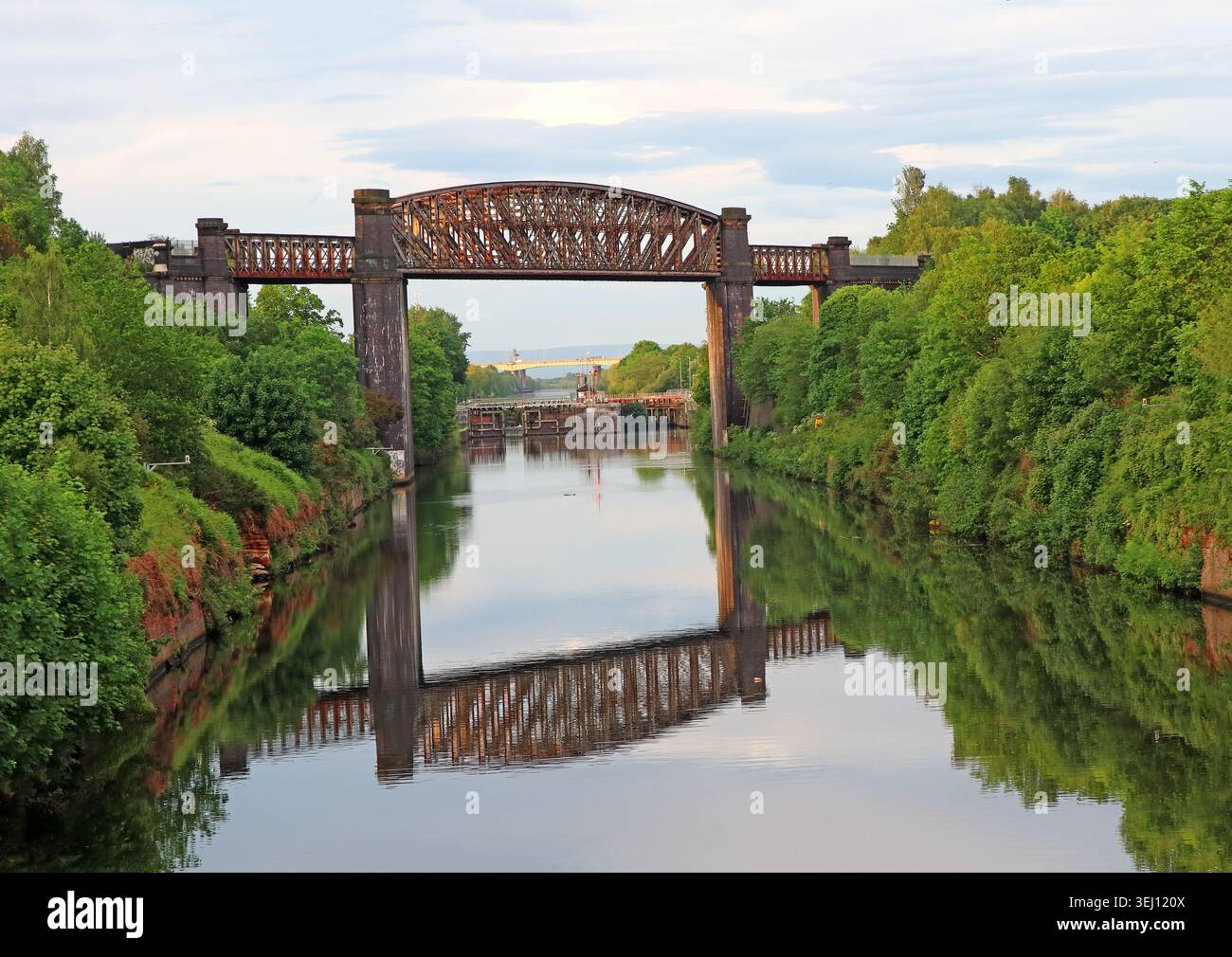
Image details
Contributor:
Tony SmithImage ID:
3EJ120XFile size:
62.1 MB (2.9 MB Compressed download)Releases:
Model - no | Property - noDo I need a release?Dimensions:
5536 x 3920 px | 46.9 x 33.2 cm | 18.5 x 13.1 inches | 300dpiDate taken:
21 May 2026Location:
Thelwall, Warrington, Cheshire, England, UKMore information:
. Latchford Railway Viaduct over the Bridgewater Canal at Thelwall, Warrington, Cheshire, England, UK. Photographed on 21 May 2026. The historic iron railway structure spans the calm waterway between mature green trees, with its reflection visible in the canal below. The combination of former railway infrastructure and canal landscape reflects the transport and industrial history of the area. For railway station, the historical context is that stations are both functional transport interchanges and pieces of civic architecture; Their canopies, footbridges, booking halls, signal boxes and signage reveal how passenger expectations and railway technology changed from steam-era operation to today's increasingly digital network. Looking at local landmark, the longer history is that local place names and small landmarks can be as significant to community history as nationally famous buildings; Streets, neighbourhood businesses and informal attractions offer reference points that may vanish during redevelopment or rebranding. The background to waterway infrastructure is that canal infrastructure is a legacy of the Industrial Revolution, when navigable waterways linked mines, mills, factories and ports; The same lock chambers and towpaths now support leisure cruising, walking, cycling, wildlife and waterside redevelopment. For railway station, the 2026 context is that rail policy is especially topical because the Railways Bill is progressing with the intention of establishing Great British Railways as the publicly owned directing mind for track, stations, timetables and passenger services; Earlier operator branding and station scenes therefore gain added historical context during another major restructuring of the industry. In 2026, local landmark remains relevant because current place-making policy increasingly emphasises distinctive local identity rather than generic development, so small landmarks and community businesses can become significant parts of how.

