
Alexander Hardcastle bust at Villa Aurea in the Valley of the Temples, Agrigento, Sicily, Italy, frontal view.
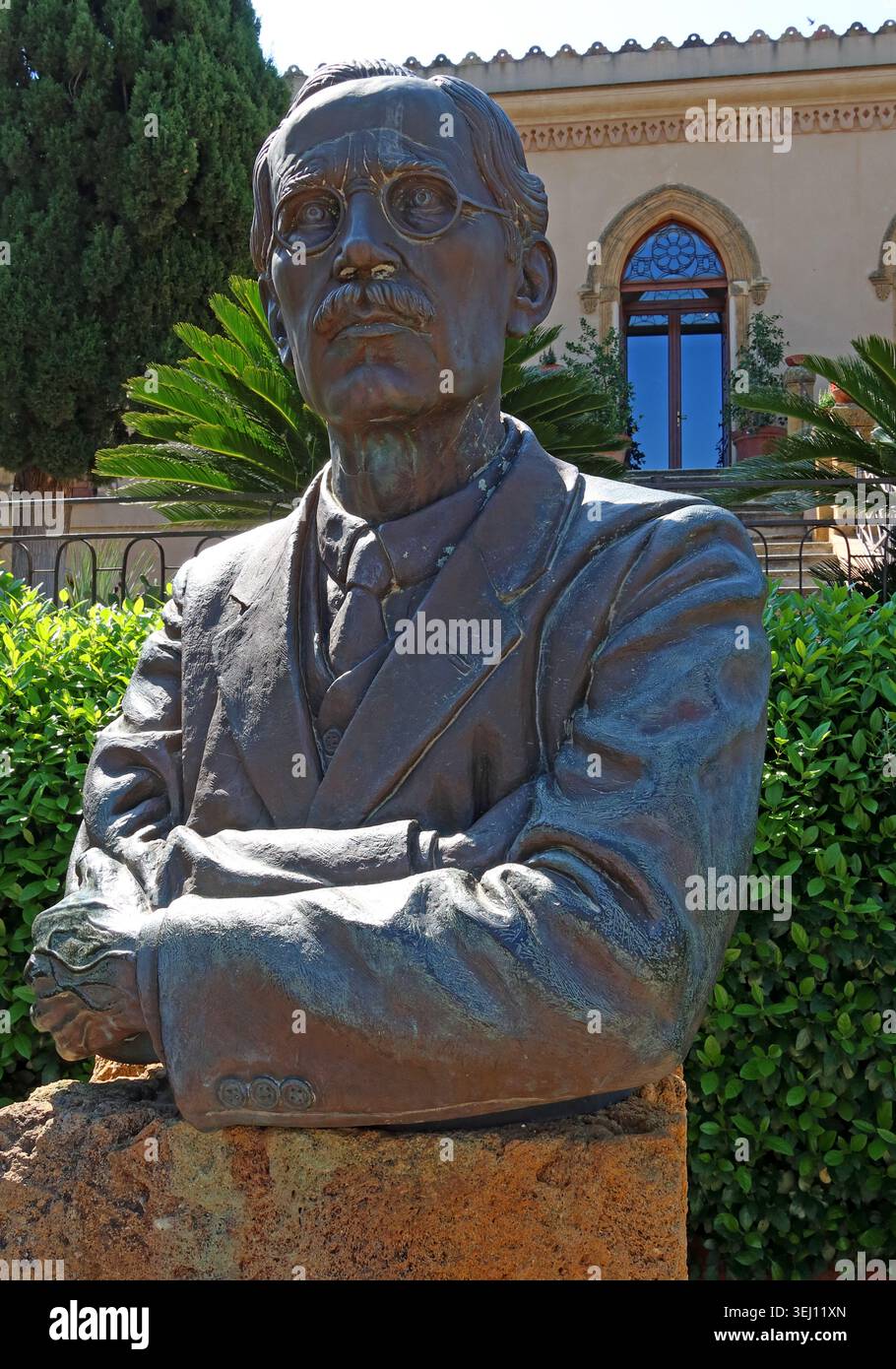
Image details
Contributor:
Tony SmithImage ID:
3EJ11XNFile size:
54.4 MB (2.6 MB Compressed download)Releases:
Model - no | Property - noDo I need a release?Dimensions:
3648 x 5208 px | 30.9 x 44.1 cm | 12.2 x 17.4 inches | 300dpiDate taken:
20 April 2026Location:
Villa Aurea, Valley of the Temples, Agrigento, Sicily, ItalyMore information:
. Alexander Hardcastle bust at Villa Aurea in the Valley of the Temples, Agrigento, Sicily, Italy, frontal view. Photographed on 20 April 2026. The recorded location is Villa Aurea, Valley of the Temples, Agrigento, Sicily, Italy. The bronze memorial portrays the British archaeologist and benefactor closely associated with conservation and archaeological work at ancient Akragas during the early twentieth century. The sculpture stands amid Mediterranean planting beside Villa Aurea, close to the Temple of Concordia. The clear daylight portrait provides a useful visual for features about foreign scholars who contributed to preserving Sicily's ancient Greek remains and the continuing interpretation of the archaeological park for visitors. Seen through street art, the earlier context is that street art and murals are especially valuable as temporary cultural evidence because they may be painted over or lost during redevelopment; Photographs preserve both the artwork and its relationship with the surrounding neighbourhood. For stained glass, the historical context is that churches combine worship with architecture, local memory and centuries of community history; Stonework, stained glass, memorials, furnishings and churchyards often record successive periods of rebuilding, Victorian restoration, local benefactors and family history. The 2026 relevance of street art comes from the fact that contemporary street art continues to blur the line between unofficial expression, commissioned mural and tourist attraction; Images are therefore relevant to urban culture, creative industries, heritage interpretation and place-making. For stained glass, the 2026 context is that many historic churches face the practical challenge of maintaining listed fabric while remaining active community buildings, visitor attractions and venues for worship, music and local events; Conservation, heating costs and new uses are therefore part of the modern story of these ancient places.

