
Pillars Bar stained glass windows dated 1864 in Dundee, Scotland, UK.
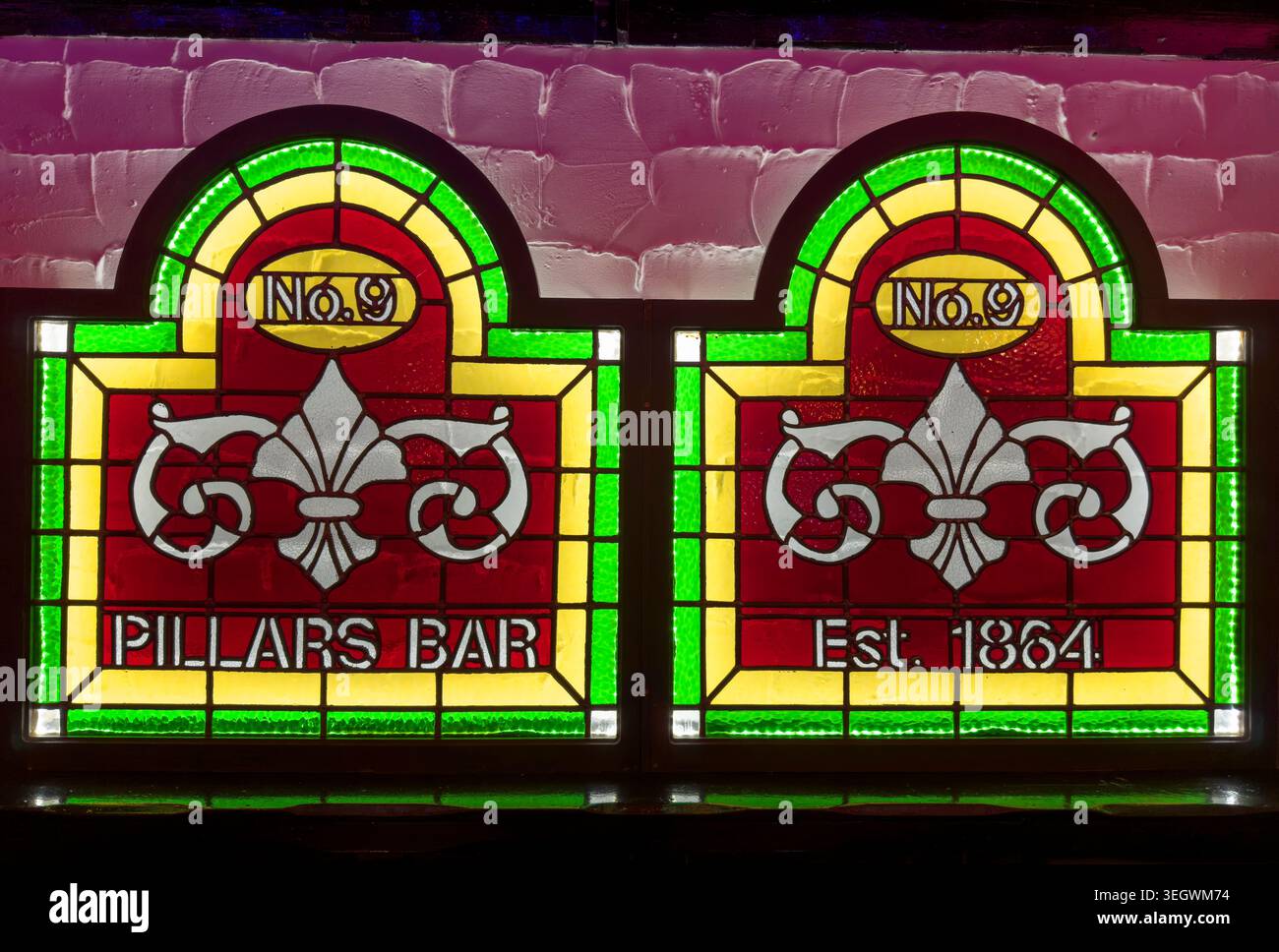
Image details
Contributor:
Tony SmithImage ID:
3EGWM74File size:
83 MB (2.5 MB Compressed download)Releases:
Model - no | Property - noDo I need a release?Dimensions:
6551 x 4427 px | 55.5 x 37.5 cm | 21.8 x 14.8 inches | 300dpiDate taken:
17 March 2025Location:
Dundee, Scotland, UK.More information:
. Pillars Bar stained glass windows dated 1864 in Dundee, Scotland, UK. Photographed on 17 March 2025. The decorative twin panels use vivid red, green and yellow glass and incorporate the wording PILLARS BAR and Est. 1864, framed by ornate motifs and geometric borders. Traditional pub stained glass is an important surviving element of nineteenth-century commercial design and often provides distinctive local identity. The close-up image clearly records the craftsmanship, lettering and colour of the panels and can illustrate stories about pub conservation, historic hospitality, traditional bars and the preservation of decorative features in long-established Scottish drinking venues. In relation to ecclesiastical architecture, historical context shows that churches combine worship with architecture, local memory and centuries of community history; Stonework, stained glass, memorials, furnishings and churchyards often record successive periods of rebuilding, Victorian restoration, local benefactors and family history. For the story of hostelry, it is useful to note that beer culture links agriculture, brewing, distribution and the licensed trade; Cask-conditioned ale, handpumps, brewery branding and pub interiors became especially significant to the real-ale revival from the 1970s onwards, while later craft brewing introduced new styles and independent producers. As of 2026, the position for ecclesiastical architecture is that many historic churches face the practical challenge of maintaining listed fabric while remaining active community buildings, visitor attractions and venues for worship, music and local events; Conservation, heating costs and new uses are therefore part of the modern story of these ancient places. For present-day hostelry, 2026 is significant because pub survival remains a live issue as energy, staffing, taxation and changing drinking habits affect the licensed trade; Historic and contemporary pub images therefore have relevance to.

