
Very wide view inside Leeds Corn Exchange, a Grade I listed Cuthbert Brodrick landmark now used for indie shopping.
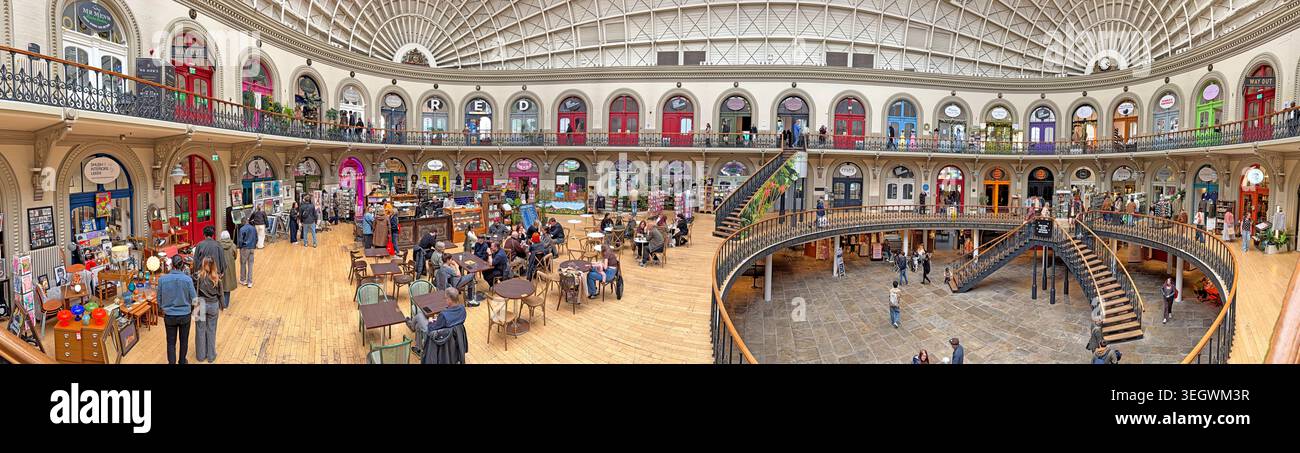
Image details
Contributor:
Tony SmithImage ID:
3EGWM3RFile size:
121.2 MB (7.5 MB Compressed download)Releases:
Model - no | Property - noDo I need a release?Dimensions:
12301 x 3444 px | 104.1 x 29.2 cm | 41 x 11.5 inches | 300dpiDate taken:
16 May 2026Location:
Leeds Corn Exchange, Call Lane, Leeds, West Yorkshire, LS1 7BRMore information:
Very wide panoramic interior view of Leeds Corn Exchange, showing the sweeping oval shopping hall, domed glazed roof, circular balconies, arched shopfronts, colourful doors, independent retailers, cafe seating and visitors inside one of Leeds city centre’s most distinctive Victorian landmarks. The image is useful for editorial coverage of alternative retail, independent shops, heritage shopping, city centre regeneration, adaptive reuse, Victorian architecture, Yorkshire tourism, Leeds visitor attractions and the continuing reinvention of historic commercial buildings. Leeds Corn Exchange was designed by Cuthbert Brodrick, the architect also associated with Leeds Town Hall, and was built between 1861 and 1863 for the viewing and trading of corn. Historic England lists the building as Grade I and records its oval plan, two storeys over a basement, partly glazed dome roof, semi-circular and elliptical iron ribs, balcony access and cast-iron railings. The original design was shaped by the need to bring in clear northern light so merchants could inspect grain samples accurately, making the roof, plan and interior arrangement practical as well as dramatic. Today the building functions as a boutique retail and leisure destination, with small shops, creative businesses, food and drink uses, events and casual seating replacing its original agricultural trading role. This panorama captures the building’s scale and symmetry better than a tighter view, showing how the upper galleries, shop units and central floor work together as a public interior. It can illustrate stories about retail diversity, high street change, independent business, heritage conservation, Leeds architecture, urban tourism, reuse of listed buildings and the shift from nineteenth-century commodity trading to twenty-first-century shopping and leisure. The soft interior light, busy seating areas and colourful shopfronts give the photograph a lively but architectural feel, making it suitable for travel, planni

