
Historic Votes for Women sash in the purple, white and green colours of the Pankhurst-led British suffragette movement
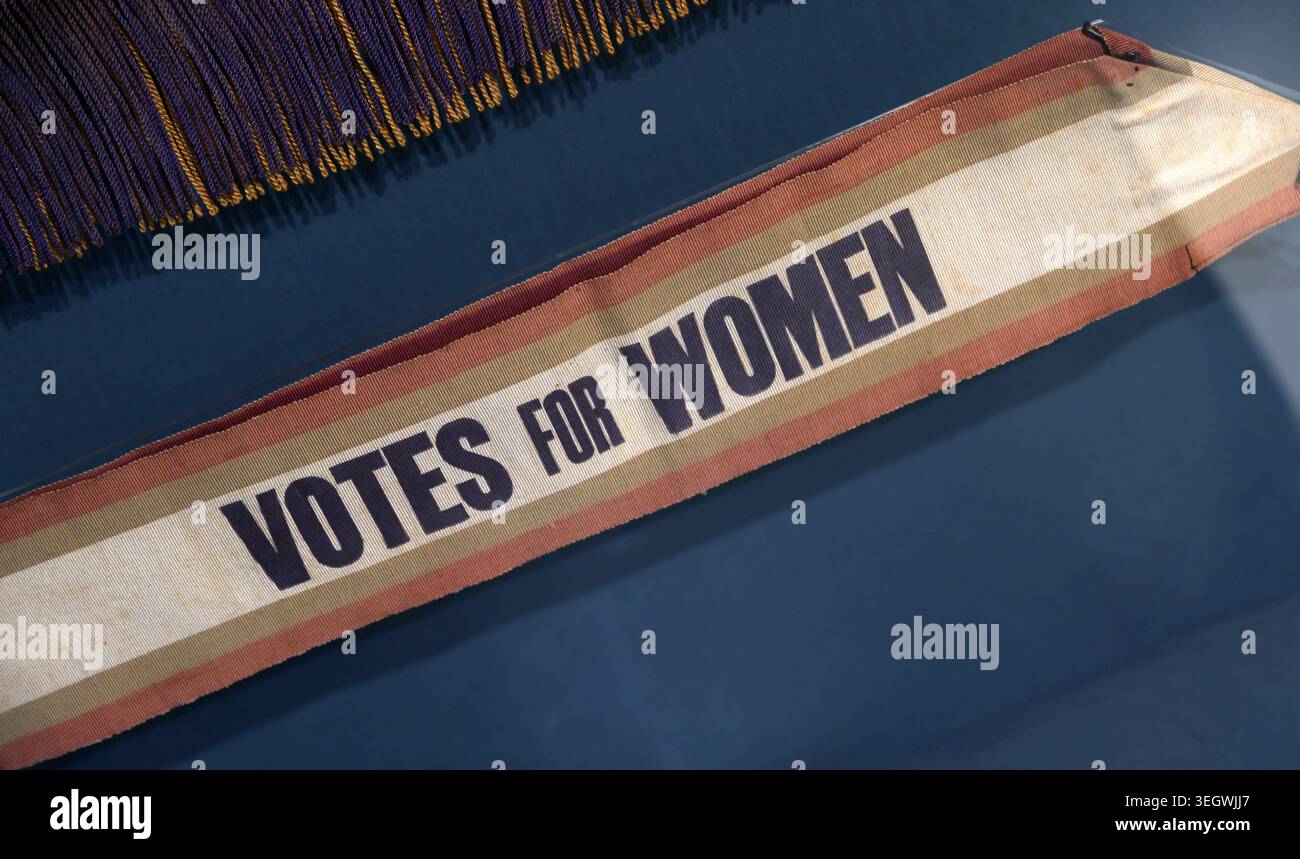
Image details
Contributor:
Tony SmithImage ID:
3EGWJJ7File size:
113.7 MB (4.5 MB Compressed download)Releases:
Model - no | Property - noDo I need a release?Dimensions:
8192 x 4852 px | 69.4 x 41.1 cm | 27.3 x 16.2 inches | 300dpiDate taken:
16 May 2026Location:
Westminster, London, EnglandMore information:
“Votes for Women” campaign sash displayed as an object associated with the British suffragette movement and the struggle to secure women’s voting rights. Bold black lettering is printed across a pale central band bordered by coloured stripes, with a dark purple fringe visible above it. Purple, white and green became the distinctive colours of the Women’s Social and Political Union, commonly known as the WSPU. Sashes in this colour scheme were worn by supporters at demonstrations, processions, meetings and other public events. Their strong visual identity helped campaigners communicate a united political message while attracting attention in streets, meeting halls and newspaper photographs. The WSPU was founded in Manchester in 1903 by Emmeline Pankhurst and other campaigners. Led by Pankhurst and closely associated with her daughters Christabel and Sylvia, it adopted the slogan “Deeds, not words” and pursued more confrontational tactics than many constitutional suffrage organisations. Its members became widely known as suffragettes. Campaign clothing, banners, badges, scarves and other merchandise transformed political activism into a recognisable public brand. Wearing a Votes for Women sash enabled campaigners to identify themselves visibly with the cause, while the sale of campaign goods also helped organisations raise funds. Such objects therefore combined propaganda, personal commitment, fundraising and fashion. The sash should not be described as having been personally worn by Emmeline Pankhurst unless its provenance confirms that association. It is more accurately presented as a Pankhurst-era suffragette sash or an object connected with the Pankhurst-led WSPU movement. Some British women gained the parliamentary vote through the Representation of the People Act 1918, although eligibility was restricted principally to women aged 30 and over who met specified property qualifications. Equal voting rights with men followed in 1928.

