
Mike Nelson M62 East West artwork on display in Leeds, West Yorkshire, England, UK.
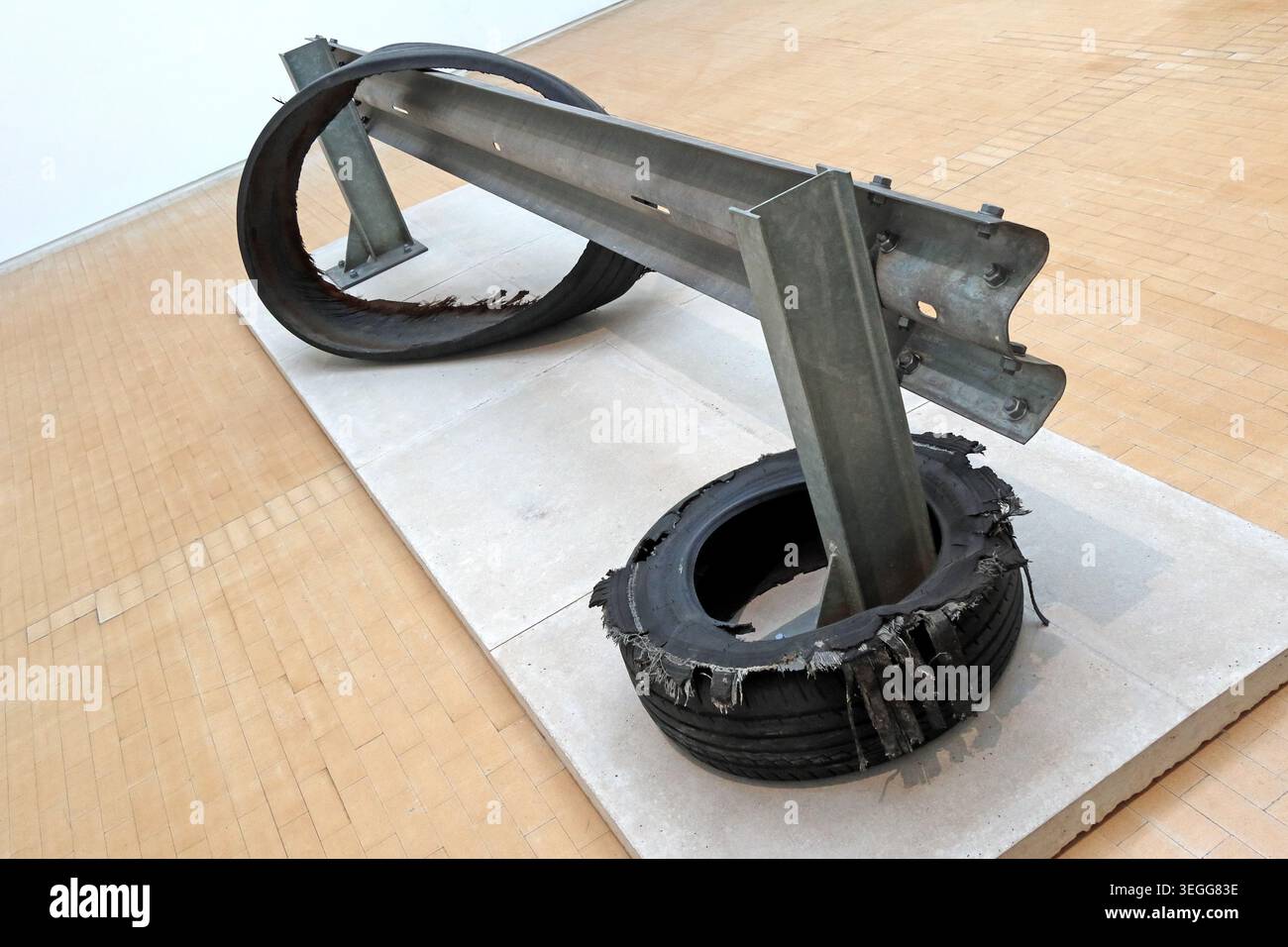
Image details
Contributor:
Tony SmithImage ID:
3EGG83EFile size:
57.1 MB (1.9 MB Compressed download)Releases:
Model - no | Property - noDo I need a release?Dimensions:
5472 x 3648 px | 46.3 x 30.9 cm | 18.2 x 12.2 inches | 300dpiDate taken:
16 May 2026Location:
Leeds, West Yorkshire, England, UKMore information:
. Mike Nelson M62 East West artwork on display in Leeds, West Yorkshire, England, UK. Photographed on 16 May 2026. The sculptural object combines dark metal components, circular forms and a robust industrial appearance, reflecting the artist's interest in found materials, constructed environments and objects carrying traces of use and history. The title M62 East West evokes the motorway crossing northern England and adds a regional dimension to the work. The historical setting for sculpture is that public art turns streets and buildings into records of local culture; Murals, statues and memorial sculpture can commemorate people and events, celebrate industry, respond to politics or simply enliven public space, while materials and style often identify a particular era. Seen through mill, the earlier context is that factories, mills, mines and workshops record the technologies and labour that powered industrial expansion; Machinery, inscriptions and specialist buildings are valuable evidence of engineering practice, working conditions and regional industries. For archive research, the historical context is that public libraries expanded during the nineteenth and twentieth centuries as part of civic education, later adding computers, events and digital services while retaining their role as shared community space. In the 2026 discussion of sculpture, public art is closely connected with regeneration, tourism, identity and debate about representation; Murals and sculptures can become visitor landmarks while also prompting discussion about whose past is visible in public space. The 2026 relevance of mill comes from the fact that former industrial sites continue to be repurposed for housing, offices and cultural attractions; Historic machinery and surviving fabric therefore illustrate both deindustrialisation and current debates about adaptive reuse, local identity and heritage-led regeneration.

