
Dig for Victory British wartime propaganda poster encouraging home food production during the Second World War.
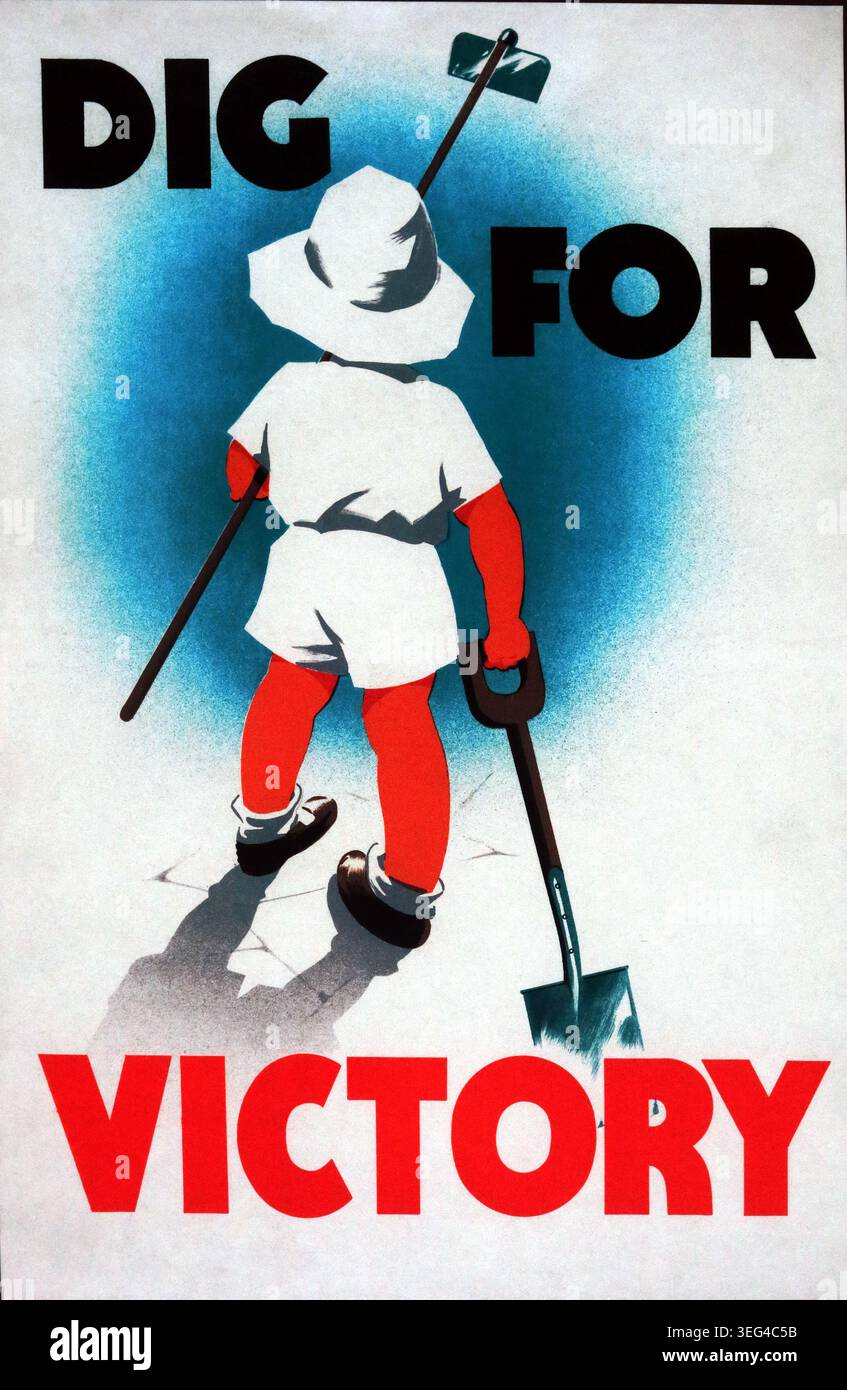
Image details
Contributor:
Tony SmithImage ID:
3EG4C5BFile size:
39.8 MB (1.9 MB Compressed download)Releases:
Model - no | Property - noDo I need a release?Dimensions:
3012 x 4620 px | 25.5 x 39.1 cm | 10 x 15.4 inches | 300dpiDate taken:
2 May 2026Location:
United KingdomMore information:
. Dig for Victory British wartime propaganda poster encouraging home food production during the Second World War. Photographed on 2 May 2026. The recorded location is United Kingdom. The striking design shows a stylised figure digging with a spade beneath the bold words DIG FOR VICTORY, one of the best-known slogans associated with Britain's wartime food campaign. The campaign encouraged households to cultivate gardens, parks and allotments to increase domestic food supplies while imports were threatened by enemy action. The poster remains an instantly recognisable symbol of wartime self-sufficiency and can illustrate stories about rationing, food security, public information, morale and everyday life in Britain during World War Two. For the story of ingredients, it is useful to note that restaurants, street vendors and domestic dishes illustrate migration and cultural exchange as much as appetite; Foods once considered specialist can become familiar through travel, supermarkets and changing urban populations. The historical setting for war museum is that first-aid dressings, gas-mask warnings and recruitment graphics illustrate different sides of wartime preparation: battlefield medicine, civil defence and the effort to persuade civilians or volunteers to take action. Seen through election, the earlier context is that election material, protest signs and campaign imagery preserve the language of politics as it was presented to voters at the time; Posters, slogans and public meetings can reveal local issues and political identities more directly than later summaries. For present-day ingredients, 2026 is significant because hospitality and food retail continue to adapt to higher costs, delivery platforms and changing diets, making older restaurant and product images valuable evidence of consumer trends. Its associated themes also include morale, food culture, cuisine, hospitality, restaurant, and street food.

