
1966 FIFA World Cup tickets for Goodison Park, Liverpool, and Wembley Stadium, including quarter-final, semi-final and final tie.
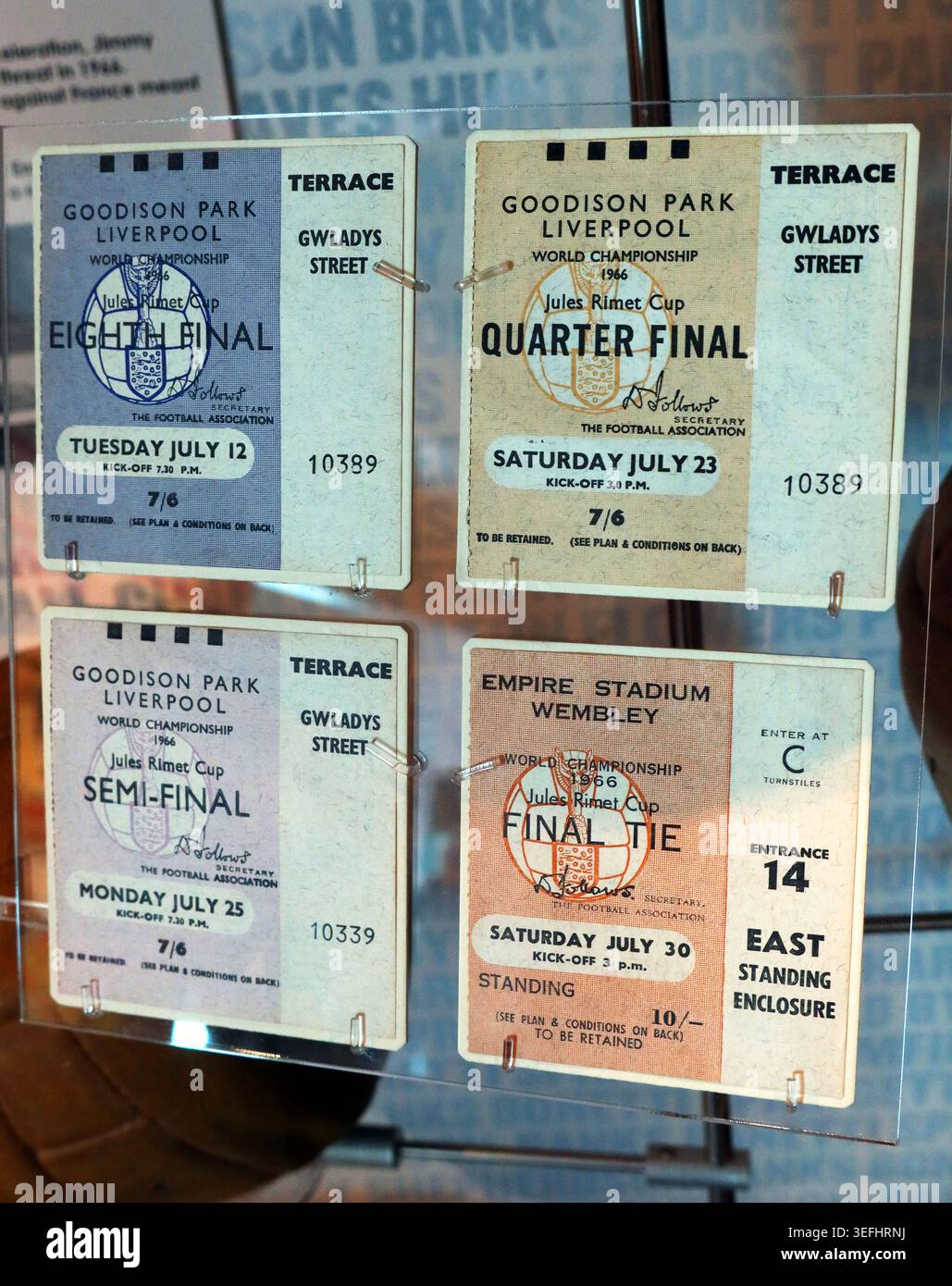
Image details
Contributor:
Tony SmithImage ID:
3EFHRNJFile size:
48.1 MB (2.5 MB Compressed download)Releases:
Model - no | Property - noDo I need a release?Dimensions:
3648 x 4608 px | 30.9 x 39 cm | 12.2 x 15.4 inches | 300dpiDate taken:
25 September 2023Location:
Wembley Stadium, London, HA9 0WSMore information:
1966 FIFA World Cup ticket stubs displayed together, including Goodison Park tickets for matches in Liverpool and a Wembley Stadium final tie ticket from Saturday 30 July 1966. The visible Goodison Park tickets include an eighth-final group-stage ticket for Tuesday 12 July, a quarter-final ticket for Saturday 23 July and a semi-final ticket for Monday 25 July, all marked for the Gwladys Street terrace at Everton’s historic ground. The display also includes an Empire Stadium Wembley ticket for the World Championship Jules Rimet Cup final tie, with East standing enclosure and entrance details printed on the stub. These small paper objects are valuable football ephemera from the tournament England hosted and won, beating West Germany 4-2 after extra time at Wembley. Goodison Park was one of the major provincial venues of the 1966 World Cup, staging Brazil v Bulgaria on 12 July, Portugal v Korea DPR on 23 July and West Germany v Soviet Union on 25 July. The quarter-final became one of the tournament’s great matches, as Korea DPR took a shock 3-0 lead before Portugal won 5-3 with Eusébio central to the comeback. The tickets are useful for editorial coverage of football history, Everton, Goodison Park, Wembley, England 1966, World Cup memorabilia, sports collecting, historic paper ephemera, stadium heritage, tournament organisation and the culture of match-going before digital ticketing. Their printed prices, terrace labels, turnstile information, paper wear, punched holes and display mounting all add strong archival value. The image can also illustrate nostalgia for Goodison Park, the changing economics of football, standing terraces, 1960s sports design, football tourism and the enduring mythology of England’s only men’s World Cup victory. It is especially relevant as Goodison Park’s long football story gives way to Everton’s new stadium era.

