
Vintage Deutschland v England match programme from 14 May 1938 at Berlin’s Olympiastadion, where England won 6-3.
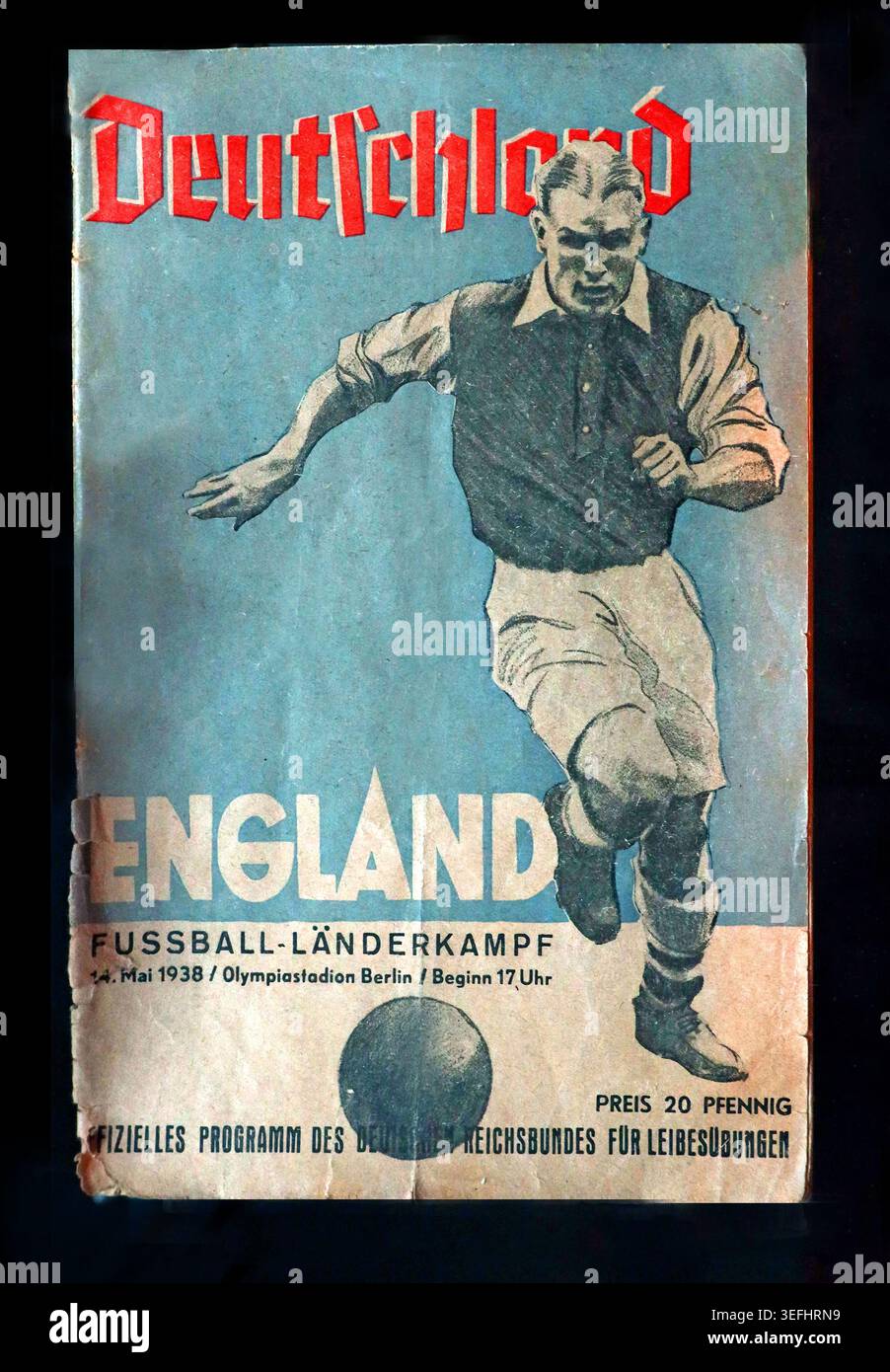
Image details
Contributor:
Tony SmithImage ID:
3EFHRN9File size:
35 MB (1.8 MB Compressed download)Releases:
Model - no | Property - noDo I need a release?Dimensions:
2914 x 4196 px | 24.7 x 35.5 cm | 9.7 x 14 inches | 300dpiDate taken:
25 September 2023Location:
Olympischer Platz 3, 14053 Berlin, GermanyMore information:
Vintage Germany v England football programme for the international friendly played at the Olympiastadion in Berlin on 14 May 1938, shortly before the outbreak of the Second World War. The blue cover reads “Deutschland England” and “Fussball-Länderkampf”, with a running footballer illustration and German match details for the Berlin Olympic Stadium. The fixture has a dark place in football history because it is remembered not only for England’s 6-3 win, but for the political symbolism surrounding the occasion in Nazi Germany. The DFB match record confirms Germany lost 3-6 to England at the Olympiastadion, while contemporary and later accounts describe the game as being watched by a huge crowd and overshadowed by the England players being instructed to give the Nazi salute before kick-off. The match is often discussed in the context of appeasement, sport as propaganda, football diplomacy and the misuse of international sporting events by authoritarian regimes. England’s scorers included Cliff Bastin, Jackie Robinson, Frank Broome, Stanley Matthews and Len Goulden, and the result became one of the most striking pre-war meetings between the two national sides. The programme is useful for editorial coverage of football memorabilia, historic match programmes, 1930s sport, Germany England rivalry, political pressure on athletes, Nazi propaganda, British foreign policy, interwar Europe, the Football Association, the German Football Association and the relationship between sport and state power. As an object, it also has collector interest, showing period typography, pre-war graphic design, official sporting ephemera and a 20 pfennig printed price. The photographed programme appears worn and aged, with creases, edge damage and surface marks adding archival character. It is suitable for serious historical, documentary, sporting and political features, especially where the image needs to convey how an apparently ordinary football fixture became entangled with one of the most t

