
The Vintage Scene neon sign at 118-120 Rose Street in Edinburgh city centre, Scotland, UK.
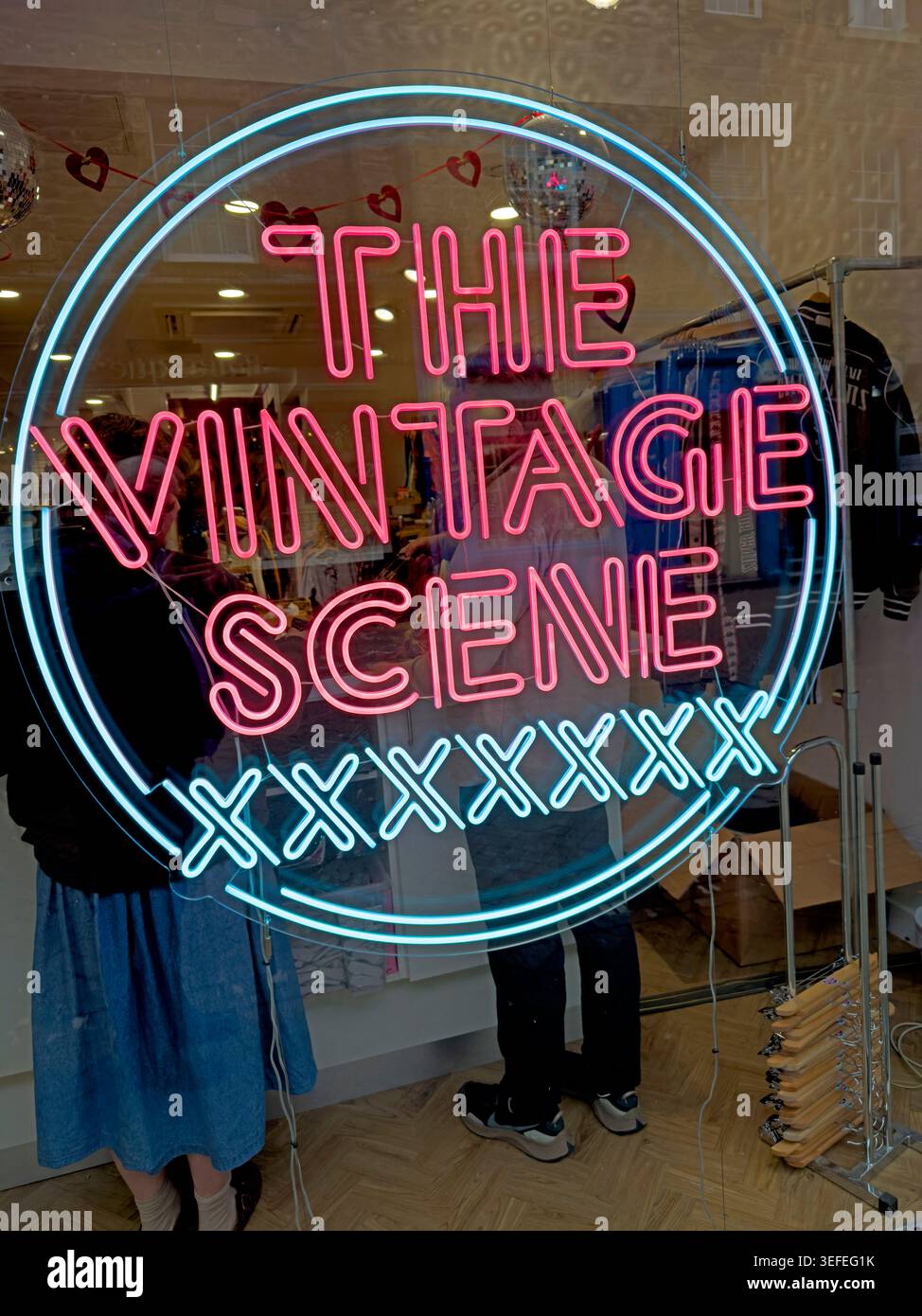
Image details
Contributor:
Tony SmithImage ID:
3EFEG1KFile size:
127.9 MB (3.1 MB Compressed download)Releases:
Model - no | Property - noDo I need a release?Dimensions:
5790 x 7720 px | 49 x 65.4 cm | 19.3 x 25.7 inches | 300dpiDate taken:
7 March 2024Location:
118-120 Rose Street, Edinburgh, Scotland, UKMore information:
. The Vintage Scene neon sign at 118-120 Rose Street in Edinburgh city centre, Scotland, UK. Photographed on 7 March 2024. The recorded location is 118-120 Rose Street, Edinburgh, Scotland, UK. The circular illuminated sign glows in pink, blue and turquoise lettering against an interior wall, creating a bold retro-style visual associated with vintage fashion, design and second-hand retail. Neon signage has become a popular way for independent retailers and lifestyle businesses to create distinctive visual identities and social-media-friendly interiors. For the story of bilingual signage, it is useful to note that temporary and permanent notices are valuable social-history evidence because they capture the rules and assumptions of a particular moment, from parking and access to opening times, safety and public-service instructions. The historical setting for material culture is that clothing and accessories are precise markers of fashion history; Fabric, colour, width, pattern and construction can identify an era even when the wearer is absent, making small objects such as ties useful records of changing male dress. Seen through commercial premises, the earlier context is that small businesses have long adapted existing premises to changing consumer demand, adding signs, windows and interiors that make each period visually distinct; Their survival is closely tied to footfall, rents, local competition and the wider fortunes of the town centre. For present-day bilingual signage, 2026 is significant because current public-realm design increasingly expects signs to be legible, inclusive and consistent, while bilingual and accessibility information reflects wider policy around language and equal access. In the 2026 discussion of material culture, formal office dress is less universal than it was in previous decades, giving vintage ties and traditional menswear additional relevance to stories about changing workplace culture, resale and retro fashion.

