
Ozzy the Bull mechanical sculpture inside Birmingham New Street station, Birmingham, England, UK.
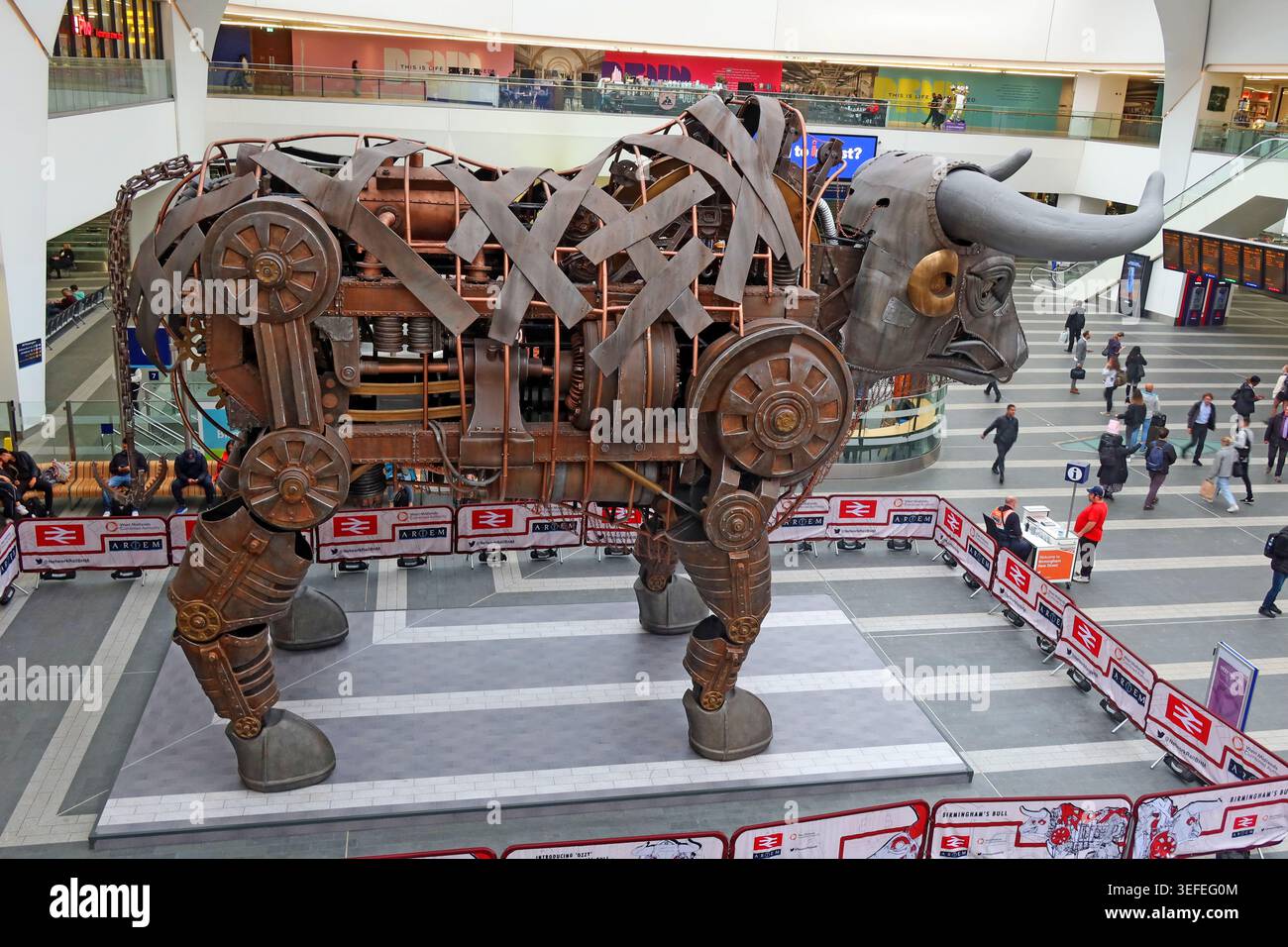
Image details
Contributor:
Tony SmithImage ID:
3EFEG0MFile size:
57.1 MB (2.2 MB Compressed download)Releases:
Model - no | Property - noDo I need a release?Dimensions:
5472 x 3648 px | 46.3 x 30.9 cm | 18.2 x 12.2 inches | 300dpiDate taken:
2 October 2023Location:
Birmingham New Street station, Birmingham, West Midlands, England, UKMore information:
. Ozzy the Bull mechanical sculpture inside Birmingham New Street station, Birmingham, England, UK. Photographed on 2 October 2023. The recorded location is Birmingham New Street station, Birmingham, West Midlands, England, UK. The large metal bull stands in the station concourse with exposed gears, articulated bodywork and dramatic industrial detailing, drawing attention from passengers and visitors. The sculpture originated from the Birmingham 2022 Commonwealth Games opening ceremony and was later given a permanent home in the city. The striking construction can illustrate stories about cultural legacy, engineering, public sculpture, visitor attractions and Birmingham's use of the bull as a civic symbol. For cultural identity, the historical context is that monuments and civic artworks are part of the visual history of place; Their subjects reveal whom a community chose to celebrate, while later reinterpretation or controversy can evolution the meaning of an apparently permanent object. Looking at commuter travel, the longer history is that stations are both functional transport interchanges and pieces of civic architecture; Their canopies, footbridges, booking halls, signal boxes and signage reveal how passenger expectations and railway technology changed from steam-era operation to today's increasingly digital network. For cultural identity, the 2026 context is that public art is closely connected with regeneration, tourism, identity and debate about representation; Murals and sculptures can become visitor landmarks while also prompting discussion about whose history is visible in public space. In 2026, commuter travel remains relevant because rail reform, fares, accessibility and passenger information remain central issues as government develops the Great British Railways model; Photographs of stations, trains and earlier operating equipment can illustrate both current public transport and the rapid disappearance of previous brands and systems.

