
Karen's Diner neon sign and retro seating in Birmingham, West Midlands, England, UK.
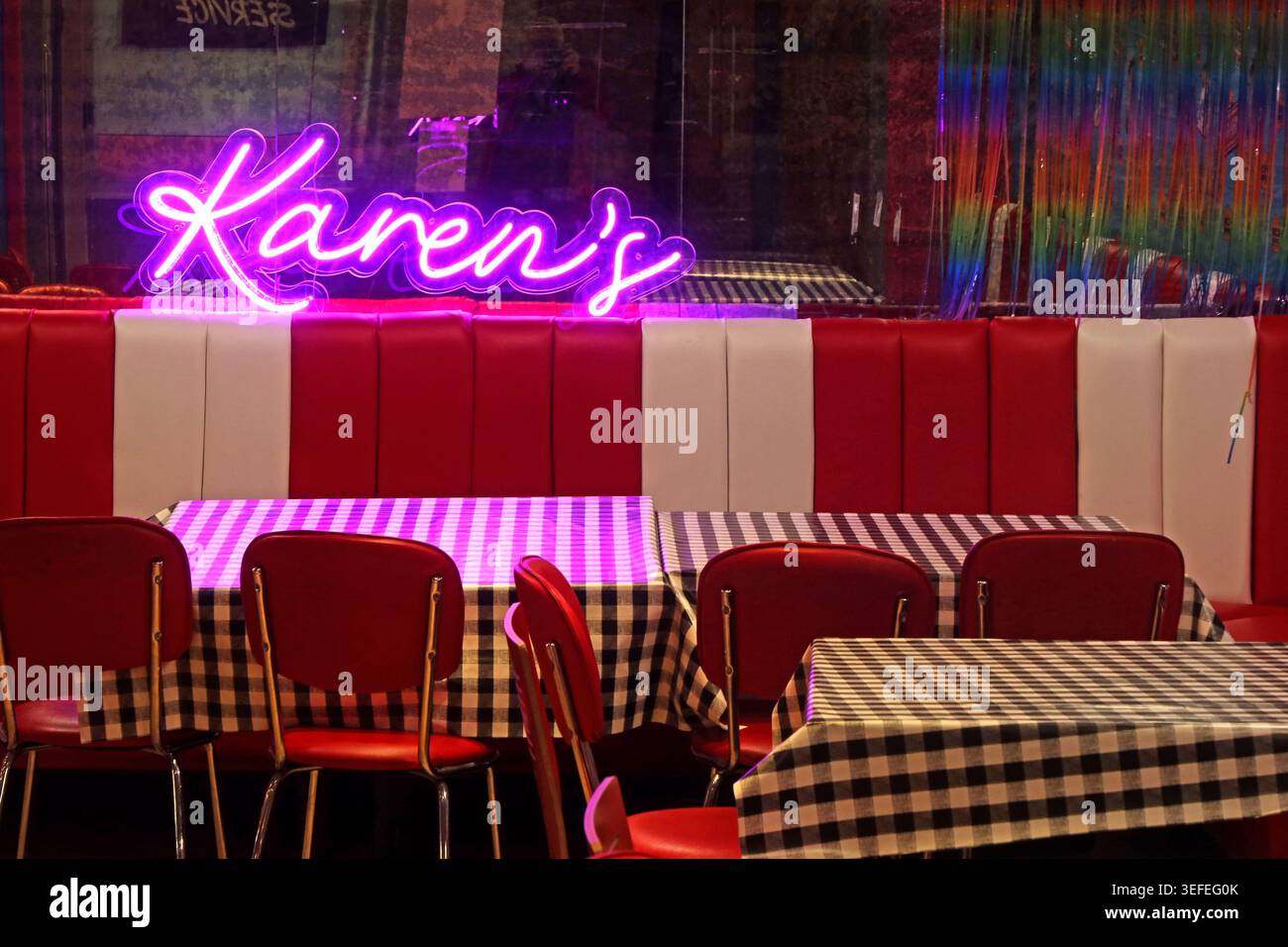
Image details
Contributor:
Tony SmithImage ID:
3EFEG0KFile size:
57.1 MB (1.7 MB Compressed download)Releases:
Model - no | Property - noDo I need a release?Dimensions:
5472 x 3648 px | 46.3 x 30.9 cm | 18.2 x 12.2 inches | 300dpiDate taken:
2 October 2023Location:
Birmingham, West Midlands, England, UKMore information:
. Karen's Diner neon sign and retro seating in Birmingham, West Midlands, England, UK. Photographed on 2 October 2023. The bright pink illuminated Karen's sign hangs above red-and-white striped booth seating and black-and-white checked tablecloths, creating a deliberately nostalgic American-diner style interior. Karen's Diner became known for its deliberately rude-service concept in which staff play exaggerated characters as part of the entertainment. Looking at public realm, the longer history is that temporary and permanent notices are valuable social-history evidence because they capture the rules and assumptions of a particular moment, from parking and access to opening times, safety and public-service instructions. The background to local services is that local businesses offer unusually precise social-history evidence because names, branding and uses change more quickly than the buildings they occupy; A shop, café, pub or service company can disappear while the façade survives, leaving photographs as a record of the previous commercial life of the street. Within the history of design history, graphic design turns practical information into a visual object; Typefaces, layout and printing methods can identify a period or brand, while small paper items preserve prices, slogans and events that may otherwise leave little physical trace. In 2026, public realm remains relevant because current public-realm design increasingly expects signs to be legible, inclusive and consistent, while bilingual and accessibility information reflects wider policy around language and equal access. Current 2026 context around local services is that independent and high-street businesses continue to face pressure from costs, online competition and changing consumer habits, while councils increasingly treat local commerce, food and leisure as part of town-centre regeneration. Other useful descriptive phrases include signage, public information, wayfinding, and direction sign.

