
Hymn Numbers , Wigan Parish Church, Wigan, England, UK.
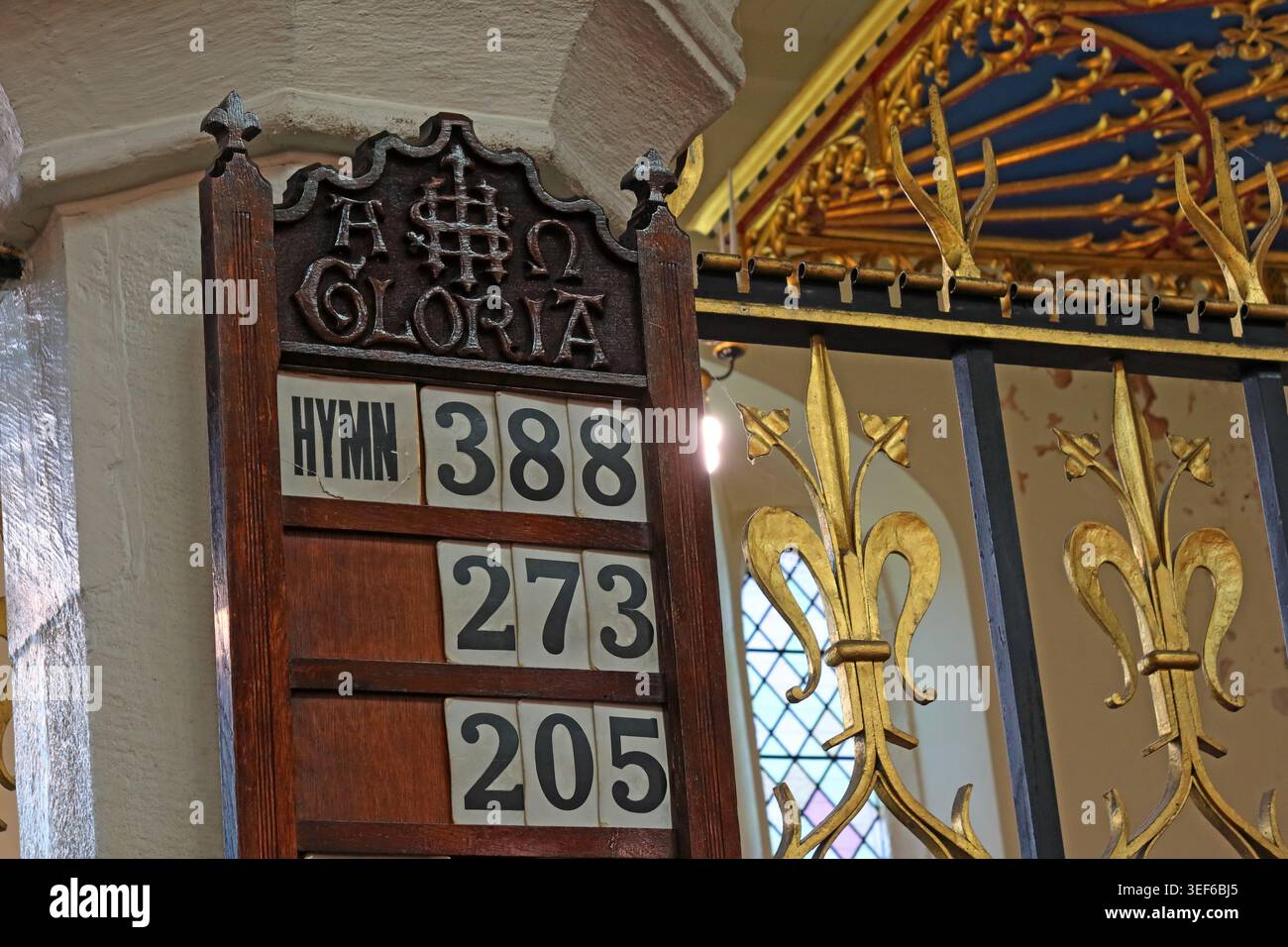
Image details
Contributor:
Tony SmithImage ID:
3EF6BJ5File size:
57.1 MB (2.2 MB Compressed download)Releases:
Model - no | Property - noDo I need a release?Dimensions:
5472 x 3648 px | 46.3 x 30.9 cm | 18.2 x 12.2 inches | 300dpiDate taken:
6 May 2026Location:
Wigan, Greater Manchester, England, UKMore information:
. Hymn Numbers , Wigan Parish Church, Wigan, England, UK. Photographed on 6 May 2026. The recorded location is Wigan, Greater Manchester, England, UK. For the story of historic fabric, it is useful to note that parish churches and cathedrals are among Britain's richest sources of architectural and social history; Medieval fabric, later chapels, organs, altars, monuments and inscriptions can coexist within a single building, revealing generations of craftsmanship and evolving liturgy. The historical setting for place identity is that place-based photography helps document the relationship between named locations and the people or businesses associated with them, especially where formal architectural records are limited. Seen through reading room, the earlier context is that libraries, museums and archives developed as civic institutions for preserving knowledge, objects and local records; Reading rooms, catalogues and display cases reveal how public access to information changed before digitisation transformed research. For present-day historic fabric, 2026 is significant because historic places of worship remain important not only for faith but also for tourism, music, community use and local identity; Images of interiors, memorials and churchyards can support stories about conservation, heritage skills and the continuing reuse of sacred buildings. In the 2026 discussion of place identity, regeneration, housing growth and evolving high streets continue to alter many British towns, giving well-located photographs practical relevance for local-history comparison. Additional discoverability terms include ecclesiastical architecture, Christian heritage, sacred art, religious symbolism, stained glass, church interior, place of worship, architectural conservation, local history, faith community, religious heritage, townscape, streetscape, and community history. Related search language includes local landmark, neighbourhood, urban change, and local character.

