
Wigan Central Tap, Wigan, England, UK.
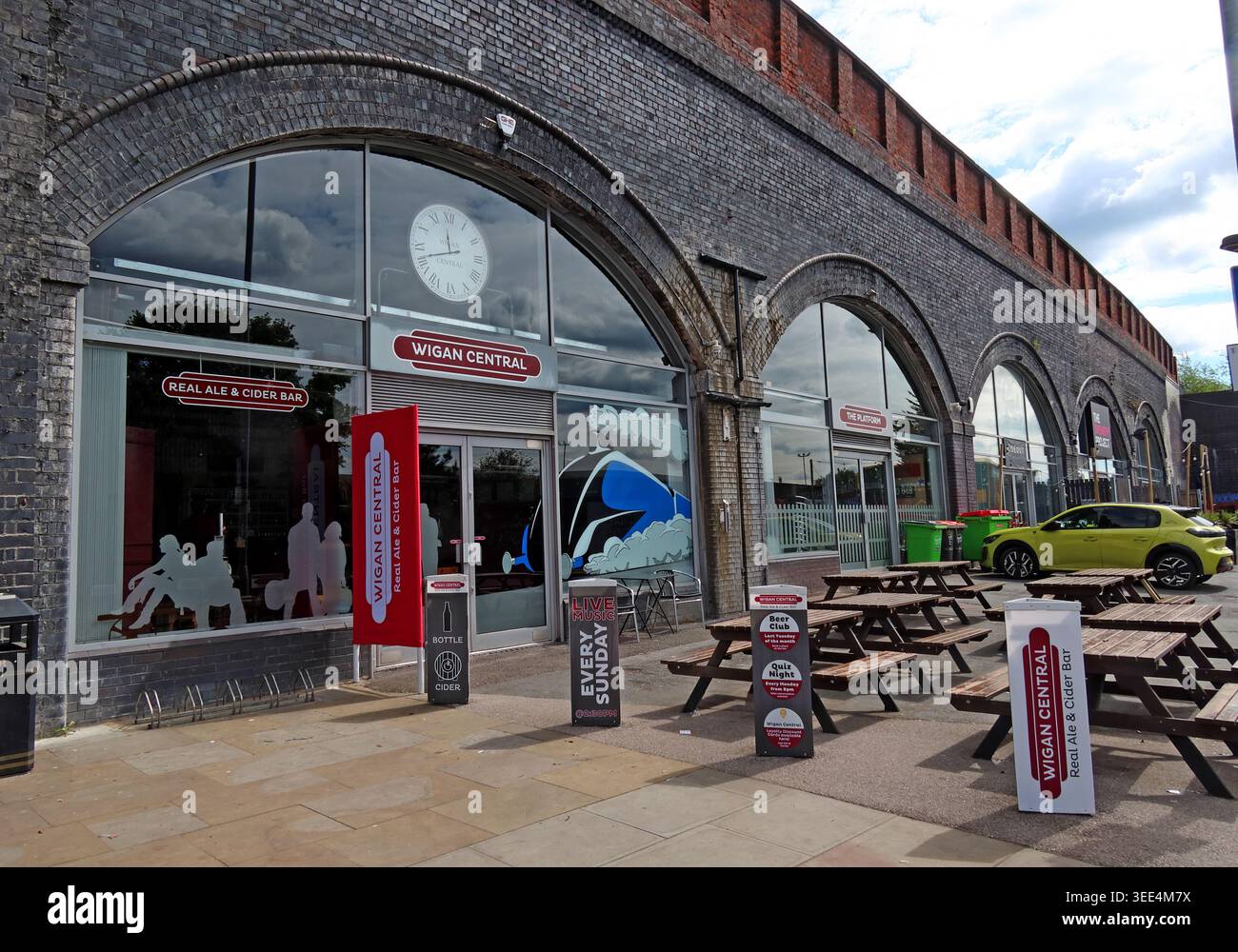
Image details
Contributor:
Tony SmithImage ID:
3EE4M7XFile size:
54.4 MB (2.4 MB Compressed download)Releases:
Model - no | Property - noDo I need a release?Dimensions:
5208 x 3648 px | 44.1 x 30.9 cm | 17.4 x 12.2 inches | 300dpiDate taken:
6 May 2026Location:
Wigan, Greater Manchester, England, UKMore information:
. Wigan Central Tap, Wigan, England, UK. Photographed on 6 May 2026. The recorded location is Wigan, Greater Manchester, England, UK. For the story of local history, it is useful to note that local place names and small landmarks can be as significant to community history as nationally famous buildings; Streets, neighbourhood businesses and informal attractions offer reference points that may vanish during redevelopment or rebranding. The historical setting for independent business is that small businesses have long adapted existing premises to changing consumer demand, adding signs, windows and interiors that make each period visually distinct; Their survival is closely tied to footfall, rents, local competition and the wider fortunes of the town centre. Seen through real ale, the earlier context is that public houses form a distinctive strand of British social history; Coaching routes, tied brewery estates, Victorian urban growth and twentieth-century leisure each shaped the location and appearance of pubs, many of which later became restaurants, shops, housing or community assets. For present-day local history, 2026 is significant because current place-making policy increasingly emphasises distinctive local identity rather than generic development, so small landmarks and community businesses can become significant parts of how an area is represented. In the 2026 discussion of independent business, independent and high-street businesses continue to face pressure from costs, online competition and changing consumer habits, while councils increasingly treat local commerce, food and leisure as part of town-centre regeneration. Closely connected keywords include place identity, townscape, streetscape, local landmark, urban change, local character, public realm, historic comparison, local heritage, local business, high street, commercial premises, shopfront, local economy, business signage, and retail and leisure.

