
Who Made The Rules, purple neon sign, England, UK.
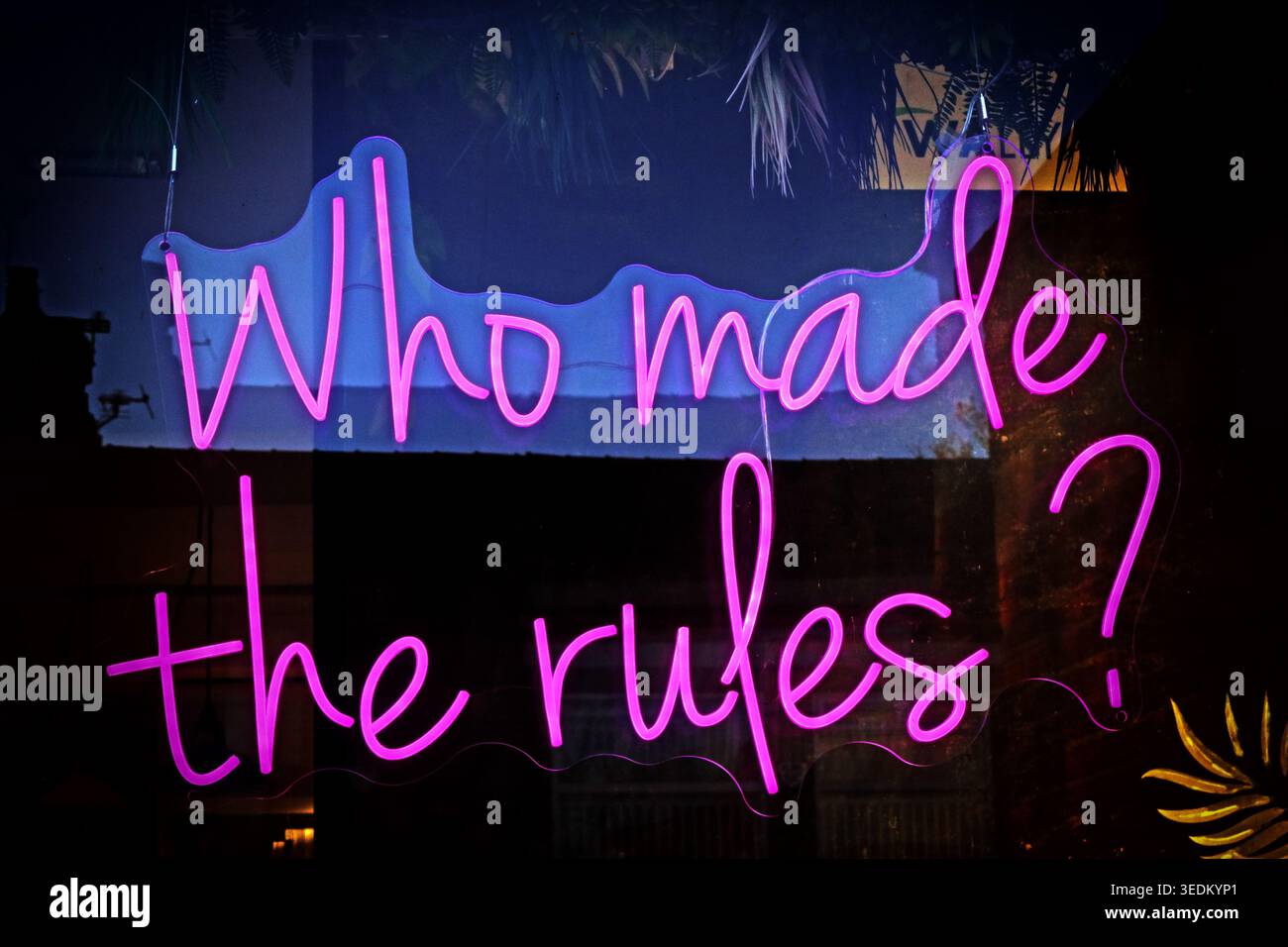
Image details
Contributor:
Tony SmithImage ID:
3EDKYP1File size:
57.1 MB (1.8 MB Compressed download)Releases:
Model - no | Property - noDo I need a release?Dimensions:
5472 x 3648 px | 46.3 x 30.9 cm | 18.2 x 12.2 inches | 300dpiDate taken:
18 April 2026Location:
England, UKMore information:
. Who Made The Rules, purple neon sign, England, UK. Photographed on 18 April 2026. Within the history of signage, signs are functional pieces of graphic design that organise movement and communicate rules, names or destinations; Lettering, symbols, colours and materials can date public space as clearly as architecture, particularly when organisations rebrand or regulations change. In relation to comic, historical context shows that graphic design turns practical information into a visual object; Typefaces, layout and printing methods can identify a period or brand, while small paper items preserve prices, slogans and events that may otherwise leave little physical trace. Against the 2026 backdrop for signage, current public-realm design increasingly expects signs to be legible, inclusive and consistent, while bilingual and accessibility information reflects wider policy around language and equal access. As of 2026, the position for comic is that much ticketing, advertising and personal communication is digital, making older printed ephemera increasingly distinctive evidence of pre-digital consumer life. Further subject-specific language includes public information, wayfinding, direction sign, street sign, notice, typography, public realm, visitor guidance, information sign, bilingual signage, accessibility sign, graphic communication, street furniture, poster, voucher, stamp, and print history. Additional high-relevance terminology includes consumer culture, paper artefact, retro design, manual, visual communication, collectable, design history, IMG_0069, culture, music, heritage, local, urban, and tourism. For the story of lettering, it is useful to note that signs are functional pieces of graphic design that organise movement and communicate rules, names or destinations; Lettering, symbols, colours and materials can date public space as clearly as architecture, particularly when organisations rebrand or regulations change.

