
Solar photovoltaic panels fitted to a suburban semi-detached house in Warrington, Cheshire, England.
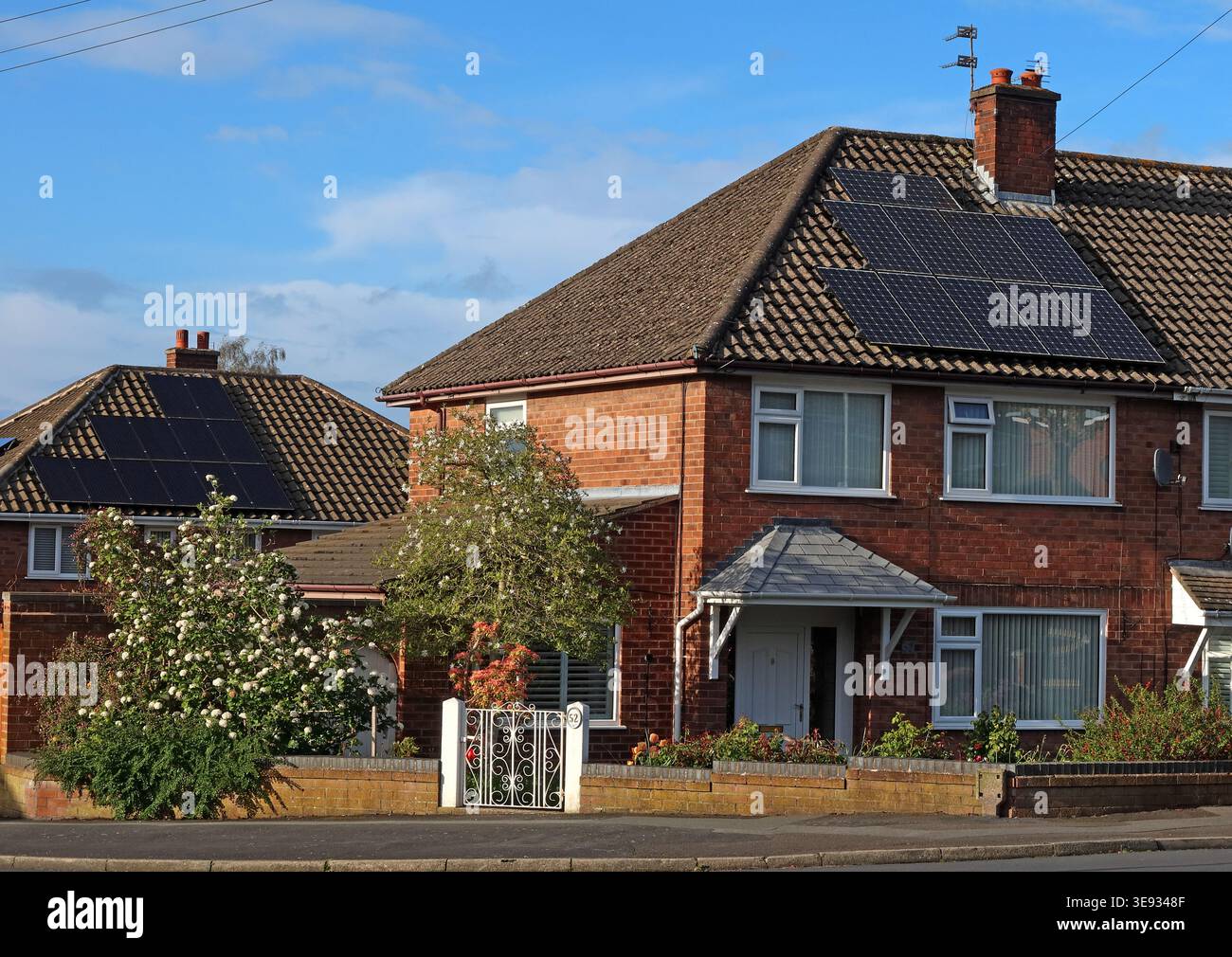
Image details
Contributor:
Tony SmithImage ID:
3E9348FFile size:
53.8 MB (3 MB Compressed download)Releases:
Model - no | Property - noDo I need a release?Dimensions:
5152 x 3648 px | 43.6 x 30.9 cm | 17.2 x 12.2 inches | 300dpiDate taken:
11 April 2026Location:
Warrington, Cheshire, England, UKMore information:
. A suburban semi-detached house in Warrington, Cheshire, with a small array of roof-mounted solar photovoltaic panels installed on the front roof slope. The image shows how domestic solar generation has become part of the ordinary British streetscape, added to an existing brick-built home rather than designed into a new development. Photovoltaic modules convert daylight directly into electricity, allowing householders to use some of the power on site and, where suitable metering and tariffs are in place, export surplus generation to the grid. The installation also illustrates the practical constraints of retrofit: available roof area, orientation, shading, roof condition and the position of chimneys all influence the size and layout of an array. In UK housing, rooftop solar has increasingly been associated with efforts to reduce purchased electricity, improve energy performance and cut operational carbon emissions. It can be installed alongside other measures such as loft and wall insulation, efficient heating controls, heat pumps, battery storage and electric-vehicle charging, although the economics and carbon benefit vary by property and household demand. The scene is useful as a straightforward record of small-scale renewable energy on an established home, contrasting traditional tiled roofs, brick construction and front gardens with modern electricity-generating technology. It also reflects the wider move toward decentralised generation, where millions of individual buildings can contribute small amounts of low-carbon power instead of relying solely on large central power stations. The modest number of panels is also significant: not every household system covers an entire roof, and older installations often reflect the budget, technology and incentive arrangements available when they were fitted. Small arrays are also relevant to debates about payback periods, export tariffs and whether solar should be added during wider roof or insulation work.

