
National Brownfield Institute at the University of Wolverhampton Springfield Campus, Wolverhampton, England.
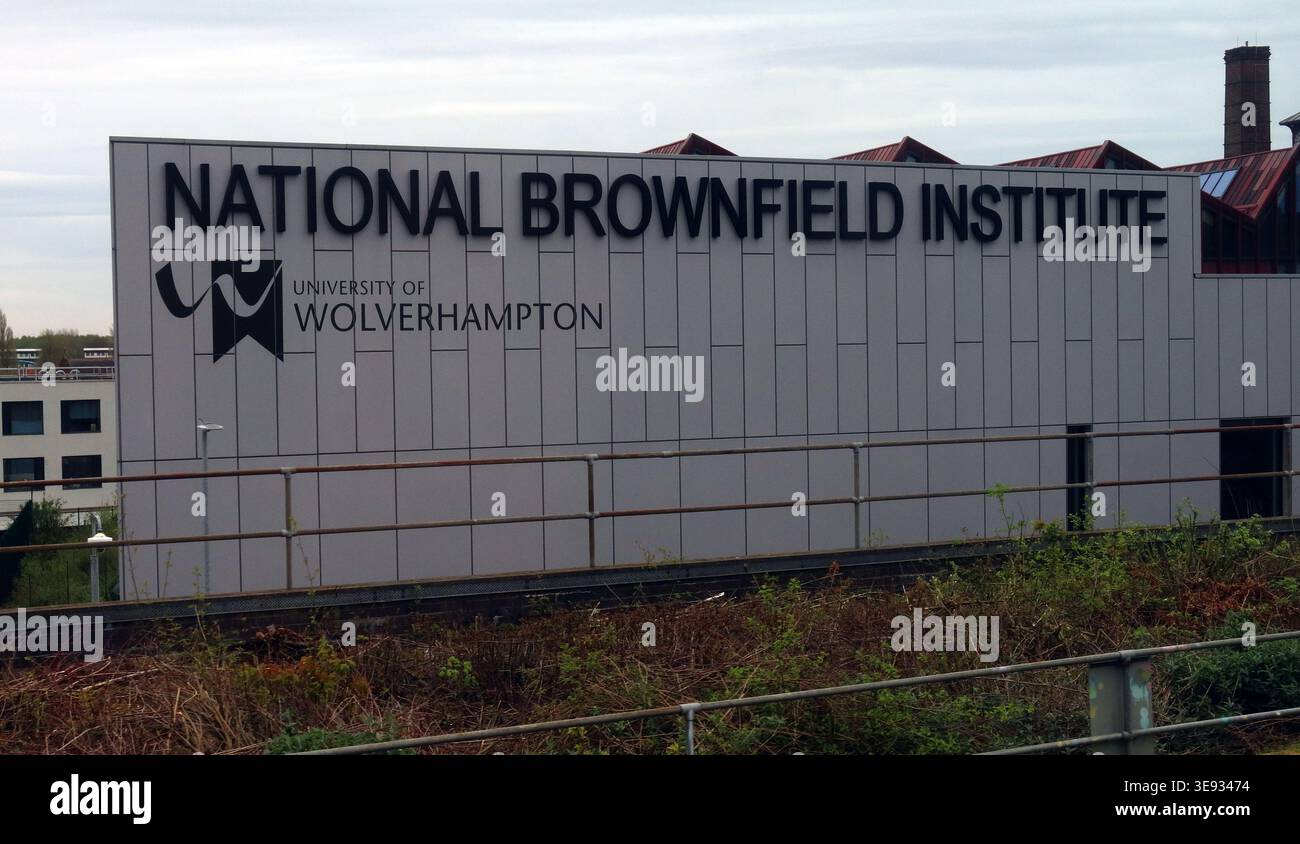
Image details
Contributor:
Tony SmithImage ID:
3E93474File size:
49.7 MB (2.1 MB Compressed download)Releases:
Model - no | Property - noDo I need a release?Dimensions:
5472 x 3176 px | 46.3 x 26.9 cm | 18.2 x 10.6 inches | 300dpiDate taken:
9 April 2026Location:
National Brownfield Institute, Springfield Campus, Wolverhampton WV10 0JR, England, UKMore information:
. The National Brownfield Institute at the University of Wolverhampton's Springfield Campus, a specialist research and innovation facility focused on the reuse and regeneration of previously developed land. Brownfield sites can include former industrial, commercial or infrastructure land where redevelopment is complicated by contamination, demolition, ground conditions, fragmented ownership or the cost of making land suitable for new use. The institute was created to bring research, technology, policy and industry practice together around those problems, with particular relevance to housing supply, urban regeneration and sustainable construction. The University states that the institute was supported by government investment and officially opened in September 2022 at Springfield, its major built-environment campus close to Wolverhampton city centre. The wider Springfield project transformed a large former brewery site into a centre for architecture, construction and related disciplines, making the location itself an example of brownfield reuse. Research at the institute covers methods of investigating and remediating land, construction innovation, environmental performance and the practical barriers that can prevent difficult sites being brought back into productive use. This matters in places such as the West Midlands, where industrial heritage has left substantial areas of previously developed land alongside strong demand for new homes and employment space. The photograph records the institute's clearly signed exterior and places a nationally focused regeneration facility within the physical landscape it was established to study. Brownfield regeneration is central to debates about meeting housing need without placing all new development on undeveloped countryside. Bringing previously used land back into circulation can support compact urban growth, but only when technical risks, abnormal costs and infrastructure constraints are understood.

