
equestrian statue of Vmara Peres in Porto, near Porto Cathedral.
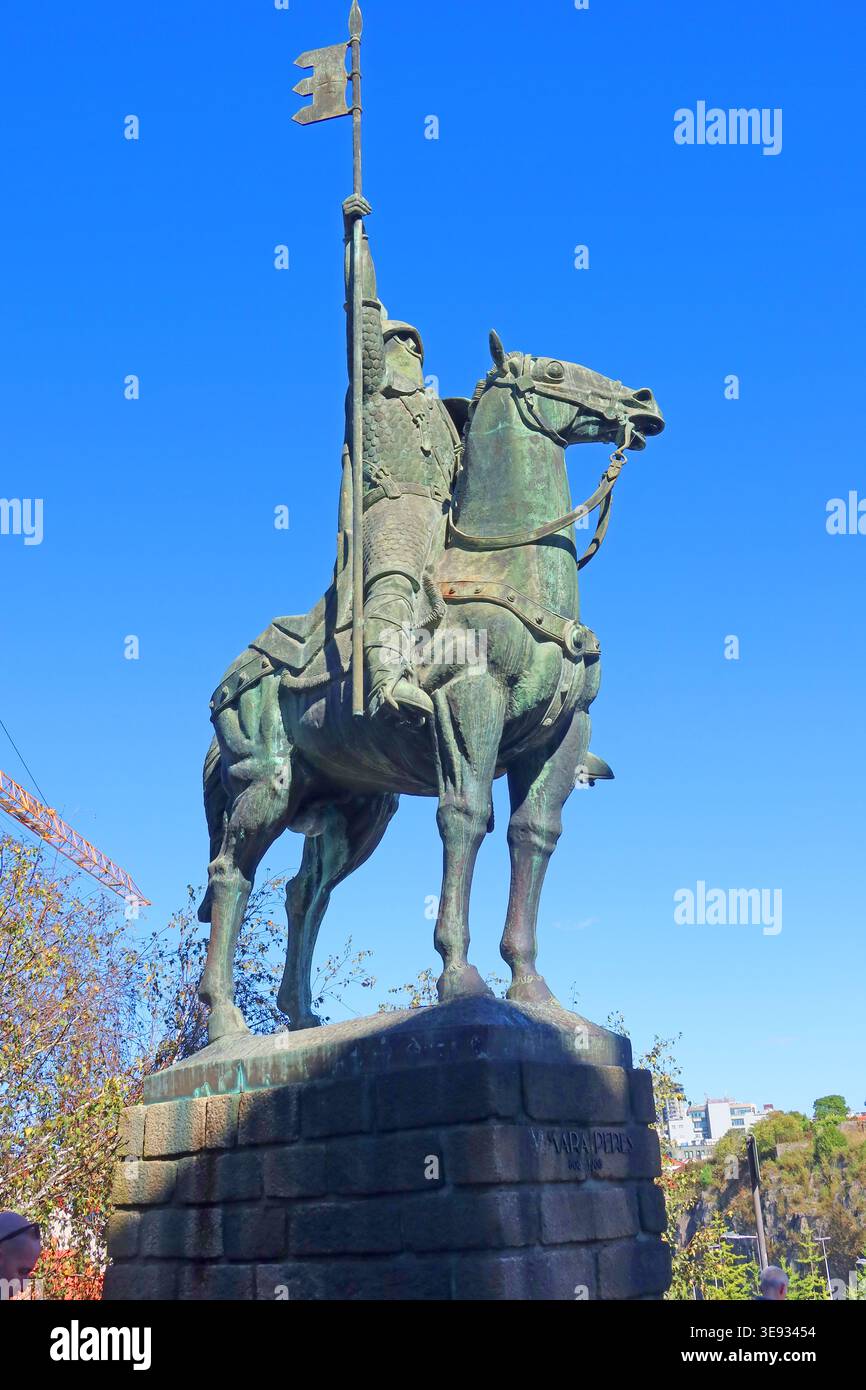
Image details
Contributor:
Tony SmithImage ID:
3E93454File size:
57.1 MB (1.9 MB Compressed download)Releases:
Model - no | Property - noDo I need a release?Dimensions:
3648 x 5472 px | 30.9 x 46.3 cm | 12.2 x 18.2 inches | 300dpiDate taken:
13 October 2024Location:
Porto, PortugalMore information:
. equestrian statue of Vmara Peres in Porto, near Porto Cathedral. Photographed on 13 October 2024. The recorded location is Porto, Portugal. Within the history of mural, monuments and civic artworks are part of the visual history of place; Their subjects reveal whom a community chose to celebrate, while later reinterpretation or controversy can change the meaning of an apparently permanent object. In relation to religious symbolism, historical context shows that ecclesiastical buildings are both active places of worship and repositories of local evidence; Churchyard monuments, carved stone, stained glass and plaques offer material for genealogy, architectural history, religious practice and remembrance. For the story of urban change, it is useful to note that local place names and small landmarks can be as significant to community history as nationally famous buildings; Streets, neighbourhood businesses and informal attractions offer reference points that may vanish during redevelopment or rebranding. Against the 2026 backdrop for mural, contemporary street art continues to blur the line between unofficial expression, commissioned mural and tourist attraction; Images are therefore relevant to urban culture, creative industries, heritage interpretation and place-making. As of 2026, the position for religious symbolism is that many historic churches face the practical challenge of maintaining listed fabric while remaining active community buildings, visitor attractions and venues for worship, music and local events; Conservation, heating costs and new uses are therefore part of the modern story of these ancient places. Useful subject and context terms include public art, sculpture, cultural identity, visual culture, community art, memorial art, public realm, cultural landmark, ecclesiastical architecture, parish church, Christian heritage, sacred art, church interior, memorial, and place of worship.

