
Rua de 31 de Janeiro shopping street in central Porto, Portugal, looking downhill through the historic city.
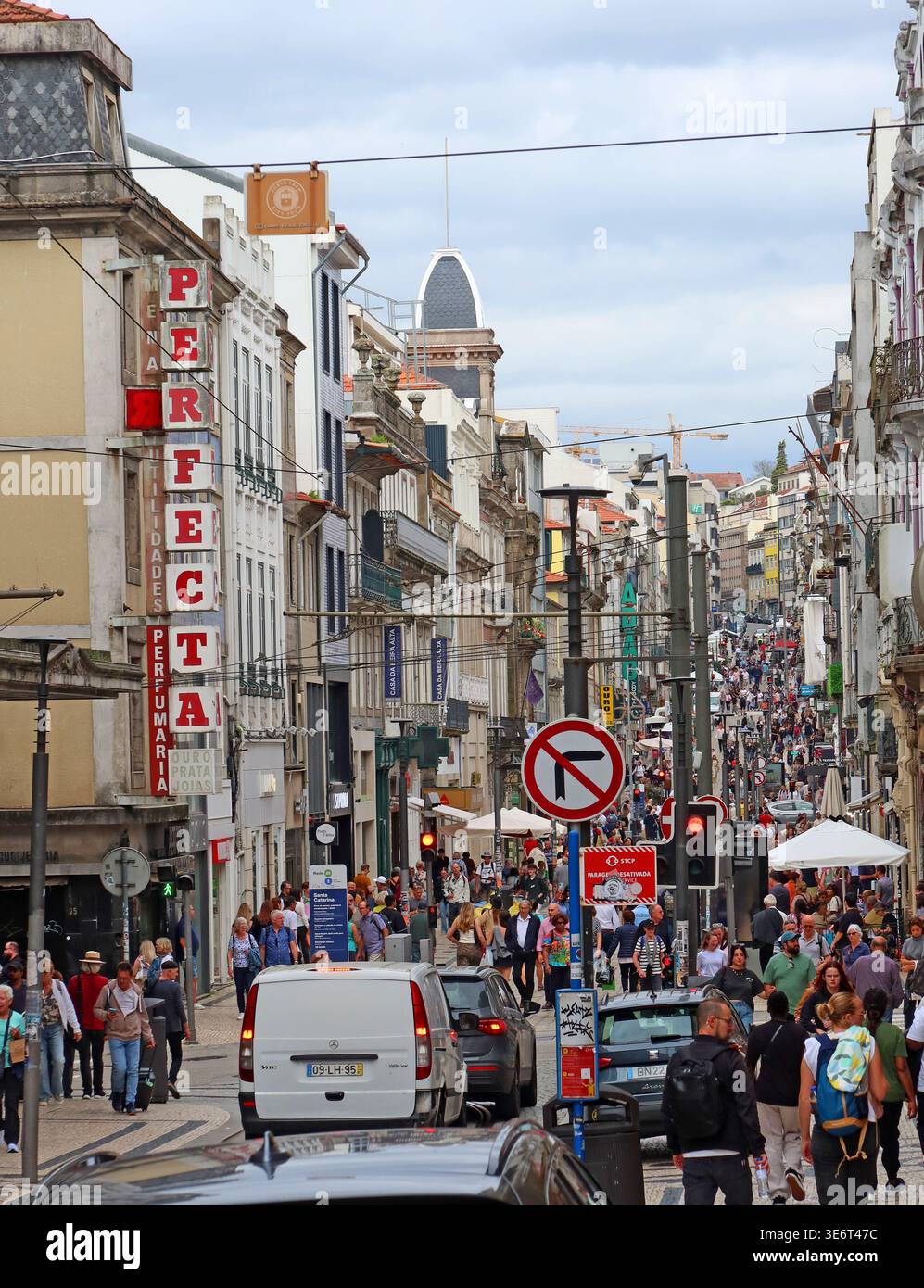
Image details
Contributor:
Tony SmithImage ID:
3E6T47CFile size:
49.6 MB (2.2 MB Compressed download)Releases:
Model - no | Property - noDo I need a release?Dimensions:
3648 x 4752 px | 30.9 x 40.2 cm | 12.2 x 15.8 inches | 300dpiDate taken:
15 October 2024Location:
Rua de 31 de Janeiro, Porto, PortugalMore information:
. Rua de 31 de Janeiro runs through the historic centre of Porto, descending through a dense urban streetscape of shops, older façades and narrow-fronted buildings. The street occupies a central position between the Batalha area and the lower city, placing it within a part of Porto heavily used by residents, workers and visitors moving between major landmarks, shopping streets and transport connections. Its name commemorates the republican revolt of 31 January 1891, an important event in the political history of Portugal that took place in Porto and preceded the eventual establishment of the Portuguese Republic in 1910. The modern street therefore combines everyday commercial life with a name carrying a specific historical memory. Porto’s central districts are characterised by steep gradients, tiled and rendered façades, decorative balconies, traditional signs and a mixture of independent businesses and national retailers. The city’s historic centre is recognised internationally for its distinctive urban fabric and relationship with the River Douro, while tourism has brought substantial changes to property use, hospitality and retail. Rua de 31 de Janeiro forms part of that living city rather than functioning simply as a preserved heritage setting. Pedestrians, traffic controls, shop signs and layers of architecture show a street continuously adapting to contemporary use. The photograph looks along the busy commercial route and captures the vertical compression typical of central Porto, where buildings rise closely on either side of sloping streets. It combines Portuguese urban history, retail, architecture, tourism and the everyday character of one of northern Portugal’s most recognisable city centres. The street’s steep alignment is characteristic of Porto, where the historic centre occupies rising ground above the Douro. Walking routes can change level quickly between the riverfront, São Bento, Batalha and the main shopping areas.

