
Historic DC Thomson Courier Building on Meadowside and Albert Square, Dundee, Scotland, UK.
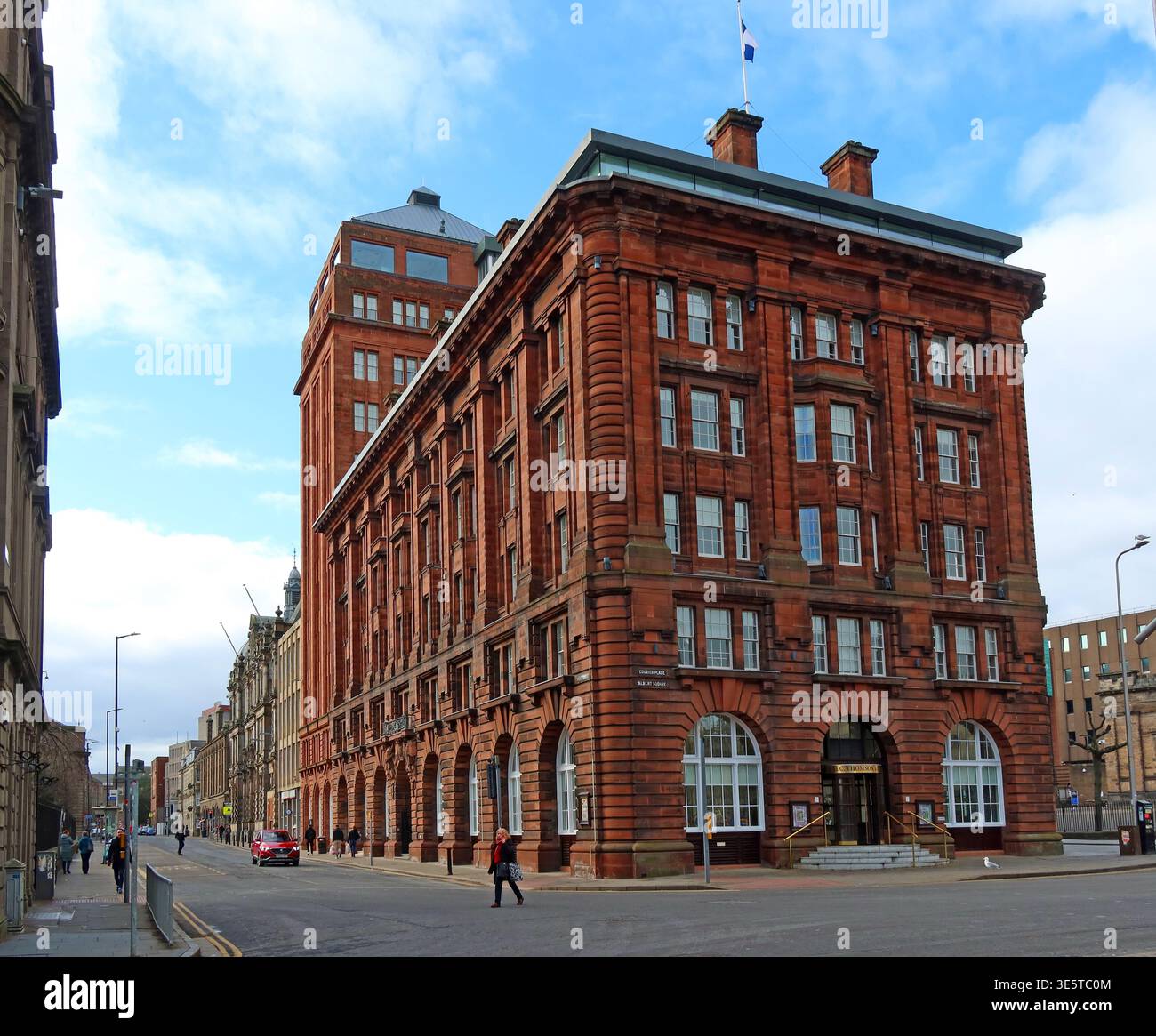
Image details
Contributor:
Tony SmithImage ID:
3E5TC0MFile size:
46 MB (1.6 MB Compressed download)Releases:
Model - no | Property - noDo I need a release?Dimensions:
4408 x 3648 px | 37.3 x 30.9 cm | 14.7 x 12.2 inches | 300dpiDate taken:
17 March 2025Location:
Courier Buildings, Albert Square, Dundee, DD1 9QJ, Scotland, UKMore information:
Historic DC Thomson Courier Building on Meadowside and Albert Square, Dundee, Scotland, UK. The photograph is a contemporary editorial record of the subject and its surroundings at Courier Buildings, Albert Square, Dundee, DD1 9QJ, Scotland, UK. Visible signage, lettering, architecture, street furniture, transport infrastructure, public art, commercial branding or landscape details are retained where present, giving the image value both as a description of the immediate scene and as a reference for how the place looked at the time of photography. The substantial red sandstone Courier Building is closely associated with Dundee publisher DC Thomson, famous for newspapers and magazines including The Courier and for comics such as The Beano and The Dandy. The earlier Courier building at Meadowside opened in the early 20th century and remains one of the city's most recognisable media-industry landmarks. The image has wider editorial relevance for local history, heritage, tourism, transport, retail, planning, regeneration, business and social change where those themes apply to the subject. It can support news and feature coverage as well as retrospective comparison if the building, business, artwork, service, route or streetscape is altered, redeveloped, rebranded, closed or otherwise changes in future. The composition also preserves small visual details that are easily lost over time, including materials, signs, logos, road or rail features, shopfront treatment, public-realm design and the relationship of the subject to neighbouring buildings or open space. This makes the photograph useful not only as a straightforward location image but also as a documentary record of everyday urban and cultural life.

