
Latchford Locks Trans Pennine Trail sign with canal tunnel view, Warrington, Cheshire, England, UK.
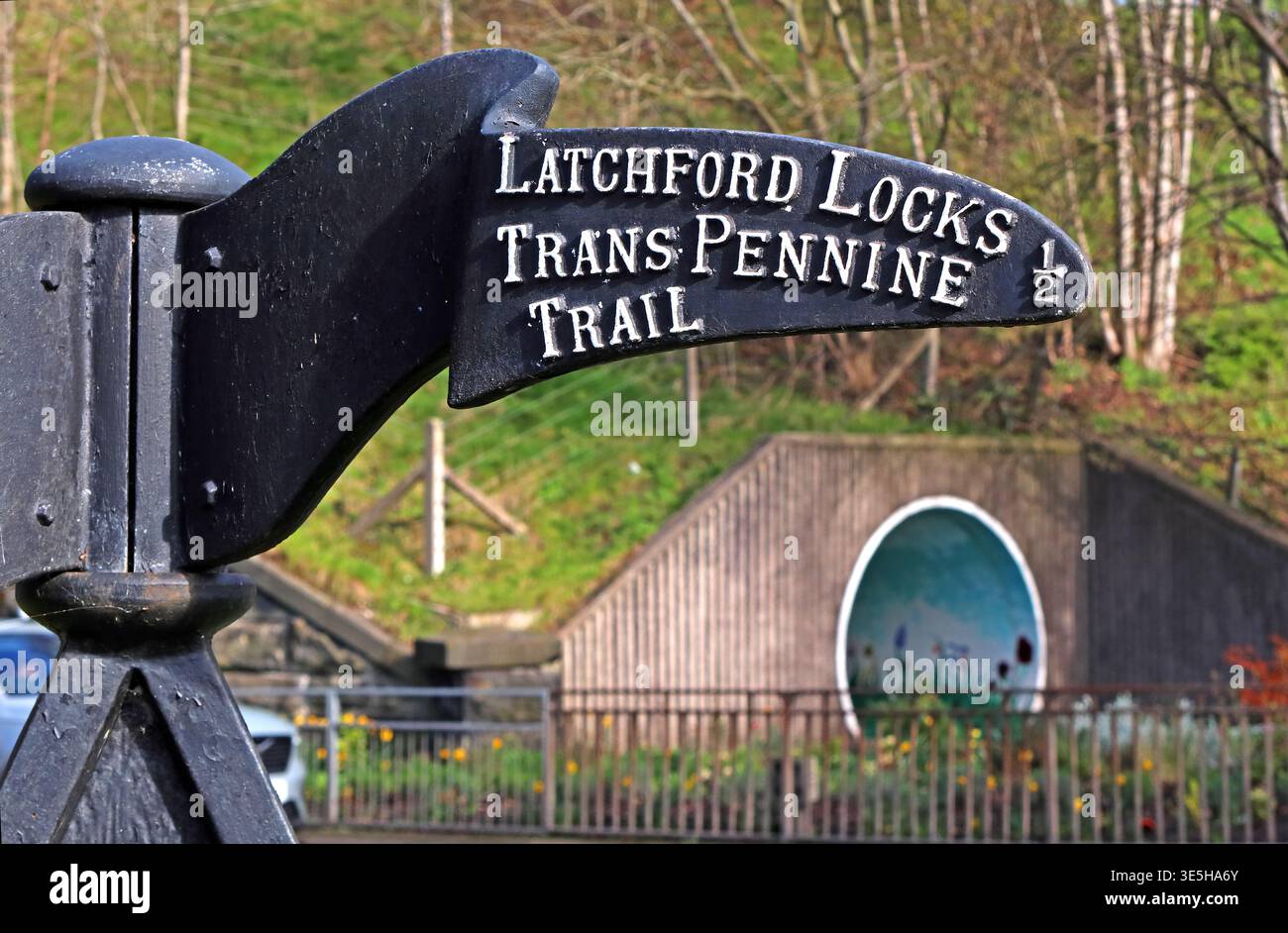
Image details
Contributor:
Tony SmithImage ID:
3E5HA6YFile size:
52.1 MB (2 MB Compressed download)Releases:
Model - no | Property - noDo I need a release?Dimensions:
5271 x 3455 px | 44.6 x 29.3 cm | 17.6 x 11.5 inches | 300dpiDate taken:
26 March 2026Location:
Latchford, Warrington, Cheshire, WA4, England, UKMore information:
Latchford Locks Trans Pennine Trail sign with canal tunnel view, Warrington, Cheshire, England, UK. The photograph is a contemporary editorial record of the subject and its surroundings at Latchford, Warrington, Cheshire, WA4, England, UK. Visible signage, lettering, architecture, street furniture, transport infrastructure, public art, commercial branding or landscape details are retained where present, giving the image value both as a description of the immediate scene and as a reference for how the place looked at the time of photography. A black fingerpost marks the route to Latchford Locks on the Trans Pennine Trail, with canal-side infrastructure visible beyond. Latchford developed around important crossings and locks on the Manchester Ship Canal, while the modern trail gives walkers and cyclists access through a landscape shaped by waterways, industry and transport. The image has wider editorial relevance for local history, heritage, tourism, transport, retail, planning, regeneration, business and social change where those themes apply to the subject. It can support news and feature coverage as well as retrospective comparison if the building, business, artwork, service, route or streetscape is altered, redeveloped, rebranded, closed or otherwise changes in future. The composition also preserves small visual details that are easily lost over time, including materials, signs, logos, road or rail features, shopfront treatment, public-realm design and the relationship of the subject to neighbouring buildings or open space. This makes the photograph useful not only as a straightforward location image but also as a documentary record of everyday urban and cultural life.

