
Wide view of Middle Temple Hall and gateway in the historic Temple legal quarter off Fleet Street, London.
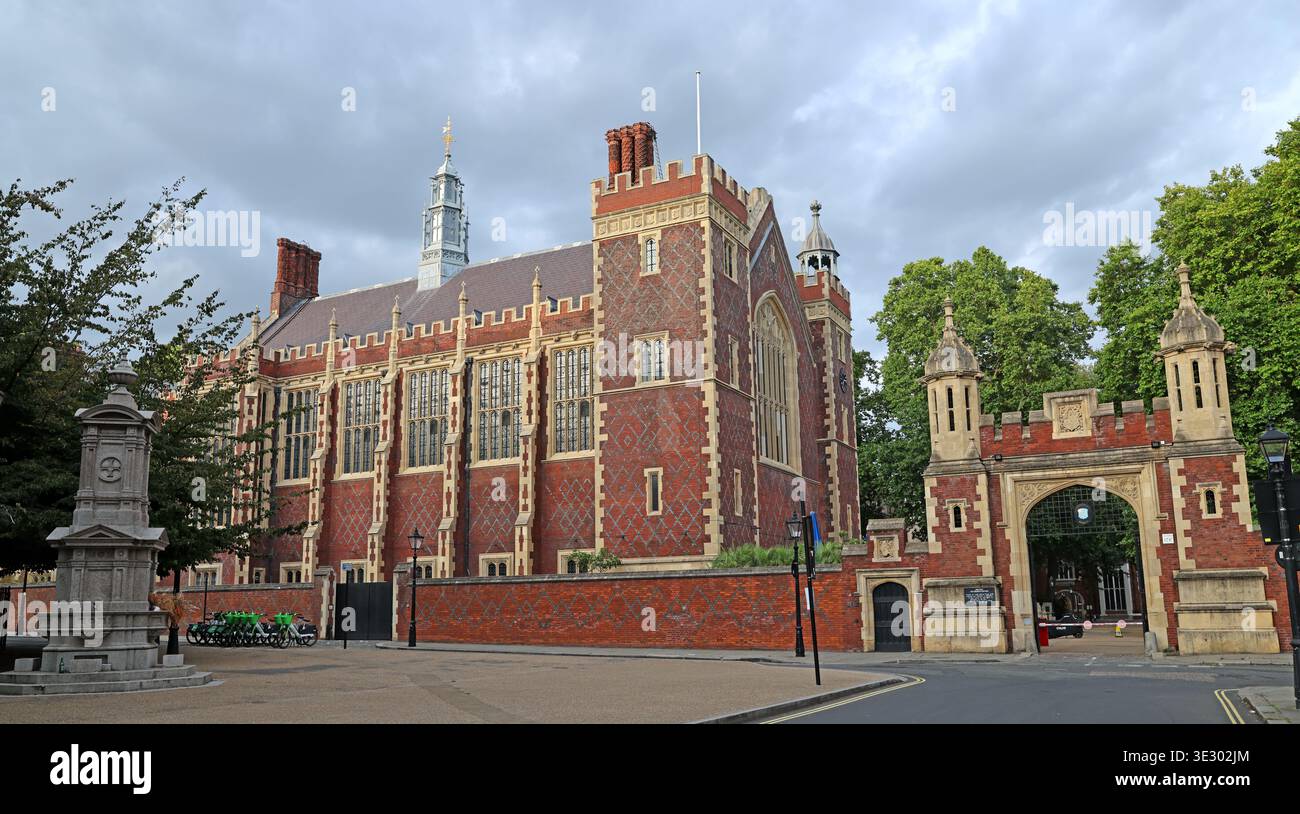
Image details
Contributor:
Tony SmithImage ID:
3E302JMFile size:
107 MB (5.3 MB Compressed download)Releases:
Model - no | Property - noDo I need a release?Dimensions:
8192 x 4564 px | 69.4 x 38.6 cm | 27.3 x 15.2 inches | 300dpiDate taken:
24 August 2025Location:
Middle Temple Lane, London EC4Y 9AT, England, UKMore information:
. Wide exterior view of Middle Temple Hall and its gateway in the historic Temple precinct between Fleet Street and the River Thames in central London. Middle Temple is one of the four Inns of Court, the professional institutions with the exclusive right to call people to the Bar of England and Wales. The Hall was begun during the reign of Elizabeth I in the early 1560s and completed in 1574, replacing an older and increasingly inadequate building used for meals, ceremonies, education and the communal life of the Inn. Its celebrated double hammer-beam roof and richly historic interior make it one of the most important surviving secular buildings from Elizabethan London. The Hall has remained closely tied to the training and social organisation of the legal profession, while the chambers and courtyards around it continue to be occupied by practising barristers and legal organisations. The Temple's narrow lanes and enclosed courts create a markedly different atmosphere from nearby Fleet Street, giving the area the appearance of a self-contained legal village in the centre of the capital. The site also carries strong cultural associations beyond law: a documented performance of Shakespeare's Twelfth Night took place in Middle Temple Hall in February 1602. Although the Inn has repeatedly repaired and modernised its estate, including after wartime bombing, the Hall remains central to Middle Temple's identity. The photograph shows the scale of the red-brick complex, stone ornament, gatehouse and surrounding mature greenery rather than focusing only on architectural detail. That wider view helps place the Hall within an institutional landscape shaped by centuries of legal education, dining traditions, advocacy and professional networks. The Inns of Court are unusual in combining historic property ownership, professional regulation, education, ceremony and working legal chambers within the same precincts.

