
Historic dark-painted shopfront at the corner of Wilkes Street and Hanbury Street in Spitalfields, east London.
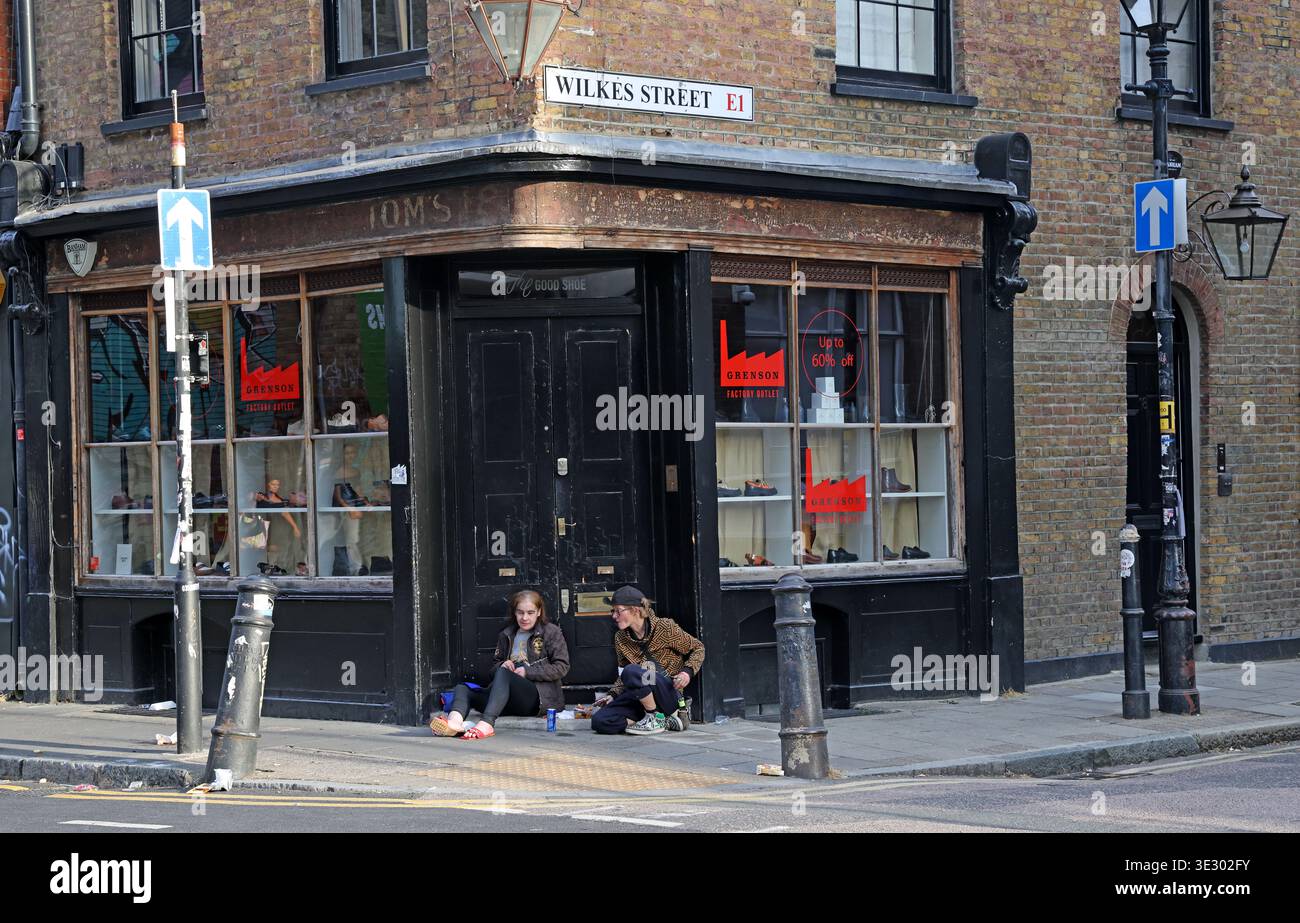
Image details
Contributor:
Tony SmithImage ID:
3E302FYFile size:
107.7 MB (4.8 MB Compressed download)Releases:
Model - no | Property - noDo I need a release?Dimensions:
7664 x 4912 px | 64.9 x 41.6 cm | 25.5 x 16.4 inches | 300dpiDate taken:
24 August 2025Location:
18 Hanbury Street at Wilkes Street, London E1 6QR, England, UKMore information:
. Old dark-painted shopfront at the junction of Wilkes Street and Hanbury Street in Spitalfields, east London, set within one of the capital's most intensively preserved and redeveloped historic neighbourhoods. Wilkes Street is known for its surviving Georgian townscape, while nearby Hanbury Street links the area to Brick Lane and the long commercial history of the East End. The corner frontage, traditional glazing and timber detailing give the premises a visual character very different from modern standardised retail units. Shopfronts such as this are an important part of urban heritage because they show how ground-floor commercial uses were fitted into domestic-scale streets and adapted repeatedly as businesses changed. Spitalfields has passed through many economic and demographic phases, from eighteenth-century silk weaving and later overcrowding to twentieth-century migration, wholesale trade and more recent gentrification. The wider district became home to Huguenot, Jewish and Bangladeshi communities at different periods, each leaving traces in local buildings, places of worship, food, markets and street names. Today the streets around Brick Lane, Commercial Street and Spitalfields Market combine expensive restored houses, independent shops, restaurants, galleries, offices and visitor attractions. The photograph captures a quieter, smaller-scale fragment of that landscape: a corner premises whose façade still reads as an old East End shop rather than a newly built retail shell. The surviving frontage contributes to the sense of continuity that makes the nearby conservation areas distinctive, even where the use behind the windows may have changed many times. Such premises also illustrate the pressures involved in conserving historic streets while allowing buildings to remain economically viable and adaptable. Small architectural survivals like this help preserve the grain and character of historic east London streets.

