
Street market clothing stalls at 29 Wentworth Street in London's East End, with the City skyline beyond.
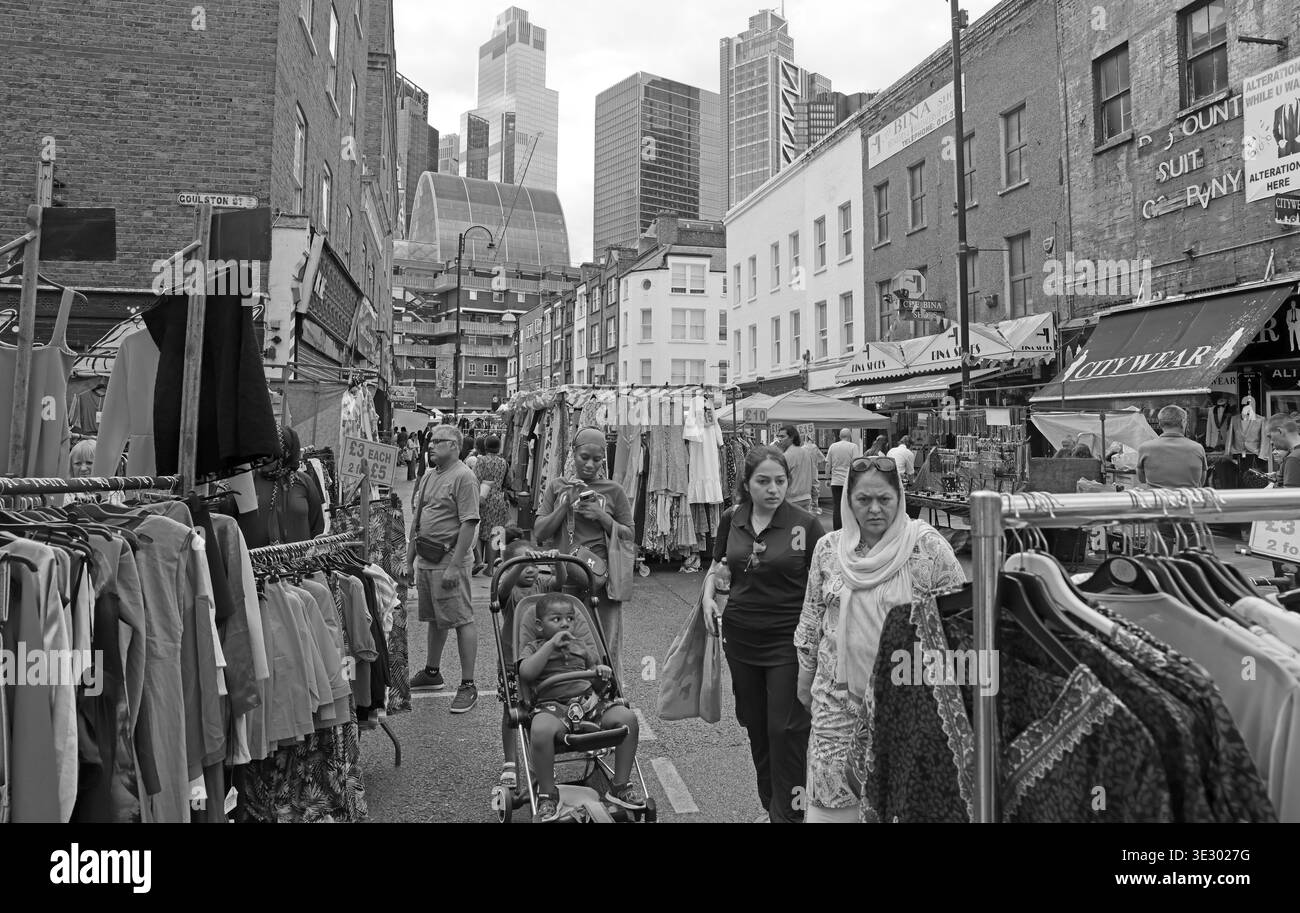
Image details
Contributor:
Tony SmithImage ID:
3E3027GFile size:
121.6 MB (5.5 MB Compressed download)Releases:
Model - no | Property - noDo I need a release?Dimensions:
8192 x 5188 px | 69.4 x 43.9 cm | 27.3 x 17.3 inches | 300dpiDate taken:
24 August 2025Location:
29 Wentworth Street, London E1 7TB, England, UKMore information:
. Clothing stalls and shoppers around 29 Wentworth Street in the East End of London, part of the traditional street-market zone associated with Petticoat Lane, with modern City office towers rising beyond the low-rise market streets. The scene captures one of London's sharpest urban contrasts: inexpensive open-air retail and long-established trading routes operating within walking distance of the global financial district. Petticoat Lane Market developed around Middlesex Street and Wentworth Street and became especially associated with garments, textiles, leather goods and clothing sold by generations of small traders. The surrounding district has repeatedly been reshaped by migration, including Huguenot, Jewish and Bangladeshi communities whose businesses, workshops and markets contributed to the commercial life of the East End. Wentworth Street retains a more everyday street-market character than nearby luxury retail areas, with rails of clothes displayed directly beside the pavement and customers browsing in the open air. The photograph also shows the changing economics of central London, where traditional market trading occupies land under intense development pressure and competes with online shopping, chain retail and newer food-led markets. Behind the stalls, high-rise offices signal the enormous growth of the City and its eastern fringe, making the view a compressed visual history of different forms of urban work and commerce. The monochrome treatment emphasises people, clothing rails, shopfronts and building shapes rather than colour. Street markets remain socially important because they offer low-cost entry points for small traders and can provide affordable goods in areas where conventional retail rents are high. They also create a form of public life that differs from enclosed shopping centres, with bargaining, display, weather and passing footfall all shaping the trading day.

