
Blue plaque Stockport railway station commemorating Channel Island evacuees welcomed to Stockport summer 1940 during World War II, Greater Manchester
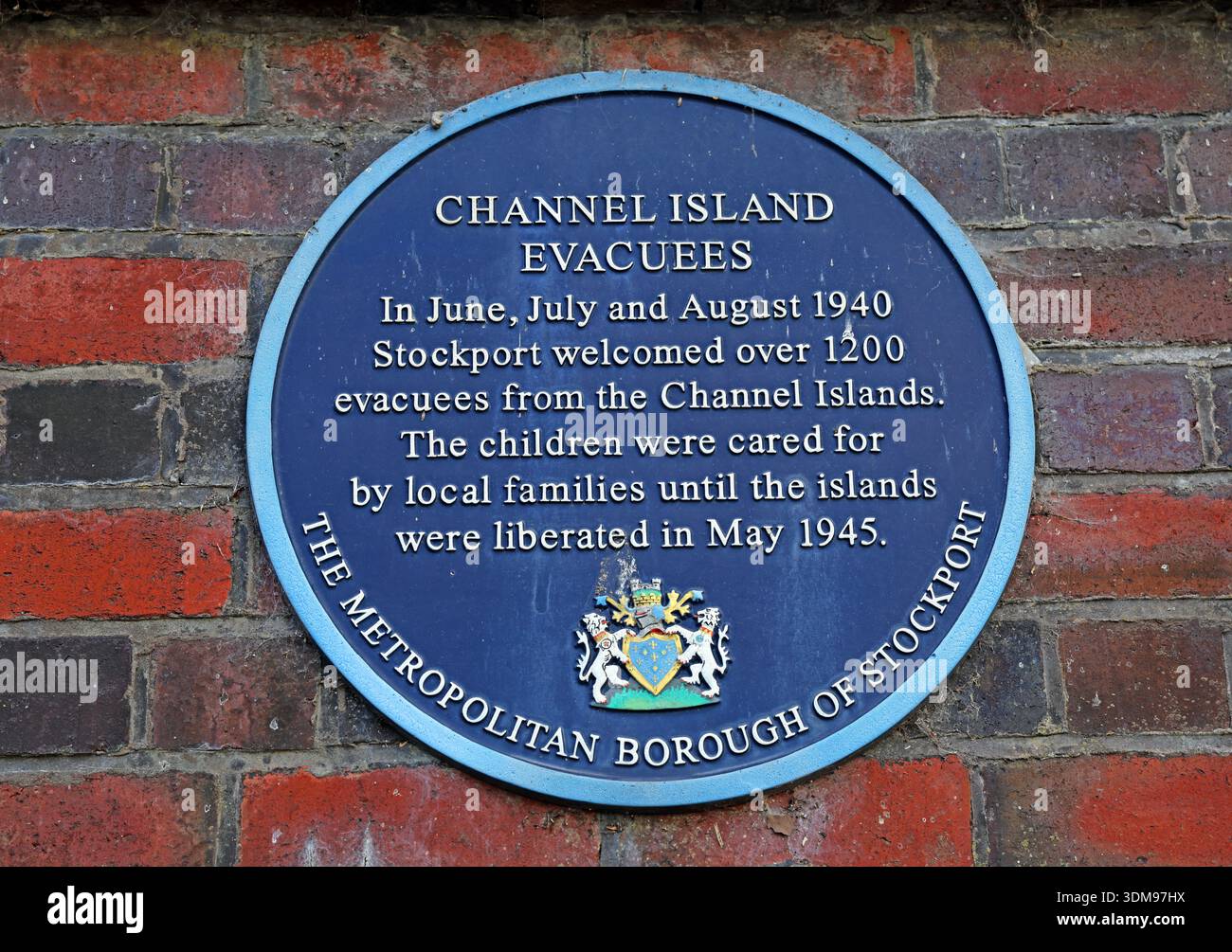
Image details
Contributor:
Tony SmithImage ID:
3DM97HXFile size:
121.3 MB (6 MB Compressed download)Releases:
Model - no | Property - noDo I need a release?Dimensions:
7760 x 5464 px | 65.7 x 46.3 cm | 25.9 x 18.2 inches | 300dpiDate taken:
24 October 2025Location:
Blue plaque at Stockport railway station commemorating Channel Island evacuees welcomed to StockportMore information:
A tight, documentary close-up of a blue civic plaque mounted on a red brick wall at Stockport railway station in Greater Manchester. The plaque headline reads “CHANNEL ISLAND EVACUEES” and the main inscription is fully legible, explaining that in June, July and August 1940 Stockport welcomed over 1200 evacuees from the Channel Islands, and that the children were cared for by local families until the islands were liberated in May 1945. Around the lower edge, the wording “THE METROPOLITAN BOROUGH OF STOCKPORT” and a small municipal crest reinforce the official, local-government nature of the marker, giving the image strong value for accurate editorial captioning and search visibility. The composition is simple and direct, designed to prioritise the readable text and the classic blue-plaque format. The brickwork texture and the slightly weathered surface add a sense of permanence and everyday realism, suggesting a plaque that has become part of the station environment rather than a staged memorial. Light appears cool and natural, consistent with winter or cold-season conditions, with no strong shadows, so the plaque reads clearly and evenly. As a stock image, it works well for editorial uses around World War II remembrance, wartime evacuation, refugees and displacement, and the social history of communities taking in children and families during conflict. It is also useful for education, heritage, and local history storytelling, especially where an image is needed to represent Channel Islands evacuation history in mainland Britain. The station setting is significant, since rail travel was central to evacuation journeys and arrivals, and the plaque serves as a quiet reminder of how major wartime events intersected with ordinary civic places

