
The sculpture “A Monument to Vimto” located in Vimto Park on Granby Row, Manchester M1 7HR, England, UK. The artwork commemorates the Vimto creation
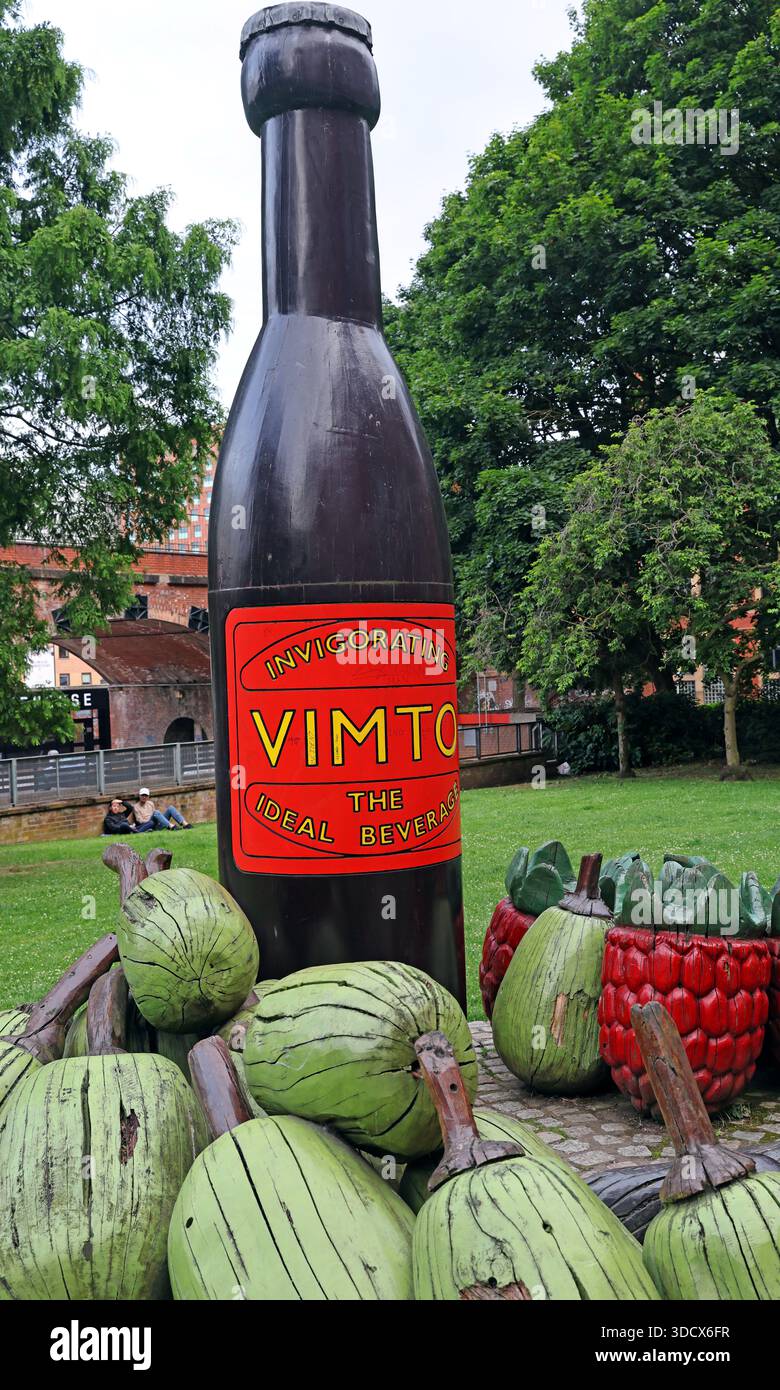
Image details
Contributor:
Tony SmithImage ID:
3DCX6FRFile size:
107.5 MB (4.8 MB Compressed download)Releases:
Model - no | Property - noDo I need a release?Dimensions:
4750 x 7913 px | 40.2 x 67 cm | 15.8 x 26.4 inches | 300dpiDate taken:
28 June 2025Location:
The sculpture “A Monument to Vimto” in Vimto Park, Granby Row, Manchester M1 7HR, England, UK. The mMore information:
The sculpture “A Monument to Vimto” located in Vimto Park on Granby Row, Manchester M1 7HR, England, UK. The artwork commemorates the creation of the Vimto soft drink, which was first developed on this site in 1908 by John Noel Nichols. “A Monument to Vimto” is a public sculpture located in Vimto Park on Granby Row, Manchester M1 7HR, within an area that now forms part of the University of Manchester campus. The monument marks the exact site where Vimto was first created in 1908 by Manchester entrepreneur John Noel Nichols, originally developed as a herbal health tonic. While Vimto is a familiar British soft drink, it has achieved exceptional cultural significance during the Islamic holy month of Ramadan, where it is widely regarded as a traditional iftar drink and is consumed when the daily fast is broken at sunset. In many Middle Eastern countries and Muslim communities worldwide, Vimto is so closely associated with Ramadan that it is often colloquially described as the “unofficial drink of Ramadan”, reflecting custom rather than formal designation. The sculpture itself takes the form of an oversized Vimto bottle surrounded by stylised fruit elements, referencing both the drink’s flavour profile and its historic branding, including the slogan “Vimto – The Ideal Beverage”. Vimto Park was created as part of city-centre regeneration and named to acknowledge the drink’s Manchester origins and its journey from local invention to global cultural icon. Photographed in daylight, the image documents a distinctive Manchester landmark that connects industrial heritage, global consumer culture and multicultural traditions, illustrating how a product invented in Edwardian Manchester became embedded in religious and social practices far beyond the UK.

