
Signage and architectural detail of the Cork Savings Bank building on South Mall, Cork City (postal district T12), County Cork, Ireland.
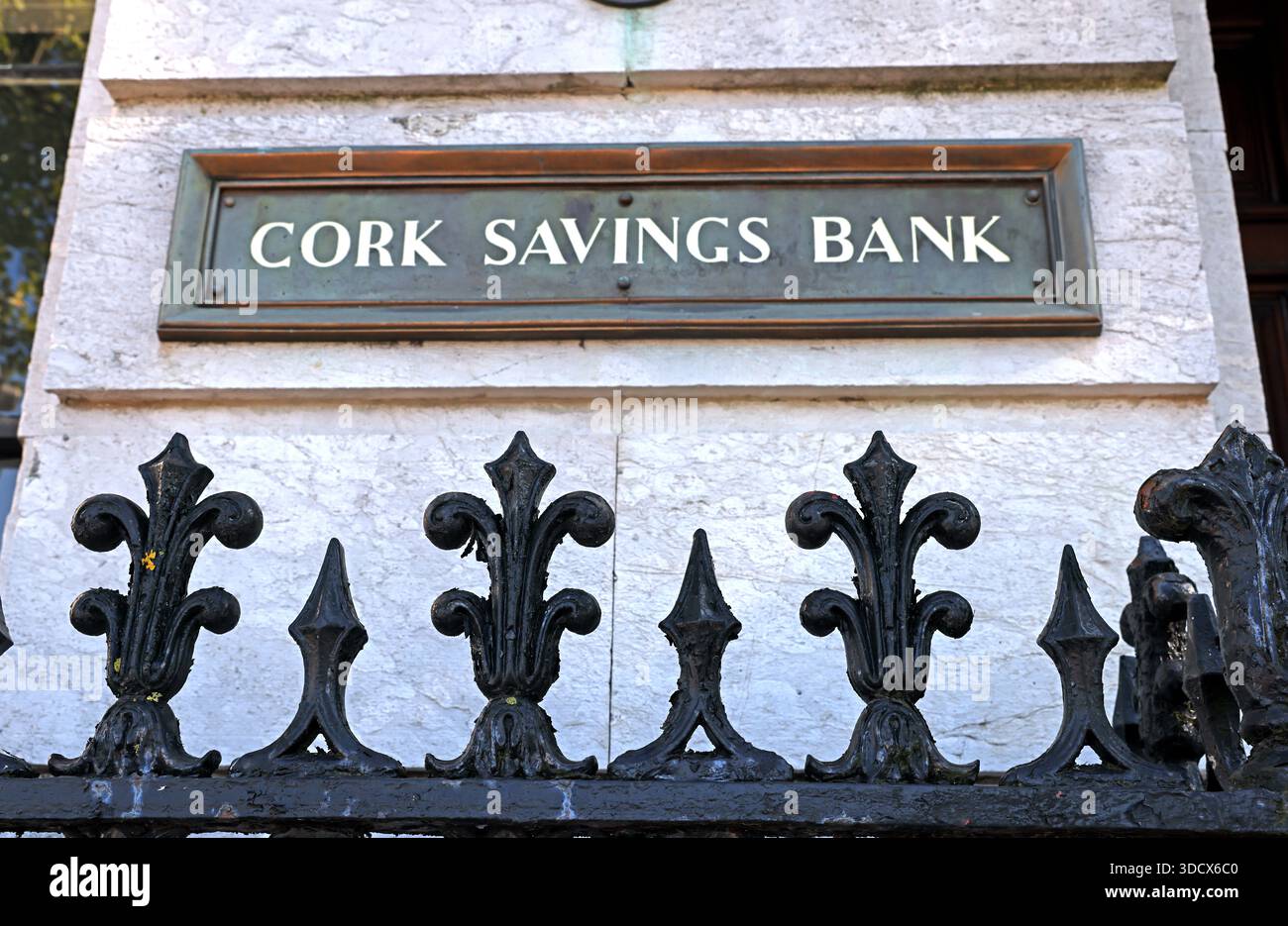
Image details
Contributor:
Tony SmithImage ID:
3DCX6C0File size:
115 MB (3.7 MB Compressed download)Releases:
Model - no | Property - noDo I need a release?Dimensions:
7861 x 5115 px | 66.6 x 43.3 cm | 26.2 x 17.1 inches | 300dpiDate taken:
12 July 2025Location:
Signage and architectural detail of the Cork Savings Bank building on South Mall, Cork City (postalMore information:
The engraved stone signage of Cork Savings Bank, photographed on the historic South Mall in Cork City, County Cork, Ireland (postal district T12). The image shows the bank’s name set into the building’s façade above decorative wrought-iron railings, emphasising craftsmanship and permanence typical of nineteenth-century financial architecture. Savings banks played a significant role in Irish social and economic history, promoting thrift and financial inclusion among working communities during a period of rapid urban and commercial growth. Cork Savings Bank was part of this wider movement, reflecting the city’s importance as a regional centre of trade, shipping and finance in southern Ireland. South Mall has long been associated with banking, commerce and professional services, forming one of Cork’s most prestigious historic streets. Buildings along the Mall were designed to convey stability, trust and civic responsibility, values that were central to public confidence in financial institutions before the modern era of digital banking. The architectural detailing visible in the image — carved stonework, restrained classical proportions and ornamental ironwork — reflects Victorian and Edwardian influences common to bank buildings of the period. Today, such structures contribute to Cork’s historic streetscape and remain important markers of the city’s commercial heritage. Photographed in daylight with architectural textures clearly visible, the image offers strong editorial value for themes including Irish banking history, financial institutions, heritage architecture, urban commercial development and the preservation of historic city centres. It is suitable for use in history publications, financial commentary, education, and cultural or architectural features relating to Ireland.

