
Dublin city Halfpenny bridge Ireland, on a sunny summer evening, crossing the Liffey at Suffolk Street and Temple Bar, looking south
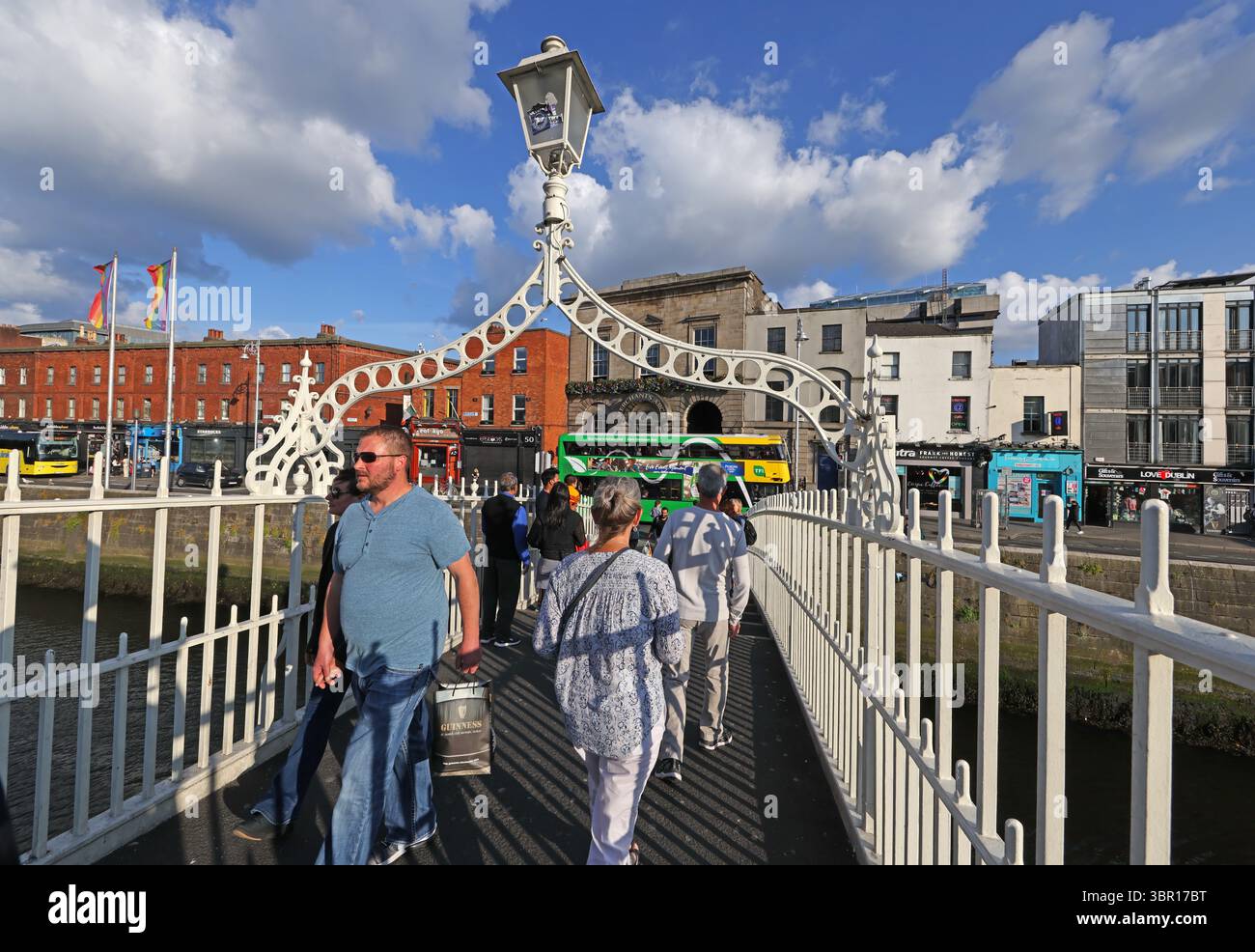
Image details
Contributor:
Tony SmithImage ID:
3BR17BTFile size:
123.9 MB (4.3 MB Compressed download)Releases:
Model - no | Property - noDo I need a release?Dimensions:
7925 x 5464 px | 67.1 x 46.3 cm | 26.4 x 18.2 inches | 300dpiDate taken:
17 June 2025Location:
Ha'penny Bridge, North City, Dublin, Ireland, IEMore information:
This contemporary British and Irish stock photograph captures Dublin city Halfpenny bridge Ireland, on a sunny summer evening, crossing the Liffey at Suffolk Street and Temple Bar, looking south. The row metadata places the subject at Ha'penny Bridge, North City, Dublin, Ireland, IE. The spreadsheet date indicates 17 June 2025, so the picture can also work as a time-specific archive record. Plainly, the image is useful because it shows Ireland, Irish, Halfpenny bridge, North City, Dublin, DUB, city, footbridge, with search-relevant terms including Ireland, Irish, Halfpenny bridge, North City, Dublin, DUB, city, footbridge, historic, famous, Southern, Republic, Dublin city, centre. Hospitality images often work beyond simple venue illustration, because pubs and bars speak to tourism, music, night-time economies, independent trade and changing social habits. Dublin is both a historic capital and a modern European city, where tourism, housing pressure, transport, politics, culture and the River Liffey all shape how the city is understood in contemporary reporting. Pub and bar imagery can illustrate the changing British and Irish hospitality trade, real-ale culture, night-time economies, independent businesses, tourism districts, licensing, social life and the pressure on high streets and leisure spending. Because it is grounded in a named location and practical subject matter, it is useful for search-led editorial use, regional storytelling, business-to-business presentations, policy briefings and stock-photo buyers wanting evidence from the real world. Historically and socially, this kind of image can help connect past and present: older streets, civic institutions, transport systems, shops, signs, political messages or public services are not frozen museum pieces, but part of how people understand modern life, local identity and economic change.

