
Rowntree Mackintosh Ltd engine No3 at DVLR - Murton Village, City of York,, North Yorkshire, England, YO19 5UF
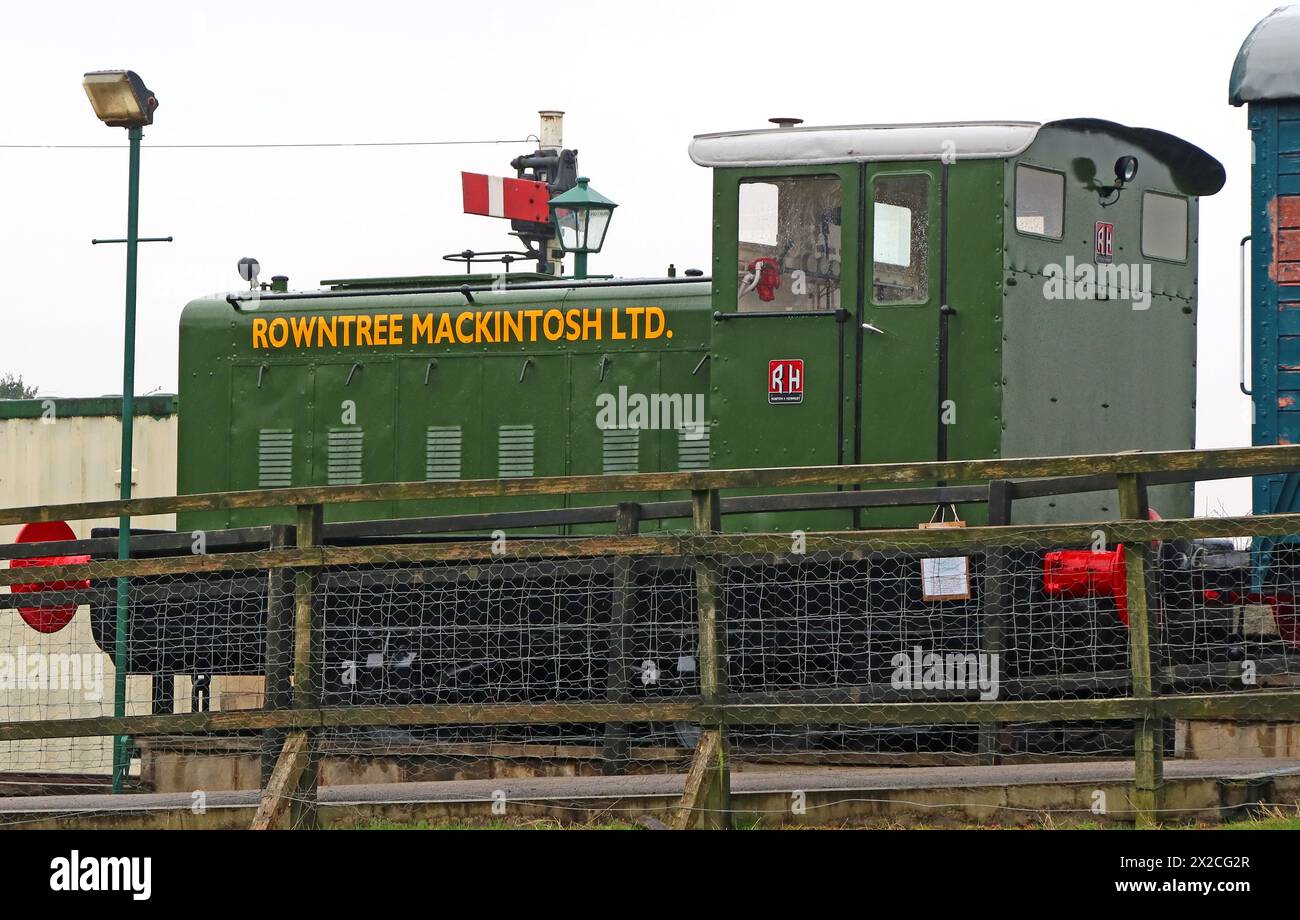
Image details
Contributor:
Tony SmithImage ID:
2X2CG2RFile size:
38.8 MB (1.5 MB Compressed download)Releases:
Model - no | Property - noDo I need a release?Dimensions:
4607 x 2943 px | 39 x 24.9 cm | 15.4 x 9.8 inches | 300dpiDate taken:
10 March 2024Location:
Murton Village, City of York,, North Yorkshire, England, YO19 5UFMore information:
This image shows a green industrial shunting locomotive marked “Rowntree Mackintosh Ltd, ” associated with the historic confectionery manufacturing operations of Rowntree in York, North Yorkshire, England. The locomotive would have been used for internal rail movements within the extensive factory railway system that served the Rowntree works, moving raw materials, packaging, and finished goods around the site and connecting with the wider national rail network. Rowntree Mackintosh was formed in 1969 following the merger of Rowntree & Company of York and Mackintosh’s of Halifax, creating one of Britain’s most significant confectionery manufacturers. The company was later acquired by Nestlé in 1988, marking a major shift in the ownership of one of York’s most important industrial employers. For much of the twentieth century, the Rowntree factory operated its own internal railway infrastructure, reflecting the scale and logistical complexity of large British manufacturing sites of the period. Industrial shunting locomotives such as this were a common feature of factories, docks, and warehouses across the UK, allowing efficient on-site rail handling without relying on mainline locomotives. Today, surviving examples are valued as part of Britain’s industrial and railway heritage, illustrating the close relationship between rail transport and manufacturing. This image is suitable for editorial and commercial use relating to British industrial history, railway heritage, manufacturing, corporate history, and the social and economic history of York.

