
HS2 high speed two works at Birmingham Curzon St, railway station, Central Birmingham, West Midlands, England, UK, B4 7XG
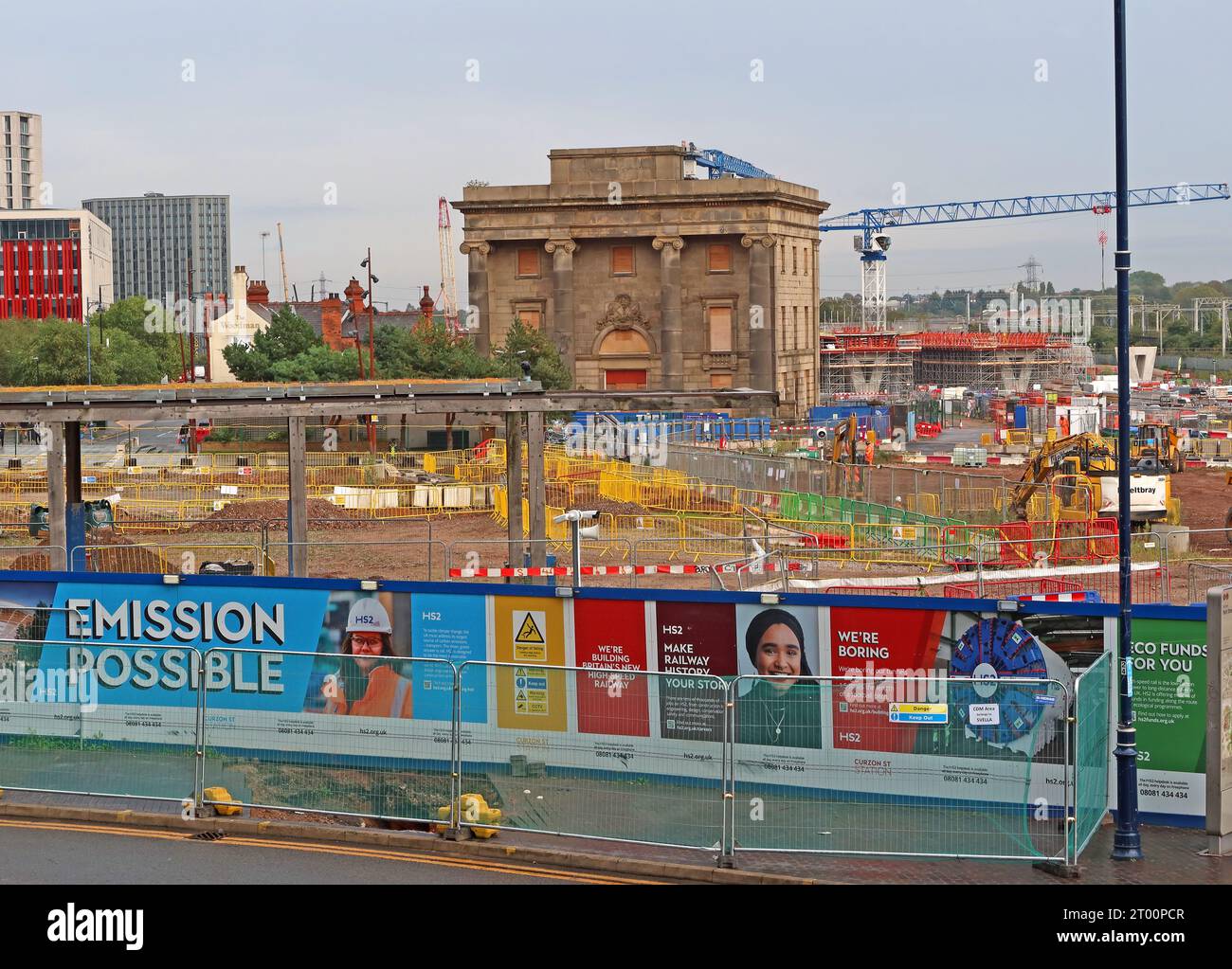
Image details
Contributor:
Tony SmithImage ID:
2T00PCRFile size:
47.6 MB (2.4 MB Compressed download)Releases:
Model - no | Property - noDo I need a release?Dimensions:
4812 x 3456 px | 40.7 x 29.3 cm | 16 x 11.5 inches | 300dpiDate taken:
2 October 2023Location:
Curzon St, new HS2 railway station, Central Birmingham, West Midlands, England, UK, B4 7XGMore information:
HS2 High Speed Two construction works at Birmingham Curzon Street in Central Birmingham, showing cranes, fencing, site hoardings, excavation areas and the Grade I listed former Curzon Street station building standing within the developing railway site. The historic building on New Canal Street was the former Principal Building of the Birmingham Terminus for the London and Birmingham Railway, designed by Philip Hardwick in Greek Revival style and opened in 1838. Its survival beside the modern HS2 works creates a powerful image of railway heritage, infrastructure investment, urban regeneration and the contested politics of major transport projects. HS2 says Birmingham Curzon Street will be the city centre station for high speed trains, stretching between Moor Street station and Millennium Point, with seven platforms and a large arched roof inspired by Victorian railway architecture. This photograph is useful for editorial and commercial searches about HS2, High Speed Two, Birmingham Curzon Street, high speed rail, railway construction, civil engineering, construction cranes, station foundations, transport infrastructure, public spending, regeneration, Eastside, city centre redevelopment, Grade I listed buildings, railway architecture, heritage conservation, Birmingham planning, West Midlands economy and UK rail policy. The visible “mission possible” style construction hoarding, safety signage, machinery, temporary fencing, old stone station frontage and modern city skyline make it suitable for news, reports, blogs, transport features, planning articles, construction industry coverage, heritage debate and infrastructure policy. It can also illustrate questions around project delays, cost overruns, future rail capacity, London to Birmingham journey times, the cancelled northern legs, public realm change, brownfield redevelopment, station-led growth, sustainable transport and whether large national schemes deliver value for money. The contrast is stark, old & new.

