
Manchester Bee Network logo branding, bus station at night, Shudehill, Manchester, England, UK, M4 2AF
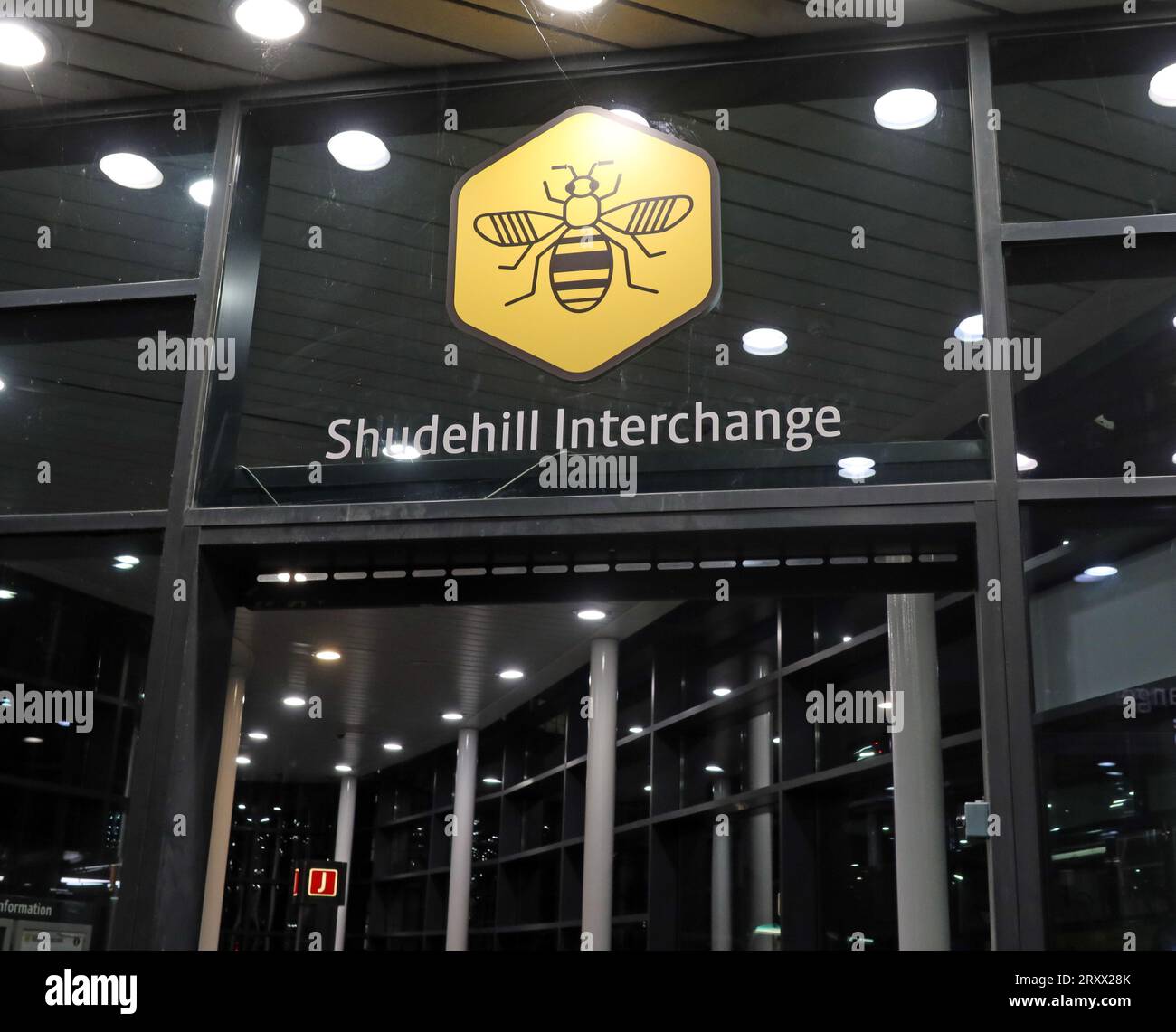
Image details
Contributor:
Tony SmithImage ID:
2RXX28KFile size:
47.1 MB (1.1 MB Compressed download)Releases:
Model - no | Property - noDo I need a release?Dimensions:
4512 x 3648 px | 38.2 x 30.9 cm | 15 x 12.2 inches | 300dpiDate taken:
25 September 2023Location:
Shudehill, Manchester, England, UK, M4 2AFMore information:
. Manchester Bee Network logo branding, bus station at night, Shudehill, Manchester, England, UK, M4 2AF. Photographed on 25 September 2023. Shudehill Interchange is a transport hub between Manchester Victoria station and the Northern Quarter in Manchester city centre, England, which comprises a Metrolink stop and a bus station. History. The tracks through the site were opened in 1992. however, the tram stop did not open until 31 March 2003. The bus part of the interchange opened on 29 January 2006. Construction had initially started on the bus station in 1998 and it was planned to have been completed and fully operational by 2000, but several disputes over the ownership of the site along with two public inquiries over the course of five years resulted in the construction work on the station being halted until 2003. Metrolink services. The Shudehill stop is in Zone 1, forming part of the Bury line. Trams run through Shudehill to Bury, Altrincham, Manchester Airport, Piccadilly and Victoria. In relation to local connectivity, historical context shows that urban buses and local transport connect residential areas with town centres, employment, hospitals and stations; Their routes offer a practical map of how communities function and how transport policy changes over time. For the story of ticketing, it is useful to note that stations are both functional transport interchanges and pieces of civic architecture; Their canopies, footbridges, booking halls, signal boxes and signage reveal how passenger expectations and railway technology changed from steam-era operation to today's increasingly digital network. The historical setting for collectable is that everyday objects often become better historical evidence with age because packaging, typography, materials and branding change more rapidly than their basic function; Souvenirs, games and household items can therefore date consumer culture very precisely.

