
Tourists in the Ancient Egypt rooms,Colossal granite head of King Amenhotep III,British Museum, Great Russell St, Bloomsbury, London, England, UK
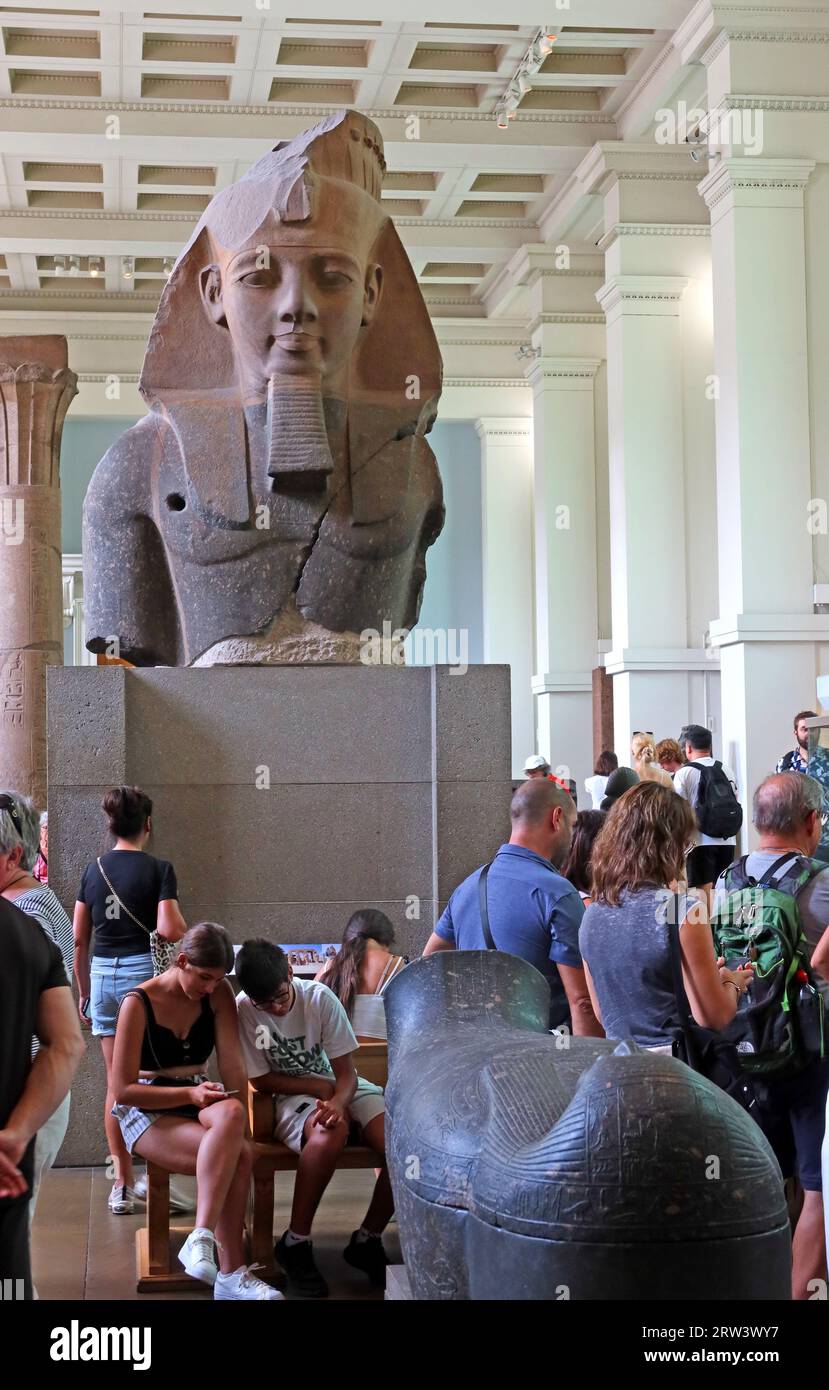
Image details
Contributor:
Tony SmithImage ID:
2RW3WY7File size:
52.1 MB (1.9 MB Compressed download)Releases:
Model - no | Property - noDo I need a release?Dimensions:
3408 x 5344 px | 28.9 x 45.2 cm | 11.4 x 17.8 inches | 300dpiDate taken:
8 September 2023Location:
Great Russell Street, Bloomsbury, London, England, UK, WC1B 3DGMore information:
. Tourists in the Ancient Egypt rooms, Colossal granite head of King Amenhotep III, British Museum, Great Russell St, Bloomsbury, London, England, UK. Photographed on 8 September 2023. The recorded location is Great Russell Street, Bloomsbury, London, England, UK, WC1B 3DG. Colossal granite head of King Amenhotep III, from Karnak (Thebes), Egypt, about 1370 BC. King Amenhotep III commissioned numerous statues of himself, especially for his temples in Thebes, then Egypt's capital. His peaceful reign was a time of opulence and outstanding artistic refinement, often displayed on a grand and ambitious scale. The complete sculpture showed him striding. This and a slightly smaller colossus flanked a doorway in the temple of Mut in Karnak. The head of the second statue is also in the British Museum, but the bodies remain in Karnak. A century later the facial features were reworked for King Ramesses II to match his own official 'portrait'. Ramesses appropriated countless statues of royal predecessors. Seen through heritage attraction, the earlier context is that libraries, museums and archives developed as civic institutions for preserving knowledge, objects and local records; Reading rooms, catalogues and display cases reveal how public access to information changed before digitisation transformed research. For retro, the historical context is that material culture includes the ordinary products people bought, used, collected or displayed; Small manufactured objects can reveal national identity, advertising, technology and popular taste in ways that formal records do not. The 2026 relevance of heritage attraction comes from the fact that digitisation has changed research but has not removed the need for physical archives and collections. institutions increasingly combine online access with conservation of original material and renewed interest in local history. Additional subject language includes Amenhotep III, dynasty, room 4, British, history, and historic.

