
Statue of a plaster mounted knight, on a horse on the former White Horse Hotel in 247-248 High Street, Guildford, Surrey, England, UK, GU1 3BJ
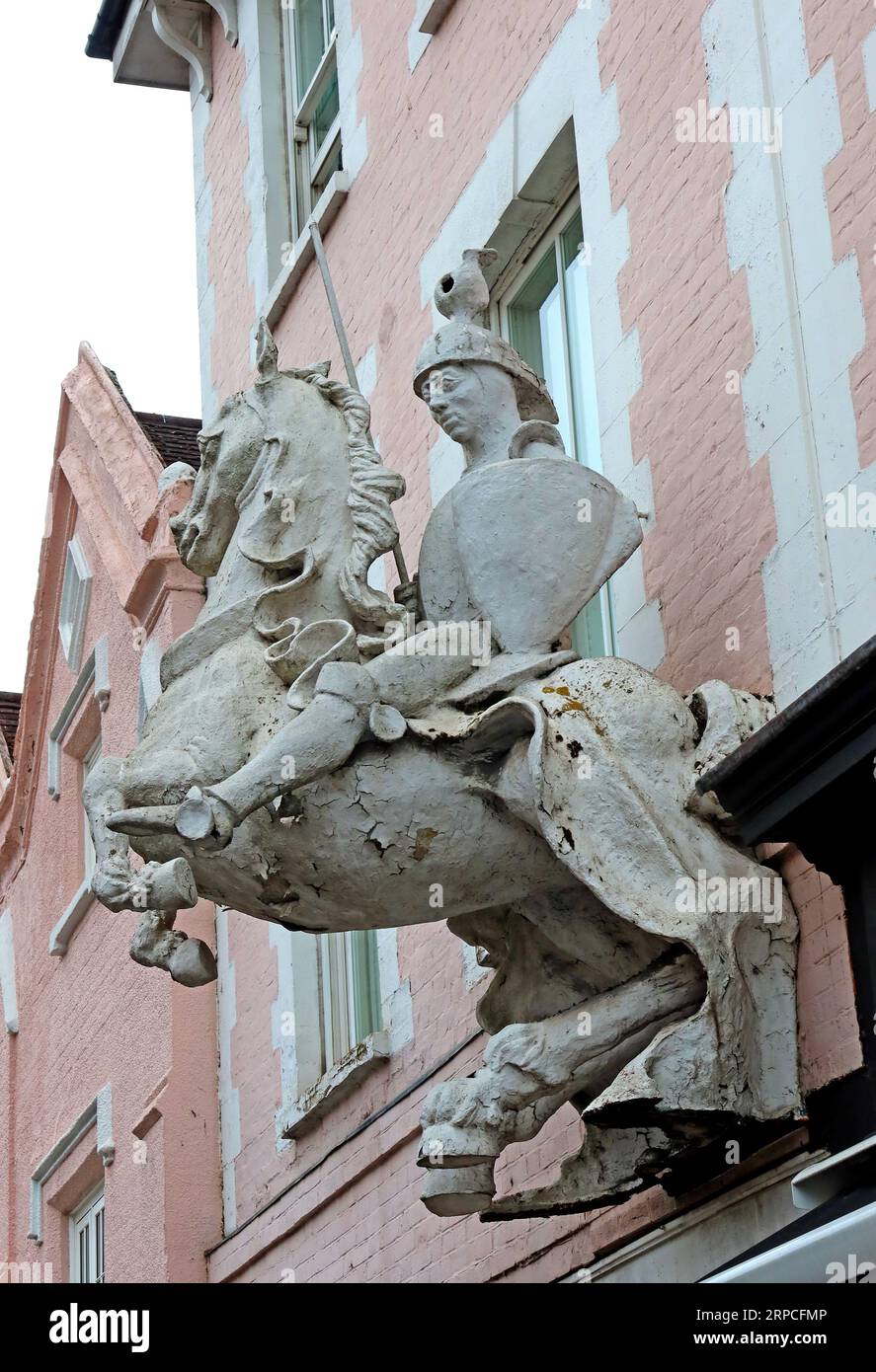
Image details
Contributor:
Tony SmithImage ID:
2RPCFMPFile size:
49.6 MB (2.2 MB Compressed download)Releases:
Model - no | Property - noDo I need a release?Dimensions:
3440 x 5040 px | 29.1 x 42.7 cm | 11.5 x 16.8 inches | 300dpiDate taken:
18 June 2023Location:
243-247 High St, Guildford, Surrey, England, UK, GU1 3BJMore information:
. Statue of a plaster mounted knight, on a horse on the former White Horse Hotel in 247-248 High Street, Guildford, Surrey, England, UK, GU1 3BJ. Photographed on 18 June 2023. The recorded location is 243-247 High St, Guildford, Surrey, England, UK, GU1 3BJ. If you visit the top of Guildford town, you might notice a gallant looking knight riding a white horse, charging off the façade of 253 Upper High Street. The unit, part of which is The Harbour Hotel's The Long Bar, used to house a pub, likely dating back to the late 1700s called The White Horse. Pubs named "'The White Horse' were tribute to the House of Hanover, the Royal family of the time period. Guildford's White Horse was a pub until 1964, when it was refurbished and transformed into the Guildford Hotel. In recent years the site underwent a massive redevelopment as part of the Harbour Hotel complex. Despite numerous changes over the years the unusual feature has remained. Looking at visual culture, the longer history is that street art and murals are especially valuable as temporary cultural evidence because they may be painted over or lost during redevelopment; Photographs preserve both the artwork and its relationship with the surrounding neighbourhood. The background to nightlife is that british pubs developed from inns, taverns and alehouses into licensed social institutions that have long served as meeting places, music venues and landmarks; Names, brewery signs, etched glass, tiled interiors and evolving fascias can preserve local history even when ownership or use changes. Within the history of coastal economy, maritime gateways connect island and mainland economies, carrying residents, visitors, freight and vehicles while also supporting fishing, leisure craft and tourism; Older waterfront buildings often survive beside modern ferry infrastructure, making port landscapes unusually layered records of economic change.

