
Peter Schöffer, Schofferhof brewery, Mainz, Germany
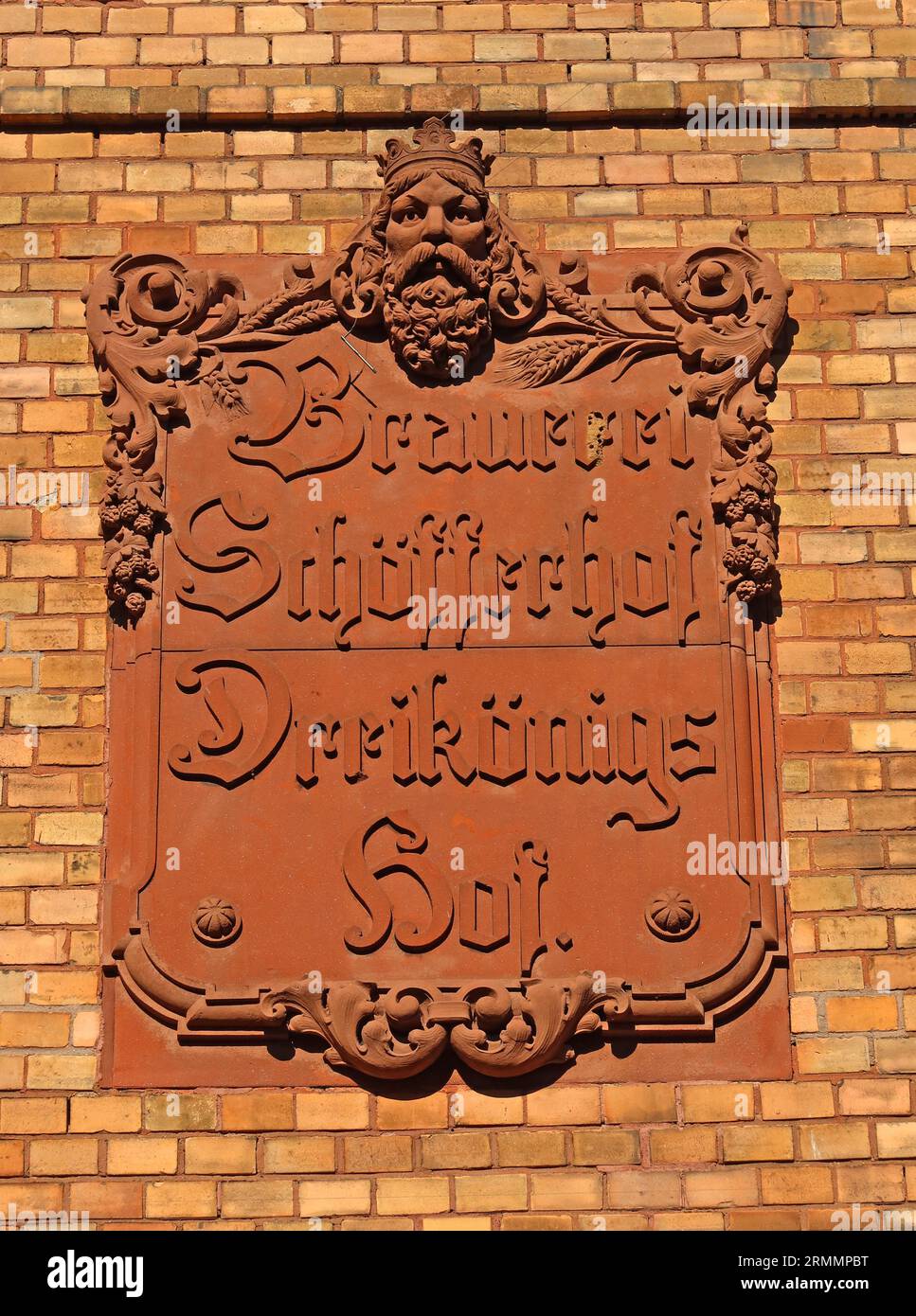
Image details
Contributor:
Tony SmithImage ID:
2RMMPBTFile size:
44.7 MB (2.4 MB Compressed download)Releases:
Model - no | Property - noDo I need a release?Dimensions:
3412 x 4583 px | 28.9 x 38.8 cm | 11.4 x 15.3 inches | 300dpiDate taken:
21 February 2023Location:
Kästrich 39, 55116 Mainz, GermanyMore information:
. Peter Schöffer, Schofferhof brewery, Mainz, Germany. Photographed on 21 February 2023. The recorded location is Kästrich 39, 55116 Mainz, Germany. Schöfferhofer brew wheat beer that is known for its refreshing and fruity taste. The history of Schöfferhofer dates back to 1806, when the brewery was founded by Georg Schöffler in Mainz, Germany. The brewery was later acquired by Binding-Brauerei AG in 1921, and then by Radeberger Gruppe in 2001. Schöfferhofer is a brand of German wheat beer named for the former house of Peter Schöffer (the house was called the Mainzer Schöfferhof) in which a brewery was founded. This brand of beer sports a portrait of Peter Schöffer as its trademark. The Schöfferhofer brand originates from this brewery in Mainz, which is also known as the Brauerei Dreikönigshof. According to the New York Times, in her 2014 novel Gutenberg's Apprentice, Alix Christie addresses the issues of intellectual property theft relating to Schöffer and Gutenberg in the invention of printing. Mainz stands on the Rhine and has more than two millennia of history, from Roman Mogontiacum through its role as an archiepiscopal city to the birthplace of Johannes Gutenberg. The old town combines reconstructed historic streets, churches, wine culture and post-war urban development, giving street signs and façades strong local-history context. For the story of community asset, it is useful to note that british pubs developed from inns, taverns and alehouses into licensed social institutions that have long served as meeting places, music venues and landmarks; Names, brewery signs, etched glass, tiled interiors and changing fascias can preserve local history even when ownership or use changes. The historical setting for housing is that residential architecture is closely tied to planning and social change; Post-war estates, high-rise blocks, gated developments and city-centre apartments reveal assumptions about land values, transport, security and the.

