
Christmas truce sculpture, known as "All Together Now" by Andy Edwards, at St Lukes, the Bombed Out Church, Reece St, Liverpool, L1 2TR
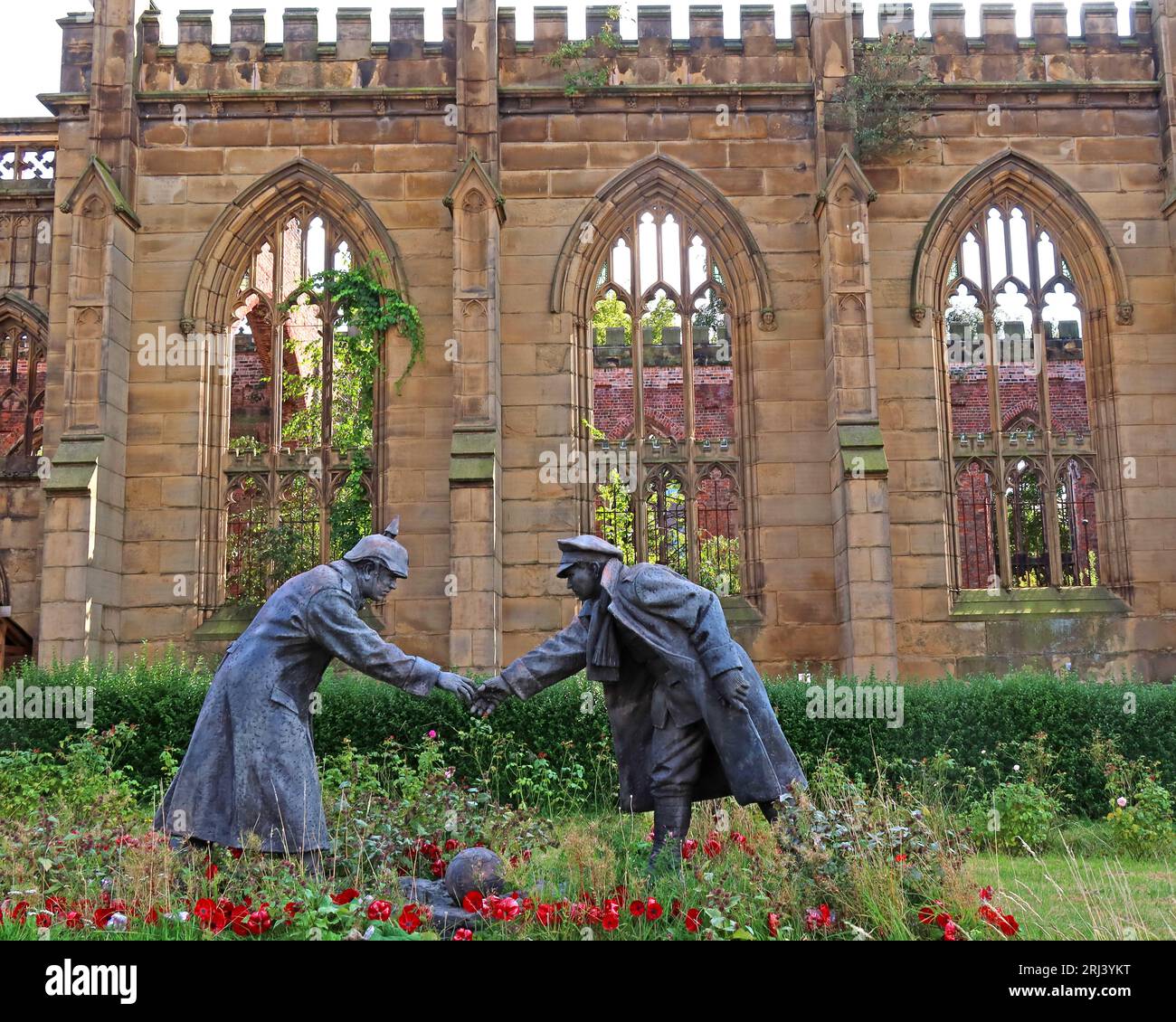
Image details
Contributor:
Tony SmithImage ID:
2RJ3YKTFile size:
47.6 MB (2.7 MB Compressed download)Releases:
Model - no | Property - noDo I need a release?Dimensions:
4560 x 3648 px | 38.6 x 30.9 cm | 15.2 x 12.2 inches | 300dpiDate taken:
19 August 2023Location:
Leece St, Liverpool, Merseyside, England, UK, L1 2TRMore information:
. Christmas truce sculpture, known as All Together Now by Andy Edwards, at St Lukes, the Bombed Out Church, Reece St, Liverpool, L1 2TR. Photographed on 19 August 2023. The recorded location is Leece St, Liverpool, Merseyside, England, UK, L1 2TR. Christmas truce sculpture, known as All Together Now by Andy Edwards in the garden, depicting a British and German soldier commencing a football game at Christmas 1914. Andy Edwards' sculpture All Together Now commemorates the unofficial Christmas Truce of 1914, when British and German troops in sectors of the Western Front left their trenches, exchanged greetings and, in some accounts, kicked footballs between the lines. The work uses two soldiers and a football to represent a moment of temporary humanity amid industrialised warfare. Its setting at St Luke's, Liverpool's bomb-damaged 'Bombed Out Church', adds another layer of war memory: the church was devastated by incendiary bombing during the May Blitz of 1941 and survives as a roofless cultural landmark. The wider historical story is that murals, sculptures and civic artworks turn public space into a record of local culture; They can commemorate people and events, respond to politics, celebrate industry or simply enliven streets, while the artists' materials and styles place the work within a particular period. As background, seasonal photographs document the mixture of tradition, commerce and community activity surrounding Christmas; Domestic lights, cards, street attractions and anti-Christmas jokes all sit within a broader culture of winter celebration. The historical context is that churches combine worship with architecture, local memory and centuries of community history; Their stonework, stained glass, memorials, furnishings and churchyards often record successive periods of rebuilding, changing liturgy, local benefactors, war remembrance and family history. Further editorial search language includes public art, street art, and visual culture.

