
Eckersleys factory name in red brick, Wigan Pier history - historically one of largest integrated textile manufactories in England, UK, WN3 5BS
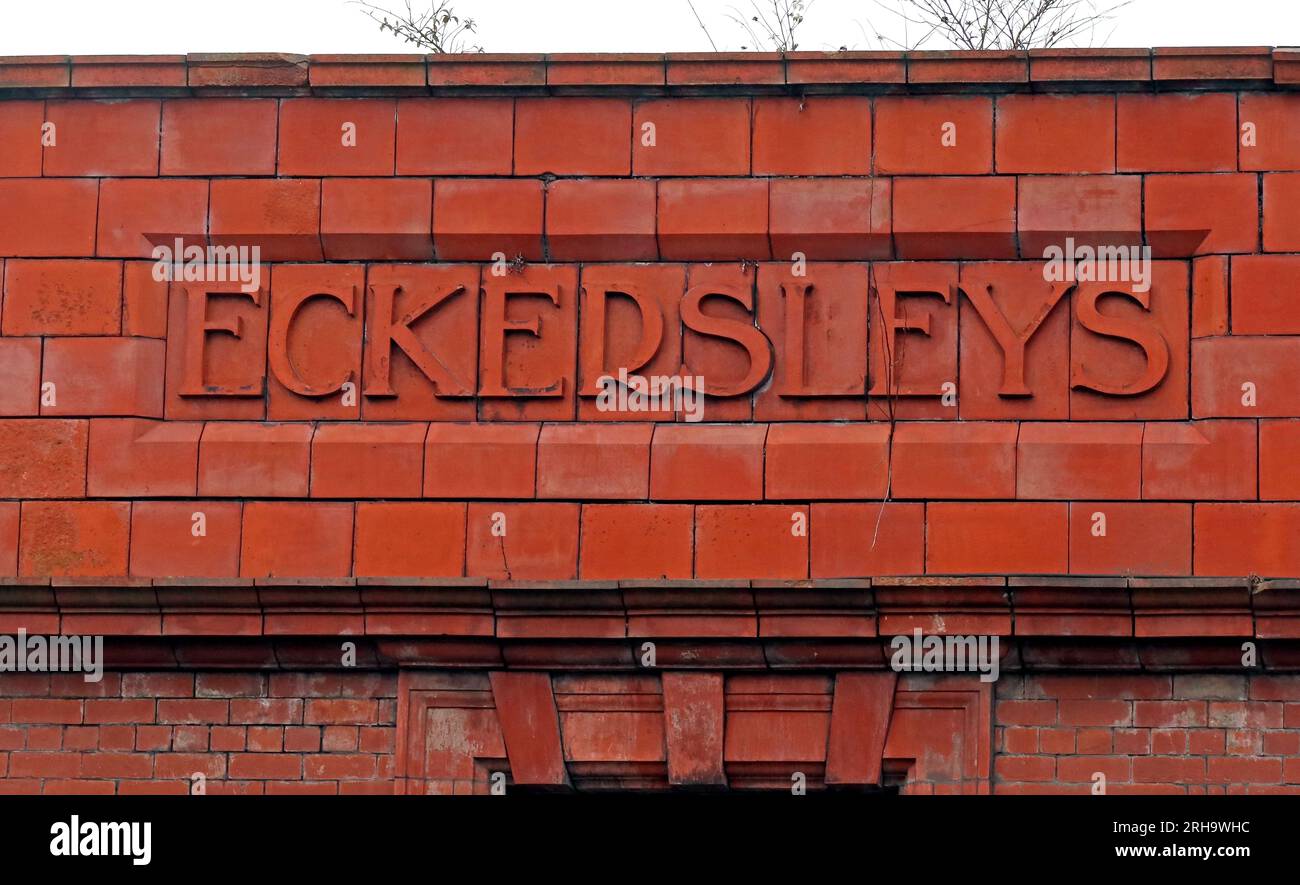
Image details
Contributor:
Tony SmithImage ID:
2RH9WHCFile size:
52.4 MB (1.7 MB Compressed download)Releases:
Model - no | Property - noDo I need a release?Dimensions:
5472 x 3348 px | 46.3 x 28.3 cm | 18.2 x 11.2 inches | 300dpiDate taken:
27 January 2023Location:
Eckersleys' Mills, Swan Meadow Road, Wigan, Lancashire, England, UK, WN3 5BSMore information:
. Eckersleys factory name in red brick, Wigan Pier history - historically one of largest integrated textile manufactories in England, UK, WN3 5BS. Photographed on 27 January 2023. The recorded location is Eckersleys' Mills, Swan Meadow Road, Wigan, Lancashire, England, UK, WN3 5BS. A cotton spinning mill (part of an integrated complex) with attached boiler and dynamo house, chimney and engine house, of 1900 by AH Stott and Sons in an Italianate style of red brick with buff sandstone dressings, for ffarington Eckersley and Co, with later alterations. List Entry Number 1384529 - Industrial Site. Within the history of place-making, place-based photography helps document the relationship between named locations and the people or businesses associated with them, especially where formal architectural records are limited. In relation to industrial regeneration, historical context shows that industrial buildings and machinery preserve the material history of manufacturing: steam power, engineering, mining, textiles, ceramics and mass production transformed both the economy and the physical character of towns; Surviving equipment is now studied as industrial archaeology. Against the 2026 backdrop for place-making, current place-making policy increasingly emphasises distinctive local identity rather than generic development, so small landmarks and community businesses can become important parts of how an area is represented. As of 2026, the position for industrial regeneration is that industrial heritage is increasingly tied to regeneration, tourism, conservation and skills education, particularly in former manufacturing towns seeking new uses for historic sites. Associated subject terminology includes local history, place identity, townscape, streetscape, community history, local landmark, neighbourhood, urban change, local character, public realm, historic comparison, town centre, local heritage, engineering history, historic machinery, and labour history.

