
Leeds and Liverpool canal tourist attractions fingerpost, Trencherfield Mill, Wigan, Lancashire, England, WN3 4EF
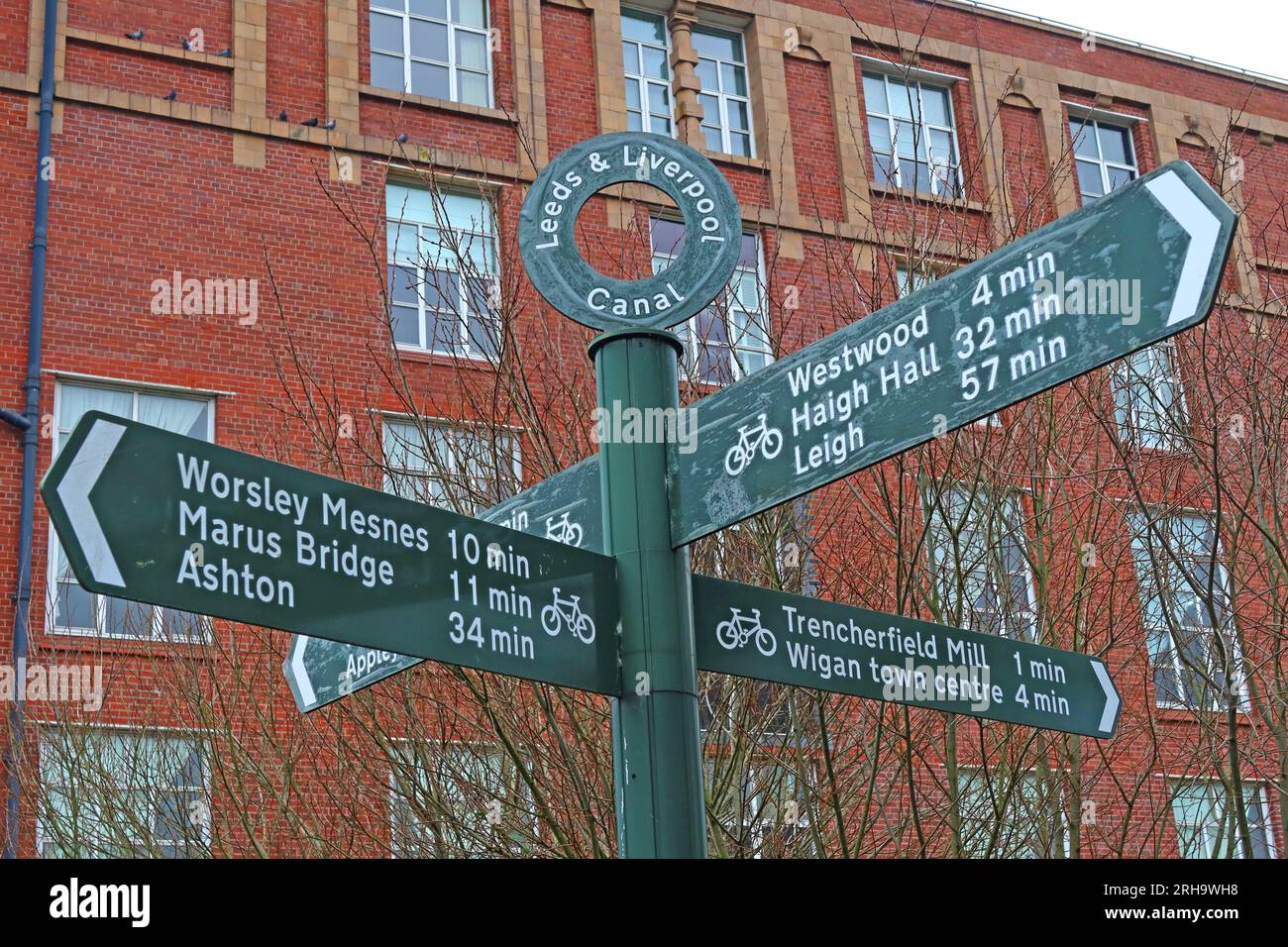
Image details
Contributor:
Tony SmithImage ID:
2RH9WH8File size:
57.1 MB (3.4 MB Compressed download)Releases:
Model - no | Property - noDo I need a release?Dimensions:
5472 x 3648 px | 46.3 x 30.9 cm | 18.2 x 12.2 inches | 300dpiDate taken:
27 January 2023Location:
Heritage Way , Wigan Pier Quarter, Wigan, WN3 4EFMore information:
. Leeds and Liverpool canal tourist attractions fingerpost, Trencherfield Mill, Wigan, Lancashire, England, WN3 4EF. Photographed on 27 January 2023. The recorded location is Heritage Way , Wigan Pier Quarter, Wigan, WN3 4EF. Green signpost on the Leeds & Liverpool canal, Trencherfield Mill, Wigan, Lancashire, England, WN3 4EF. Wigan, town, centre, Worsley, Mesnes, Marus Bridge, Ashton, town, centre, Leigh, Haigh Hall, Westwood. Trencherfield Mill is one of Wigan's major surviving monuments to the Lancashire cotton industry. The present mill was built in 1907 and its monumental J&E Wood engine was built in Bolton in 1906-07, entering service when the mill opened in 1908. The horizontal twin-tandem, triple-expansion engine developed about 2, 500hp and drove the spinning machinery through a vast rope race and 70-ton flywheel. Cotton production ceased in 1968; the engine was later preserved, restored and recognised with an Institution of Mechanical Engineers Engineering Heritage Award. The wider historical story is that canal infrastructure is a legacy of the Industrial Revolution, when navigable waterways linked mines, mills, factories and ports; The same lock chambers, bridges and towpaths now support leisure cruising, cycling, walking, wildlife corridors and redevelopment, while retaining evidence of their freight-carrying past. From a heritage perspective, public wording is part of the visual landscape; Direction signs, warning notices, painted advertisements and engraved plaques show how authorities and businesses communicated before digital screens and app-based information became widespread. The wider historical story is that farming and allotment imagery records the practical work behind food production, from ploughing and arable crops to small-scale vegetable growing; Allotments expanded strongly during periods of food shortage and continue to be an important part of British urban and suburban gardening culture.

