
Prestwich Manchester Metrolink tramway light rail station, to all destinations, Rectory Lane, Prestwich, England, UK, M25 1BR
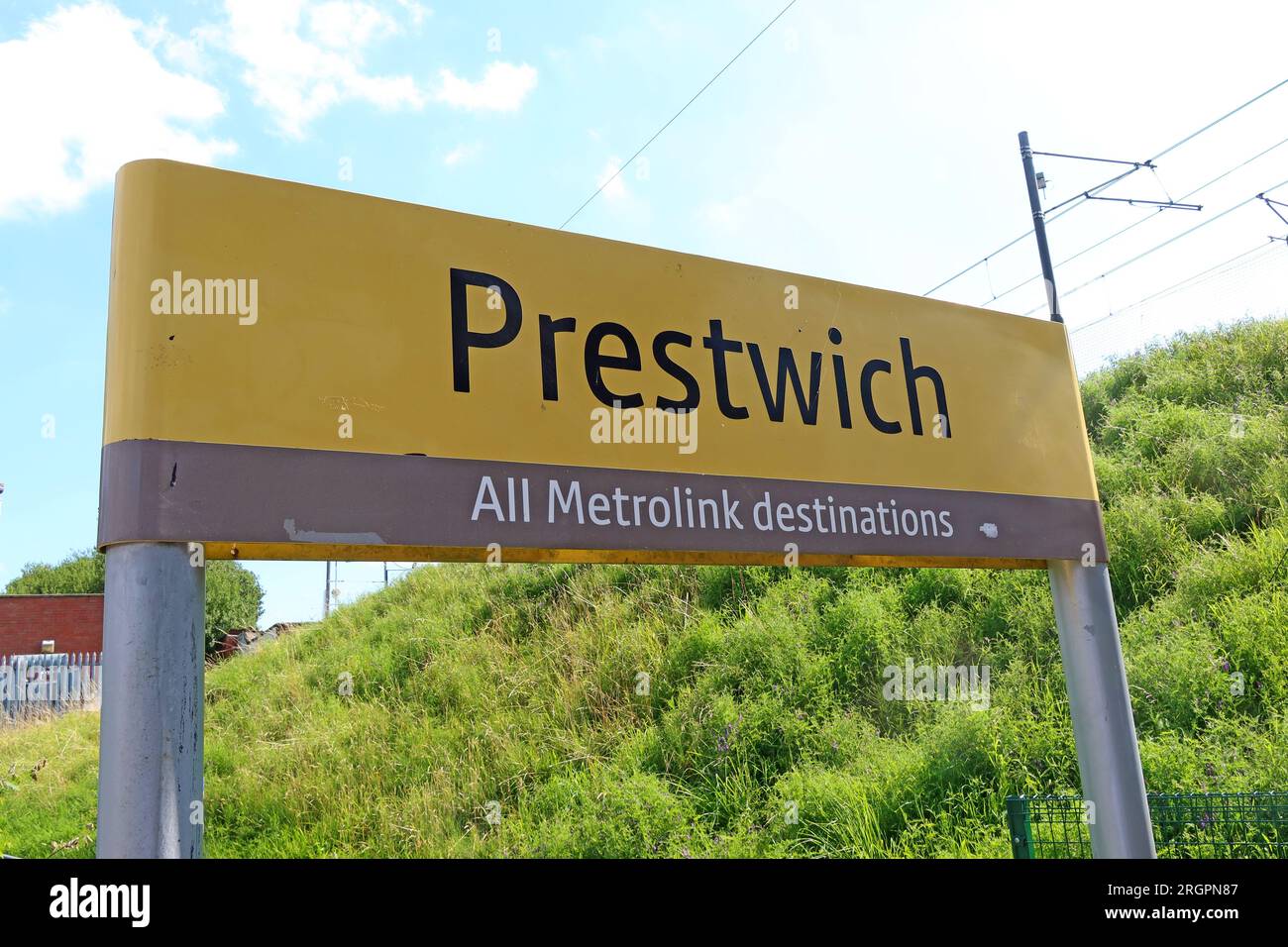
Image details
Contributor:
Tony SmithImage ID:
2RGPN87File size:
57.1 MB (2.4 MB Compressed download)Releases:
Model - no | Property - noDo I need a release?Dimensions:
5472 x 3648 px | 46.3 x 30.9 cm | 18.2 x 12.2 inches | 300dpiDate taken:
10 August 2023Location:
Rectory Lane, Prestwich, England, UK, M25 1BRMore information:
. Prestwich Manchester Metrolink tramway light rail station, to all destinations, Rectory Lane, Prestwich, England, UK, M25 1BR. Photographed on 10 August 2023. Prestwich is a tram stop in the town of Prestwich, Greater Manchester, England. It is on the Bury Line of Greater Manchester's light rail Metrolink system. The stop was originally Prestwich railway station, which was along the Manchester to Bury heavy rail line, completed by the Lancashire & Yorkshire Railway, in 1879 and opened on 1 September. The line was converted from steam to electric power as from 17 April 1916, using the third rail system. The station closed on 17 August 1991 to allow conversion of the route to the Metrolink system using overhead power lines, reopening on 6 April 1992. The station forms part of Ticketing Zone 3. It is located off Rectory Lane a walkway connects the station to the Longfield Suite Precinct and Bury New Road (A56). Services mostly run every 12 minutes on 2 routes, forming a 6-minute service between Bury and Manchester at peak times. For passenger railway, the historical context is that rail transport links engineering history with everyday mobility; The network evolved through private railway companies, grouping, nationalisation, British Rail and later privatisation, leaving successive layers of architecture, liveries, ticketing equipment and operating practice. Looking at integrated transport, the longer history is that the growth of integrated transport authorities has encouraged common branding, coordinated fares and closer links between buses, trams, cycling and rail, replacing a more fragmented pattern of separate operators. The background to typography is that signs are functional pieces of graphic design that organise movement and communicate rules, names or destinations; Lettering, symbols, colours and materials can date public space as clearly as architecture, particularly when organisations rebrand or regulations evolution.

